Your bed should be the cleanest place in your home, yet every night your bedding collects sweat, body oils, dead skin cells, dust mites, and bacteria. Over time, this buildup can affect skin health, allergies, and sleep quality.
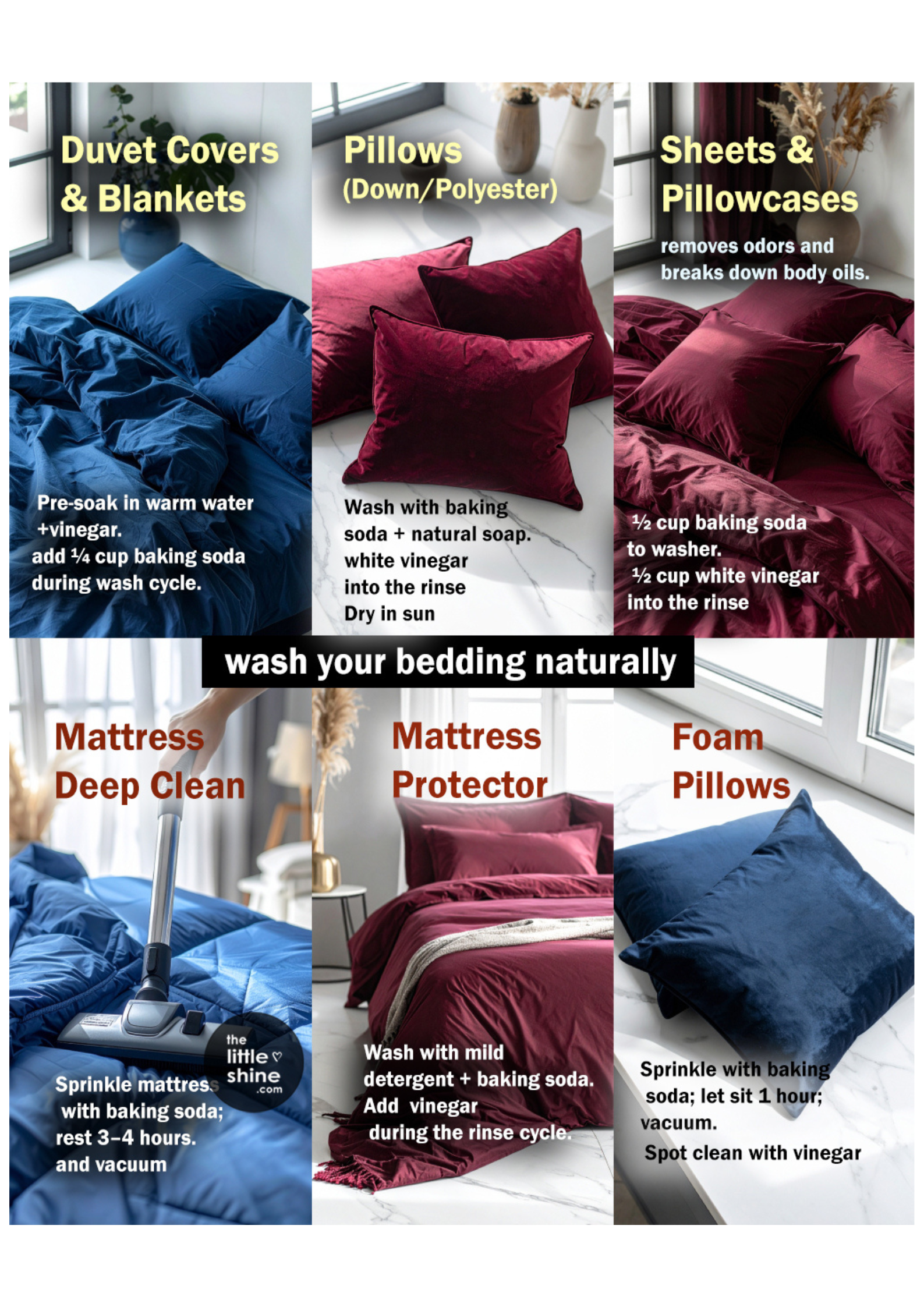
The good news is that you can keep bedding fresh using simple natural ingredients such as baking soda, white vinegar, sunlight, and mild soap—without relying on harsh chemicals.
Why Cleaning Bedding Matters
An average person sheds millions of skin cells each night, which attract dust mites. Combined with sweat and oils, bedding can quickly accumulate bacteria and odors.
Regular cleaning helps:
- Reduce dust mites and allergens
- Prevent acne and skin irritation
- Remove sweat and odors
- Improve overall sleep hygiene
How Often You Should Clean Your Bedding
1. Sheets and Pillowcases
Frequency: Once a week
(Every 4–5 days if you sweat heavily or have allergies)
Sheets absorb sweat, oils, and skincare products quickly.
Natural Cleaning Method
- Add ¼–½ cup baking soda to the wash cycle with your detergent.
- Add ½ cup white vinegar to the rinse cycle (fabric softener compartment).
- Wash with warm or hot water.
- Dry in sunlight when possible.
Important: Baking soda and vinegar should be used in separate stages, not together.
2. Duvet Covers
Frequency: Every 2–3 weeks
Duvet covers protect your comforter but still collect body oils and dust.
Natural Cleaning Method
- Pre-soak in warm water with 1 cup white vinegar for about 30 minutes (optional but helpful for odors).
- Wash with mild detergent.
- Add ¼ cup baking soda to the wash cycle.
- Air dry or sun dry.
Sunlight acts as a natural disinfectant and deodorizer.
3. Blankets
Frequency: Every 2–3 months
Blankets gather dust and skin cells over time, especially during colder months.
Natural Cleaning Method
- Wash with mild detergent + ¼ cup baking soda.
- Add ½ cup white vinegar in the rinse cycle.
- Air dry or dry in sunlight for freshness.
4. Pillows (Down or Polyester)
Frequency: Every 3–4 months
Even with pillowcases, pillows absorb sweat and oils.
Natural Cleaning Method
- Wash two pillows at a time to balance the machine.
- Add 2 tablespoons baking soda with mild detergent.
- Add ½ cup vinegar to the rinse cycle.
- Dry on low heat with clean tennis balls or dryer balls to restore fluffiness.
5. Foam or Memory Foam Pillows
These should not be machine washed.
Natural Cleaning Method
- Sprinkle baking soda over the pillow.
- Let it sit for 1 hour to absorb odors.
- Vacuum the powder off.
- Spot clean stains using vinegar + water (1:3).
6. Mattress Protector
Frequency: Once a month
Mattress protectors trap sweat, spills, and dust.
Natural Cleaning Method
- Wash with mild detergent + ¼ cup baking soda.
- Add ½ cup vinegar during the rinse cycle.
- Air dry to maintain the waterproof layer.
7. Mattress
Frequency: Deep clean every 3–6 months
Mattresses accumulate dust mites, sweat, and bacteria over time.
Natural Cleaning Method
- Sprinkle baking soda evenly over the mattress.
- Leave it for 3–4 hours.
- Vacuum thoroughly.
- For stains, use a paste of baking soda + 3% hydrogen peroxide.
If possible, place the mattress in direct sunlight for 1–2 hours to naturally reduce bacteria.
Simple Natural Bedding Care Tips
- Air your bed every morning before making it.
- Use sunlight whenever possible to naturally disinfect fabrics.
- Rotate your mattress every few months.
- Use mattress and pillow protectors to keep bedding cleaner longer.
The Bottom Line
Keeping your bedding clean is essential for healthy sleep, better skin, and fewer allergens. By following a simple cleaning schedule and using natural ingredients like baking soda, vinegar, and sunlight, you can keep your bed fresh without harsh chemicals.
Clean bedding doesn’t just feel better—it helps support better sleep and a healthier home environment. 🛏️✨