Hormones are your body’s chemical messengers. They regulate metabolism, mood, sleep, hunger, reproduction, stress response, and even motivation. When they’re balanced, you feel stable, energized, and clear-headed. When they’re dysregulated, symptoms appear—often subtly at first.
This guide breaks down the key hormones, what they do physiologically, common imbalance patterns, and practical strategies to support them.
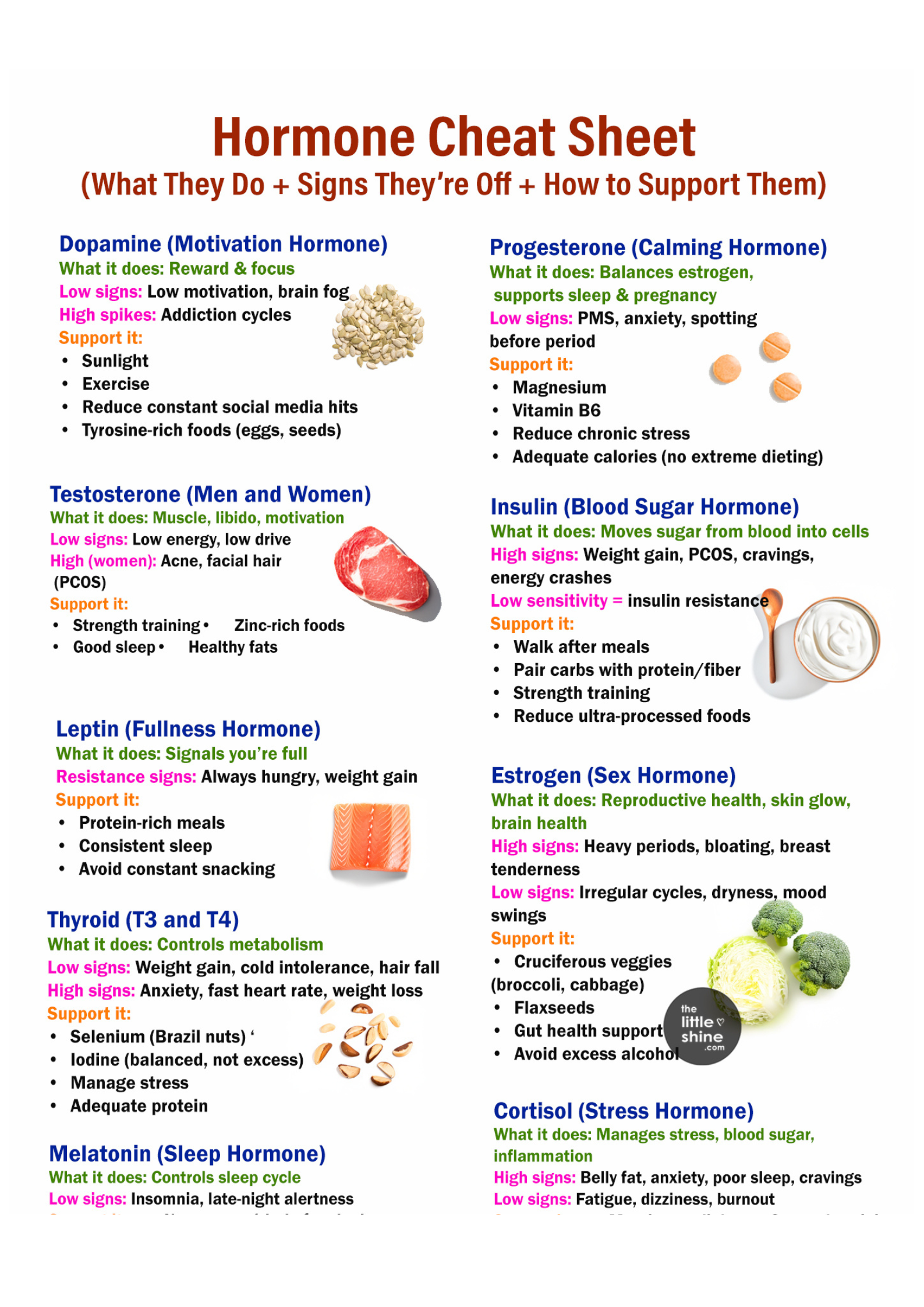
1. Cortisol – The Stress Regulator
Primary Role:
Produced by the adrenal glands, cortisol helps regulate stress response, blood sugar, inflammation, and circadian rhythm.
When Cortisol Is Chronically High:
- Central (belly) fat accumulation
- Anxiety or irritability
- Sugar cravings
- Poor sleep
- Elevated fasting glucose
When Too Low (Adrenal Dysfunction Pattern):
- Fatigue
- Lightheadedness
- Burnout feeling
- Low stress tolerance
How to Support Healthy Cortisol Patterns:
- Get morning sunlight within 30 minutes of waking
- Maintain consistent sleep timing
- Avoid excessive high-intensity training
- Eat protein at breakfast to stabilize blood sugar
- Magnesium in the evening may support relaxation
2. Insulin – The Blood Sugar Controller
Primary Role:
Secreted by the pancreas, insulin transports glucose from the bloodstream into cells for energy.
Signs of Insulin Resistance:
- Energy crashes after meals
- Increased abdominal fat
- Intense carb cravings
- Difficulty losing weight
- PCOS (in women)
Support Strategies:
- 10–15 minute walk after meals
- Combine carbohydrates with protein and fiber
- Strength training (improves insulin sensitivity)
- Reduce ultra-processed foods
- Maintain consistent meal timing
3. Estrogen – The Growth & Reproductive Hormone
Primary Role:
Essential for reproductive health, bone density, cardiovascular protection, skin elasticity, and brain function.
High Estrogen (Estrogen Dominance Pattern):
- Heavy or painful periods
- Bloating
- Breast tenderness
- Mood swings
Low Estrogen:
- Irregular or missing cycles
- Vaginal dryness
- Brain fog
- Hot flashes (peri/menopause)
Support Strategies:
- Cruciferous vegetables (broccoli, cabbage, kale)
- Ground flaxseeds (supports estrogen metabolism)
- Support gut health (estrogen is metabolized via the gut)
- Limit excess alcohol
- Maintain healthy body fat levels
4. Progesterone – The Calming Hormone
Primary Role:
Balances estrogen and supports menstrual regulation, sleep quality, and pregnancy.
Low Progesterone Signs:
- PMS
- Anxiety before periods
- Spotting before menstruation
- Sleep disturbances
Support Strategies:
- Manage chronic stress (stress suppresses progesterone)
- Ensure adequate calorie intake
- Magnesium and vitamin B6
- Prioritize ovulation health (progesterone rises after ovulation)
5. Testosterone – Drive, Strength & Vitality
Primary Role:
Supports muscle mass, libido, motivation, and cognitive performance (important in both men and women).
Low Testosterone:
- Low energy
- Decreased libido
- Muscle loss
- Low motivation
High Testosterone (Common in PCOS for women):
- Acne
- Excess facial hair
- Irregular periods
Support Strategies:
- Resistance training
- Zinc-rich foods (pumpkin seeds, seafood)
- Healthy fats (olive oil, nuts, eggs)
- Adequate sleep
6. Thyroid Hormones (T3 & T4) – The Metabolic Engine
Primary Role:
Control metabolic rate, temperature regulation, and energy production.
Hypothyroid Pattern:
- Weight gain
- Cold intolerance
- Hair thinning
- Constipation
- Fatigue
Hyperthyroid Pattern:
- Rapid heartbeat
- Anxiety
- Weight loss
- Heat intolerance
Support Strategies:
- Adequate protein intake
- Selenium (Brazil nuts)
- Balanced iodine intake (avoid excess)
- Manage stress (cortisol affects thyroid conversion)
7. Melatonin – The Sleep Hormone
Primary Role:
Regulates circadian rhythm and sleep-wake cycles.
Low Melatonin Signs:
- Trouble falling asleep
- Late-night alertness
- Light, disrupted sleep
Support Strategies:
- Reduce screen exposure 60 minutes before bed
- Keep bedroom dark and cool
- Get morning sunlight daily
- Magnesium glycinate in the evening
8. Leptin – The Fullness Signal
Primary Role:
Signals satiety to the brain and regulates energy balance.
Leptin Resistance Signs:
- Constant hunger
- Difficulty feeling full
- Weight gain despite eating “normally”
Support Strategies:
- High-protein meals
- Consistent sleep schedule
- Avoid frequent snacking
- Reduce processed foods
9. Dopamine – The Motivation Molecule
Primary Role:
Regulates reward, focus, pleasure, and drive.
Low Dopamine:
- Low motivation
- Brain fog
- Reduced pleasure
High Dopamine Spikes (Unstable):
- Addictive behaviors
- Constant stimulation seeking
Support Strategies:
- Exercise
- Sunlight exposure
- Tyrosine-rich foods (eggs, seeds, poultry)
- Reduce constant digital stimulation
The Bigger Picture: Hormones Work as a Network
No hormone operates in isolation. For example:
- High cortisol can impair thyroid conversion.
- Insulin resistance can increase androgen levels in women (PCOS pattern).
- Poor sleep affects leptin, ghrelin, cortisol, and insulin simultaneously.
This is why foundational habits matter more than quick fixes:
The Core Hormone Support Framework:
- Stable blood sugar
- Consistent sleep schedule
- Strength training 2–4x weekly
- Daily sunlight exposure
- Stress regulation
- Gut health support
Final Takeaway
Hormonal balance is not about perfection—it’s about rhythm.
When sleep, stress, nutrition, and movement align with your biology, hormones tend to stabilize naturally.