Good health does not always require complicated rules. Many basic habits—like walking more, drinking enough water, or managing screen time—can make a huge difference in how your body feels and functions. The following simple charts provide quick guidelines that help support daily health, energy, and long-term wellness.
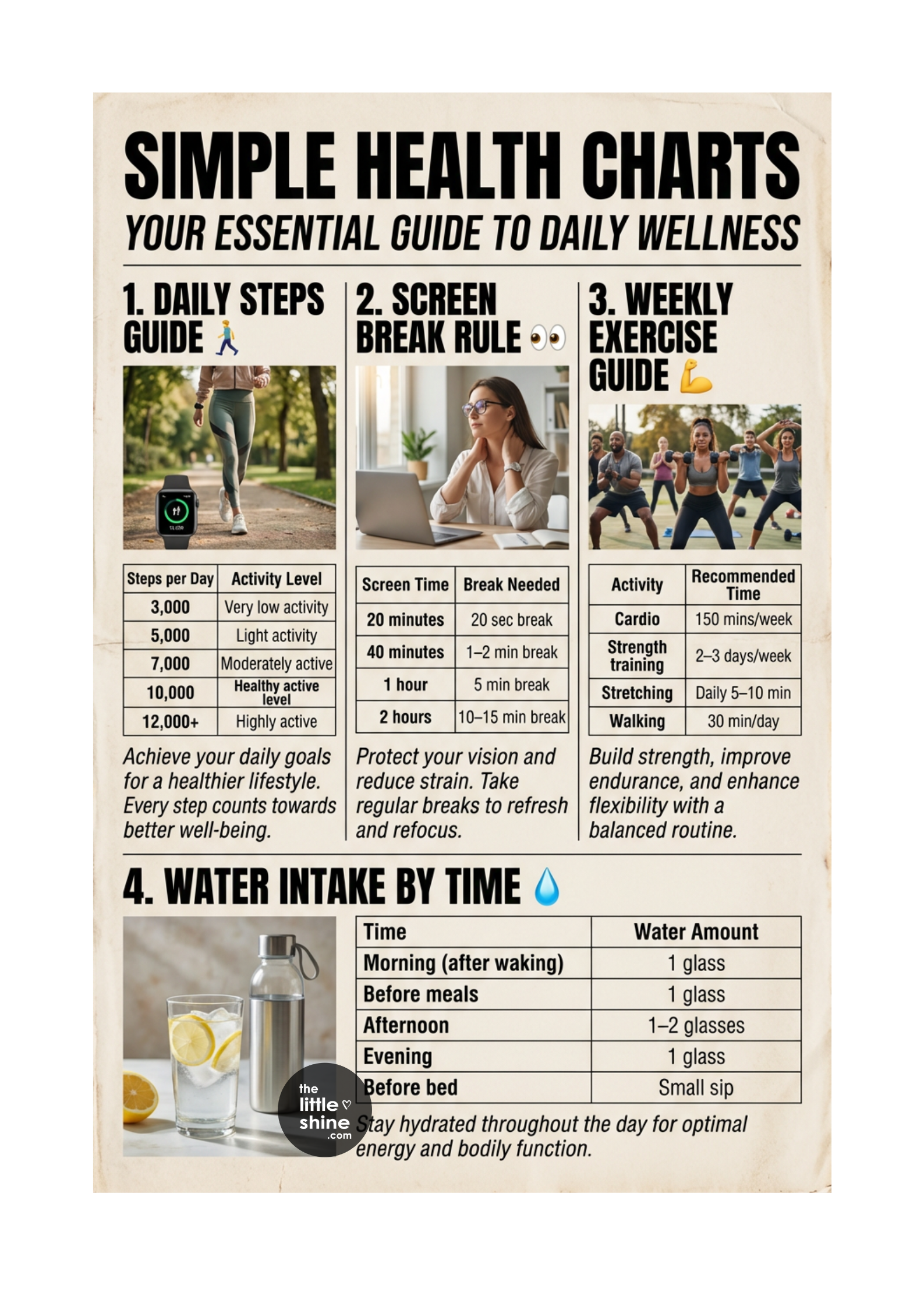
1. Daily Steps Guide 🚶
| Steps per Day | Activity Level |
|---|---|
| 3,000 | Very low activity |
| 5,000 | Light activity |
| 7,000 | Moderately active |
| 10,000 | Healthy active level |
| 12,000+ | Highly active |
Walking is one of the easiest ways to stay active. Around 7,000–10,000 steps per day is commonly associated with better heart health, improved metabolism, and lower risk of chronic diseases.
2. Daily Protein Needs 🥚
| Body Weight | Protein Needed |
|---|---|
| 110 lb | 1.4–1.8 oz |
| 132 lb | 1.7–2.1 oz |
| 154 lb | 2.0–2.5 oz |
| 176 lb | 2.3–2.8 oz |
| 198 lb | 2.5–3.2 oz |
Protein helps maintain muscles, hormones, enzymes, and immune function. A common guideline is 0.36–0.45 grams of protein per pound of body weight.
3. Fiber Intake Guide 🌾
| Age Group | Fiber per Day |
|---|---|
| Children | 0.5–0.7 oz |
| Teens | 0.7–0.9 oz |
| Women | ~0.9 oz |
| Men | 1.0–1.3 oz |
Dietary fiber supports gut health, digestion, and blood sugar control. Foods like fruits, vegetables, whole grains, beans, and seeds are excellent fiber sources.
4. Meal Timing Guide 🍽️
| Meal | Ideal Time |
|---|---|
| Breakfast | 7–9 AM |
| Lunch | 12–2 PM |
| Snack | 4–5 PM |
| Dinner | 6–8 PM |
Eating meals at consistent times helps regulate metabolism, blood sugar levels, and digestion. Many experts also suggest finishing dinner 2–3 hours before bedtime.
5. Screen Break Rule 👀
| Screen Time | Break Needed |
|---|---|
| 20 minutes | 20 sec break |
| 40 minutes | 1–2 min break |
| 1 hour | 5 min break |
| 2 hours | 10–15 min break |
Long screen exposure can strain the eyes and reduce focus. The 20-20-20 rule—looking at something 20 feet away for 20 seconds every 20 minutes—helps protect eye health.
6. Weekly Exercise Guide 💪
| Activity | Recommended Time |
|---|---|
| Cardio | 150 mins/week |
| Strength training | 2–3 days/week |
| Stretching | Daily 5–10 min |
| Walking | 30 min/day |
Regular physical activity improves heart health, muscle strength, metabolism, and mental well-being.
7. Sugar Intake Limit 🍬
| Group | Max Added Sugar |
|---|---|
| Women | ~0.9 oz/day |
| Men | ~1.3 oz/day |
| Children | 0.7–0.9 oz/day |
High sugar consumption is linked to weight gain, diabetes, and heart disease. Limiting added sugars while focusing on whole foods helps maintain balanced energy levels.
8. Caffeine Intake Guide ☕
| Drink | Safe Daily Amount |
|---|---|
| Coffee | 2–3 cups |
| Tea | 3–4 cups |
| Energy drinks | Limit or avoid |
| Total caffeine | ≤400 mg/day |
Moderate caffeine intake can improve alertness and concentration, but too much may cause anxiety, sleep problems, or digestive issues.
9. Salt Intake Guide 🧂
| Intake Level | Amount |
|---|---|
| Ideal | 0.1–0.18 oz/day |
| Upper limit | ~0.18 oz/day |
| High intake | 0.21 oz+ |
Excess salt can increase blood pressure and cardiovascular risk. Reducing processed foods and using herbs or spices for flavor can help control salt intake.
10. Water Intake by Time 💧
| Time | Water Amount |
|---|---|
| Morning (after waking) | 1 glass |
| Before meals | 1 glass |
| Afternoon | 1–2 glasses |
| Evening | 1 glass |
| Before bed | Small sip |
Drinking water throughout the day supports digestion, circulation, temperature regulation, and brain function.
Final Thought
Health often comes down to consistent daily habits. Simple actions—like walking more, eating enough fiber and protein, limiting sugar, and staying hydrated—can significantly improve overall well-being.
These quick charts provide easy reminders that help guide healthier choices every day. 🌿