Modern wellness advice often overcomplicates simple problems. In reality, many daily symptoms—fatigue, anxiety, headaches, digestive issues—respond best to foundational, low-cost interventions. Before reaching for another supplement, protocol, or productivity hack, stabilize the basics.
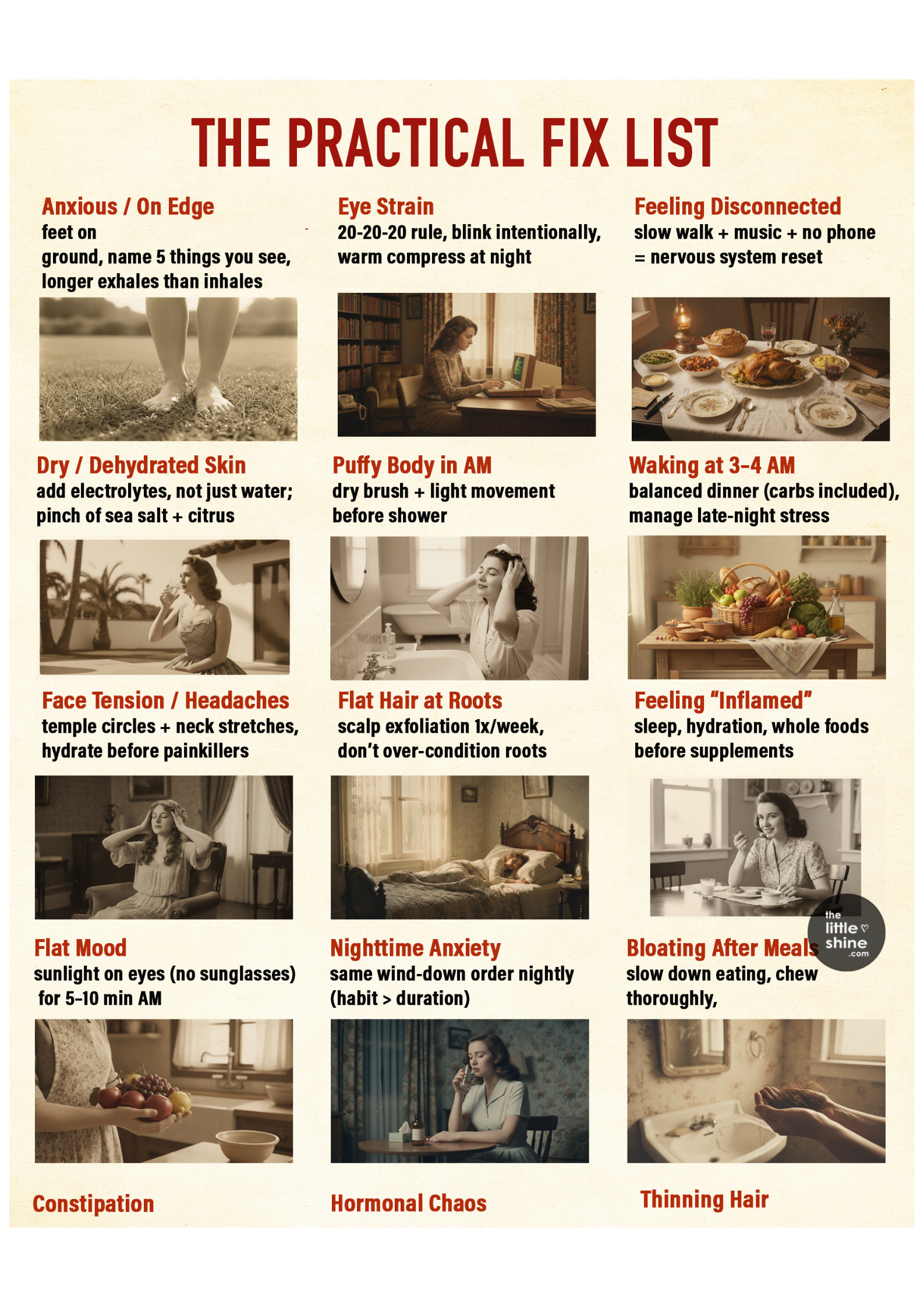
Below is a practical, systems-based guide to restoring balance through small, consistent actions.
1. Anxious or On Edge
Intervention: Nervous system grounding
When anxiety spikes, your sympathetic nervous system is dominant. Shift into parasympathetic mode using:
- Bare feet on the ground (literal grounding helps sensory regulation)
- Name 5 things you see
- Extend exhales longer than inhales
Longer exhalation activates the vagus nerve and reduces physiological arousal.
2. Eye Strain
Intervention: Visual reset protocol
Digital fatigue is cumulative.
- Follow the 20-20-20 rule: every 20 minutes, look at something 20 feet away for 20 seconds
- Blink intentionally
- Apply a warm compress at night
This reduces ocular dryness and relaxes ciliary muscle tension.
3. Feeling Disconnected
Intervention: Low-stimulation sensory walk
Mental fog and emotional disconnection often signal nervous system overload.
- Take a slow walk
- Listen to music
- Leave your phone in your pocket
Movement + rhythm + reduced digital input resets baseline stress.
4. Dry or Dehydrated Skin
Intervention: Hydrate with electrolytes
Water alone is not always sufficient.
- Add electrolytes
- A pinch of sea salt
- Citrus (vitamin C supports collagen synthesis)
Hydration depends on mineral balance, not just fluid intake.
5. Puffy Body in the Morning
Intervention: Lymphatic stimulation
Morning puffiness is often lymph stagnation.
- Dry brushing
- Light mobility or stretching before shower
- Warm shower to improve circulation
This supports lymphatic drainage and fluid balance.
6. Low Confidence Days
Intervention: Micro-momentum
Confidence follows action, not the reverse.
- Clean one small surface
- Finish one small task
Momentum generates dopamine and psychological traction.
7. Face Tension or Headaches
Intervention: Muscle release before medication
Before reaching for painkillers:
- Temple circles
- Neck stretches
- Hydrate
Many tension headaches are muscular and dehydration-related.
8. Flat Hair at the Roots
Intervention: Scalp management
Over-conditioning suffocates roots.
- Exfoliate scalp once per week
- Avoid applying conditioner directly to roots
Healthy scalp = better lift and hair density appearance.
9. Hormonal Chaos
Intervention: Stop stacking “fixes”
Constantly adding new supplements or protocols can worsen instability.
First stabilize:
- Consistent meals
- Protein intake
- Sleep
- Stress regulation
Hormones respond to rhythm, not randomness.
10. Flat Mood
Intervention: Morning sunlight exposure
Within 30 minutes of waking:
- Get 5–10 minutes of sunlight
- No sunglasses
This anchors circadian rhythm and improves serotonin production.
11. Nighttime Anxiety
Intervention: Predictable wind-down ritual
The brain relaxes with repetition.
- Same order every night
- Screens off at a fixed time
- Light reading, tea, or journaling
Habit consistency matters more than duration.
12. Waking at 3–4 AM
Intervention: Stabilize blood sugar + stress
Common triggers:
- Unbalanced dinner (too low-carb)
- Elevated evening cortisol
Try:
- Balanced dinner (include carbs + protein + fat)
- Stress management before bed
Night waking often reflects metabolic instability.
13. Constipation
Intervention: Motility support
- Magnesium citrate
- Kiwi or chia seeds
- Consistent morning routine
The digestive tract responds strongly to rhythm and fiber diversity.
14. Burnout Signals
Intervention: Strategic rest
If you dread things you normally enjoy, discipline is not the answer.
You likely need:
- Reduced output
- True mental rest
- Boundary reinforcement
Burnout is nervous system depletion, not laziness.
15. Thinning Hair
Intervention: Nutrient sufficiency
Hair is non-essential tissue. Deficiency shows here early.
- Adequate protein (0.8–1 g per lb of lean mass)
- Iron sufficiency
- Zinc sufficiency
Correct deficiencies before trying cosmetic solutions.