A practical guide to building your own natural wellness garden
Growing medicinal plants at home is one of the simplest ways to support everyday health naturally. Whether you have a backyard, balcony, or sunny windowsill, many healing herbs thrive in common US climates and require minimal care. From soothing digestion to boosting immunity and calming stress, these plants offer powerful benefits right from your own home.
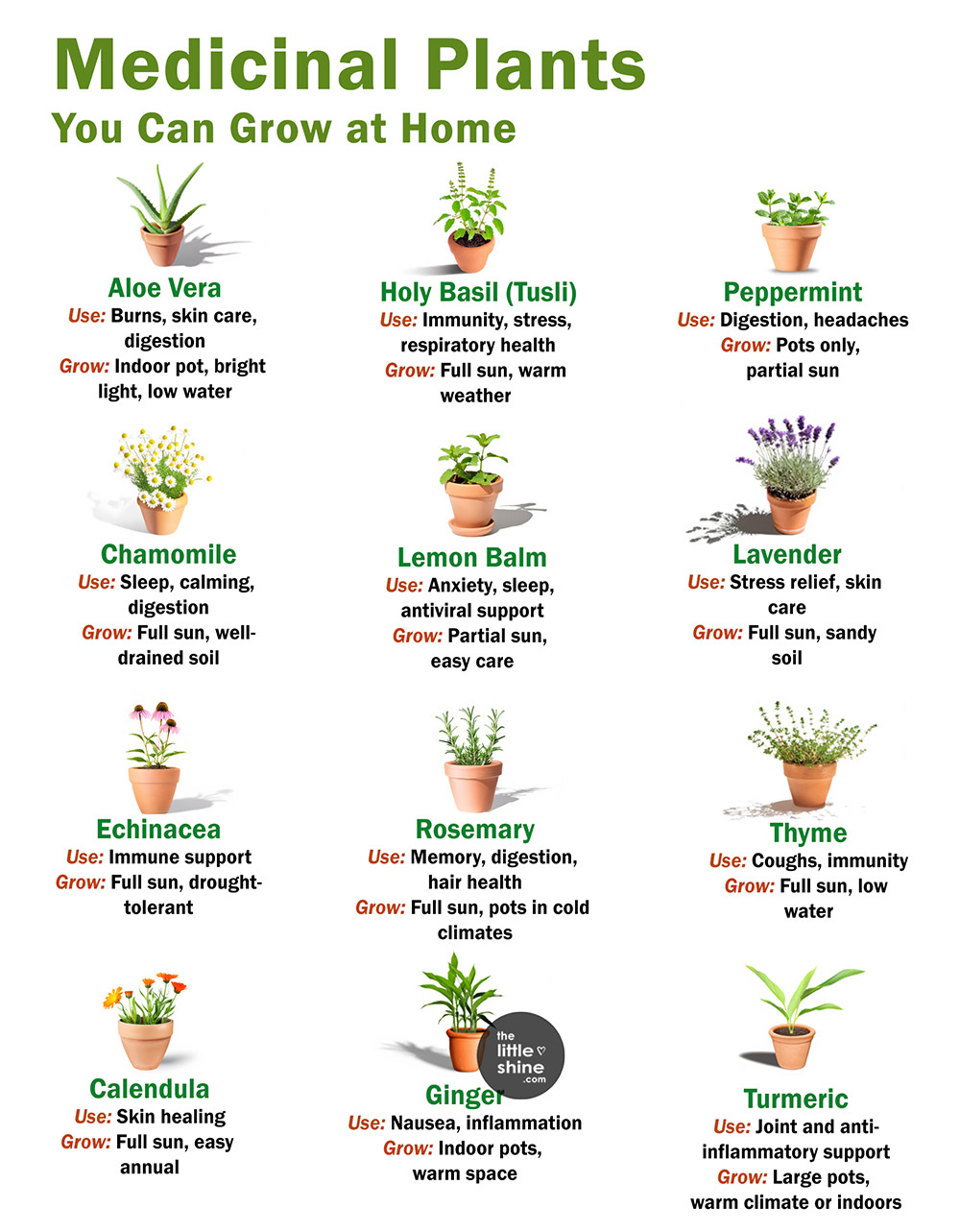
Below is a beginner-friendly guide to the most useful medicinal plants you can grow along with their primary uses and basic growing needs.
Why Grow Medicinal Plants at Home?
- Fresh, chemical-free remedies on demand
- Cost-effective compared to store-bought supplements
- Easy to grow in pots or garden beds
- Supports sustainable living
- Adds beauty and fragrance to your space
Top Medicinal Plants for Home Gardens
Aloe Vera
Benefits: Burns, skin irritation, digestion support
Growing: Indoor pots, bright indirect light, water sparingly
Aloe is one of the most versatile healing plants—perfect for kitchens and windowsills.
Tulsi (Holy Basil)
Benefits: Stress relief, immunity, respiratory health
Growing: Full sun, warm temperatures
Known as the “queen of herbs,” tulsi is prized for its adaptogenic properties.
Peppermint
Benefits: Digestion, headaches, nausea
Growing: Partial sun, moist soil (best in containers)
Extremely hardy but invasive—always grow mint in pots.
Chamomile
Benefits: Sleep, anxiety, digestive calming
Growing: Full sun, well-drained soil
Ideal for homemade calming teas.
Lemon Balm
Benefits: Anxiety relief, antiviral support, sleep
Growing: Partial sun, moist soil
A gentle nervine herb with a refreshing citrus scent.
Lavender
Benefits: Stress reduction, sleep, skin care
Growing: Full sun, sandy soil, low watering
Excellent for relaxation, sachets, and infused oils.
Echinacea
Benefits: Immune support, cold prevention
Growing: Full sun, drought tolerant
A native US plant widely used for immune health.
Rosemary
Benefits: Memory, digestion, hair health
Growing: Full sun, excellent drainage
A hardy culinary herb with strong medicinal value.
Sage
Benefits: Sore throat, oral health, digestion
Growing: Full sun, dry soil
Zones: 4–10
Traditionally used for gargles and respiratory support.
Thyme
Benefits: Coughs, infections, immunity
Growing: Full sun, low water
Rich in thymol, a natural antimicrobial compound.
Calendula (Pot Marigold)
Benefits: Skin healing, anti-inflammatory
Growing: Full sun, easy annual
Popular for salves and healing creams.
Ginger
Benefits: Nausea, digestion, inflammation
Growing: Indoor pots, warm environment
Great for fresh teas and digestive remedies.
Turmeric
Benefits: Joint health, anti-inflammatory
Growing: Large containers, warmth, humidity
A powerful root used widely in natural healing.
Oregano
Benefits: Antibacterial, immune support
Growing: Full sun, dry soil
Contains natural compounds that fight microbes.
Dandelion
Benefits: Liver support, digestion
Growing: Full sun, extremely hardy
Often overlooked, yet one of the most nutritious medicinal plants.
Best Plants for Beginners
If you’re just starting, begin with:
- Aloe Vera
- Peppermint
- Rosemary
- Chamomile
These are low-maintenance, fast-growing, and highly useful.
Simple Safety Note
Medicinal plants support wellness but do not replace professional medical care. Always research proper usage and potential interactions—especially during pregnancy or if taking medication.
Final Thoughts
Creating a small medicinal garden is a powerful step toward natural living. Even a few pots can provide year-round support for stress, digestion, immunity, and skin care. Start small, learn as you grow, and enjoy having nature’s remedies right at your fingertips.