
Healthy foods are not all created equal. Some provide basic nutritional support, while others offer a more concentrated amount of a particular vitamin, mineral or protective plant compound.
The percentages below are illustrative nutrition scores for easy comparison, not clinically measured health-benefit percentages.
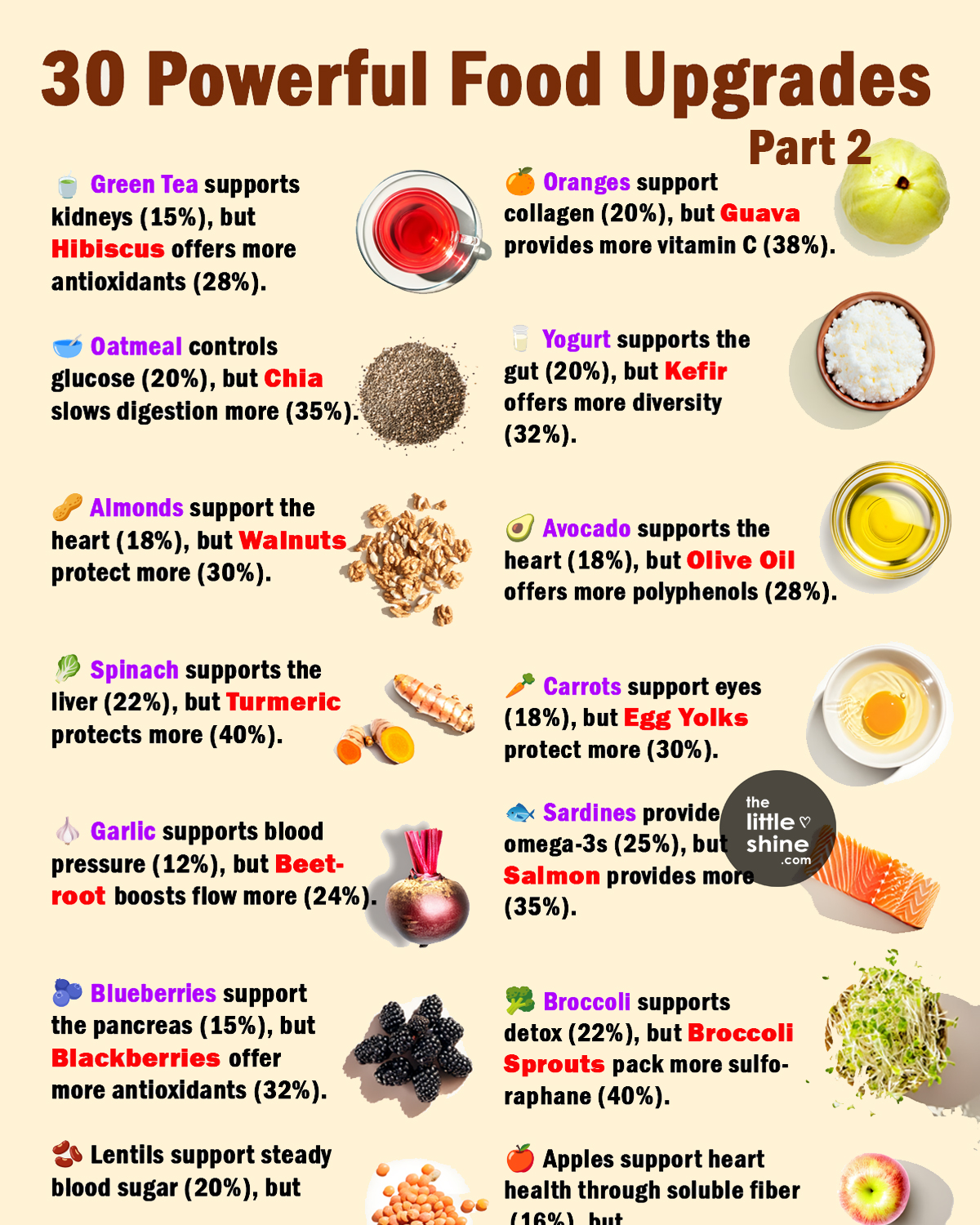
1. Green Tea 15% vs. Hibiscus Tea 28%
Green tea provides catechins and a small amount of caffeine. Hibiscus tea contains red-purple anthocyanins and other polyphenols. Both provide antioxidants, although hibiscus is a naturally caffeine-free option.
2. Oatmeal 20% vs. Chia Seeds 35%
Oatmeal contains beta-glucan, a soluble fiber that can help moderate the rise in blood sugar after a meal. Chia seeds absorb liquid and form a gel rich in fiber, which can slow digestion and help you feel satisfied longer. Research supports the effects of oat beta-glucan on post-meal glucose.
3. Almonds 18% vs. Walnuts 30%
Almonds provide vitamin E, magnesium, protein and monounsaturated fat. Walnuts are especially notable for alpha-linolenic acid, a plant-based omega-3 fat. Both are heart-friendly choices when eaten in sensible portions.
4. Spinach 22% vs. Turmeric 40%
Spinach provides folate, magnesium, fiber and protective carotenoids. Turmeric contains curcumin, a plant compound studied for its antioxidant and anti-inflammatory activity. However, ordinary culinary turmeric should not be considered a treatment for liver disease.
5. Garlic 12% vs. Beetroot 24%
Garlic contains sulfur compounds and may contribute to a heart-healthy eating pattern. Beetroot provides dietary nitrates that the body can convert into nitric oxide, helping blood vessels relax. Studies suggest that beetroot juice may modestly lower systolic blood pressure in some people with hypertension.
6. Lemon Water 10% vs. Coconut Water 22%
Lemon water encourages hydration and makes plain water more refreshing. Coconut water supplies potassium and smaller amounts of other electrolytes, making it particularly useful after exercise or heavy sweating.
7. Carrots 18% vs. Egg Yolks 30%
Carrots provide beta-carotene, which the body converts into vitamin A. Egg yolks contain lutein and zeaxanthin—two carotenoids found in the retina. Eating both provides more complete nutritional support for the eyes.
8. Strawberries 16% vs. Amla 35%
Strawberries provide vitamin C, fiber and protective plant compounds. Amla, also known as Indian gooseberry, can contain an especially concentrated combination of vitamin C and polyphenols.
9. Lentils 20% vs. Black Beans 30%
Lentils provide plant protein, iron, fiber and slowly digested carbohydrates. Black beans can offer slightly more fiber in certain servings, helping meals feel satisfying while supporting a steadier blood-sugar response.
10. Avocado 18% vs. Extra-Virgin Olive Oil 28%
Avocado provides fiber, potassium and monounsaturated fat. Extra-virgin olive oil supplies similar heart-friendly fats along with protective polyphenols. Use olive oil for cooking and dressings while adding avocado to salads, toast and bowls.
11. Oranges 20% vs. Guava 38%
Oranges are refreshing sources of vitamin C, water and fiber. Guava generally contains substantially more vitamin C by weight, making it a particularly concentrated choice for supporting normal collagen production.
12. Flaxseeds 22% vs. Sesame Seeds 30%
Flaxseeds provide fiber, alpha-linolenic acid and lignans. Sesame seeds contain different lignans, including sesamin and sesamolin. Neither seed is proven to balance hormones better, but including both provides a wider variety of beneficial plant compounds.
13. Kiwi 18% vs. Papaya 27%
Kiwi contains actinidin, while papaya contains papain. These natural enzymes help break down proteins. Both fruits also provide fiber, water and vitamin C for additional digestive support.
14. Dark Chocolate 20% vs. Cocoa Powder 32%
Dark chocolate contains cocoa flavanols but may also include considerable sugar and fat. Unsweetened cocoa powder can provide a more concentrated amount of cocoa solids with fewer added ingredients. Processing may reduce its flavanol content, so choose natural unsweetened cocoa when possible.
15. Green Peas 15% vs. Edamame 28%
Green peas provide fiber, vitamin C and plant protein. Edamame supplies considerably more protein per serving and contains all nine essential amino acids, making it a more substantial plant-protein option.
16. Brown Rice 18% vs. Quinoa 27%
Brown rice provides complex carbohydrates, manganese and steady energy. Quinoa generally offers more protein and contains all nine essential amino acids. Alternating between the two adds variety to grain bowls and main meals.
17. Onions 18% vs. Red Onions 30%
All onions contain sulfur compounds and antioxidants. Red onions also provide anthocyanins—the reddish-purple pigments associated with additional antioxidant activity.
18. Yogurt 20% vs. Kefir 32%
Yogurt supplies protein, calcium and beneficial bacterial cultures. Kefir is traditionally fermented with a mixture of bacteria and yeasts, often giving it a broader variety of live microorganisms. Choose plain varieties to avoid large amounts of added sugar.
19. Apples 16% vs. Pears 25%
Apples support digestive and heart health through soluble fiber such as pectin. Pears commonly provide slightly more total fiber per fruit, particularly when eaten with the skin.
20. Sunflower Seeds 20% vs. Almonds 30%
Sunflower seeds and almonds are both excellent sources of vitamin E. Sunflower seeds actually provide slightly more vitamin E per ounce, while almonds offer a balanced combination of vitamin E, magnesium, protein and healthy fats.
21. Sardines 25% vs. Salmon 35%
Sardines and salmon both supply protein and the omega-3 fats EPA and DHA. Salmon often provides a generous amount of omega-3s per serving, while sardines eaten with their soft bones offer the additional benefit of calcium.
22. Broccoli 22% vs. Broccoli Sprouts 40%
Broccoli provides fiber, vitamins C and K, folate and glucosinolates. Young broccoli sprouts can contain much higher concentrations of glucoraphanin, which the body uses to produce sulforaphane.
23. Ginger Tea 18% vs. Peppermint Tea 27%
Ginger tea may help settle occasional nausea and digestive discomfort. Peppermint tea can feel soothing after meals, although most clinical research for digestive conditions has studied concentrated peppermint oil rather than tea.
24. Blueberries 20% vs. Blackberries 28%
Blueberries provide anthocyanins and other polyphenols associated with brain and cardiovascular health. Blackberries contain a different mixture of protective compounds and generally provide more fiber per serving.
25. Cashews 18% vs. Pumpkin Seeds 35%
Cashews provide healthy fats, copper, protein and magnesium. Pumpkin seeds deliver considerably more magnesium per ounce, along with iron and zinc, making them an especially mineral-rich snack.
The Bottom Line
These foods should not be divided into “good” and “bad” groups. The higher-scoring choices simply highlight foods that may provide more of one particular nutrient or plant compound.
Enjoy oatmeal with chia seeds, spinach cooked with turmeric, yogurt alongside kefir and almonds mixed with walnuts. Combining these foods is often more beneficial—and far more enjoyable—than replacing one with another.