In the age of diet trends and viral nutrition advice, many foods have been unfairly labeled as “bad” simply because of how they look or outdated beliefs around fat, carbs, or calories. In reality, nutrition is far more nuanced. Several everyday foods that are often avoided can be highly nourishing when consumed in the right form and quantity.
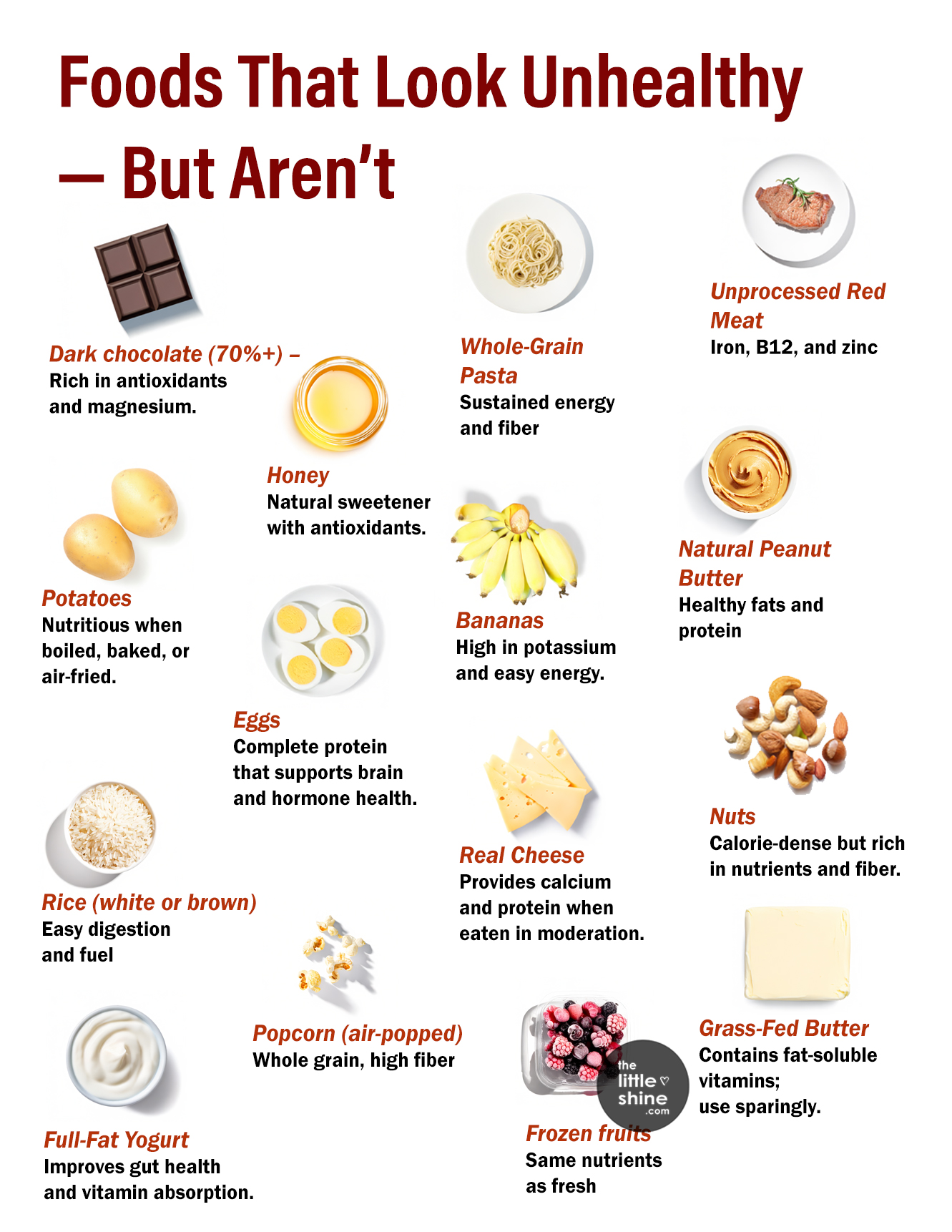
Let’s break down some foods that may look unhealthy at first glance—but actually support overall health.
1. Dark Chocolate (70% and above)
Dark chocolate is often lumped together with sugary desserts, but high-quality dark chocolate is rich in antioxidants, magnesium, and flavonoids. These compounds support heart health, brain function, and even mood. The key is choosing chocolate with at least 70% cocoa and minimal added sugar.
2. Potatoes
Potatoes are frequently blamed for weight gain, yet they are naturally rich in potassium, vitamin C, and fiber. When boiled, baked, or air-fried (not deep-fried), potatoes are filling, nourishing, and supportive of gut health—especially when eaten with the skin.
3. Rice (White or Brown)
Rice often gets criticized for being “empty carbs,” but it is an excellent source of easily digestible energy. White rice can be especially helpful for sensitive digestion, while brown rice provides more fiber and minerals. Both have a place in a balanced diet.
4. Full-Fat Yogurt
Fat-free dairy is not always the healthier choice. Full-fat yogurt supports better vitamin absorption (A, D, E, and K), improves gut health, and helps with satiety. Fermented dairy also contributes beneficial probiotics when minimally processed.
5. Honey
While honey is still a form of sugar, it is a natural sweetener containing antioxidants and antimicrobial compounds. Compared to refined sugar, honey has a lower glycemic impact when used in moderation and can be a better option for sweetening foods naturally.
6. Eggs
Eggs were once feared because of cholesterol, but research now confirms they are a powerhouse of nutrition. Eggs provide complete protein, choline for brain health, and nutrients that support hormone balance. For most people, eggs can be consumed regularly without concern.
7. Whole-Grain Pasta
Pasta is not inherently unhealthy. Whole-grain pasta provides sustained energy, fiber, and essential nutrients. When paired with protein, vegetables, and healthy fats, it can be part of a balanced and satisfying meal.
8. Bananas
Bananas are sometimes avoided due to their sugar content, but they are rich in potassium, vitamin B6, and quick, natural energy. They are particularly beneficial for active individuals and for replenishing energy stores.
9. Popcorn (Air-Popped)
Popcorn is a whole grain that is high in fiber and antioxidants. When air-popped and minimally seasoned, it is a nutrient-dense snack far removed from the butter-laden movie-theater version.
10. Real Cheese
Cheese often gets labeled as “fattening,” but real, minimally processed cheese provides calcium, protein, and beneficial fats. When eaten in moderation, it supports bone health and satiety.
11. Nuts
Nuts are calorie-dense, but they are also rich in healthy fats, fiber, protein, and minerals. Regular nut consumption has been linked to improved heart health and better blood sugar control.
12. Natural Peanut Butter
Natural peanut butter (without added sugar or hydrogenated oils) offers healthy fats and plant-based protein. It is highly satiating and supports sustained energy levels.
13. Unprocessed Red Meat
Unprocessed red meat is a valuable source of iron, vitamin B12, zinc, and high-quality protein. When consumed in appropriate portions and not heavily processed, it can support energy, muscle health, and nutrient sufficiency.
14. Grass-Fed Butter
Grass-fed butter contains fat-soluble vitamins and beneficial fatty acids. While it should be used sparingly, it can be part of a healthy diet, especially when replacing refined vegetable oils.
15. Frozen Fruits
Frozen fruits are often just as nutritious as fresh ones because they are frozen at peak ripeness. They are convenient, affordable, and reduce food waste while delivering the same vitamins and antioxidants.
The Bigger Picture
Health is not determined by demonizing single foods. It is shaped by overall dietary patterns, food quality, preparation methods, and moderation. Many foods that appear “unhealthy” are simply misunderstood.
Instead of focusing on food fear, focus on balance, variety, and listening to your body. Nutrition is not about perfection—it’s about making informed, sustainable choices.