
Our bodies send signals when something is off, but the source of a symptom isn’t always where you think it is. Sometimes everyday habits can mimic signs of a more serious problem. Before jumping to conclusions, consider these common possibilities.
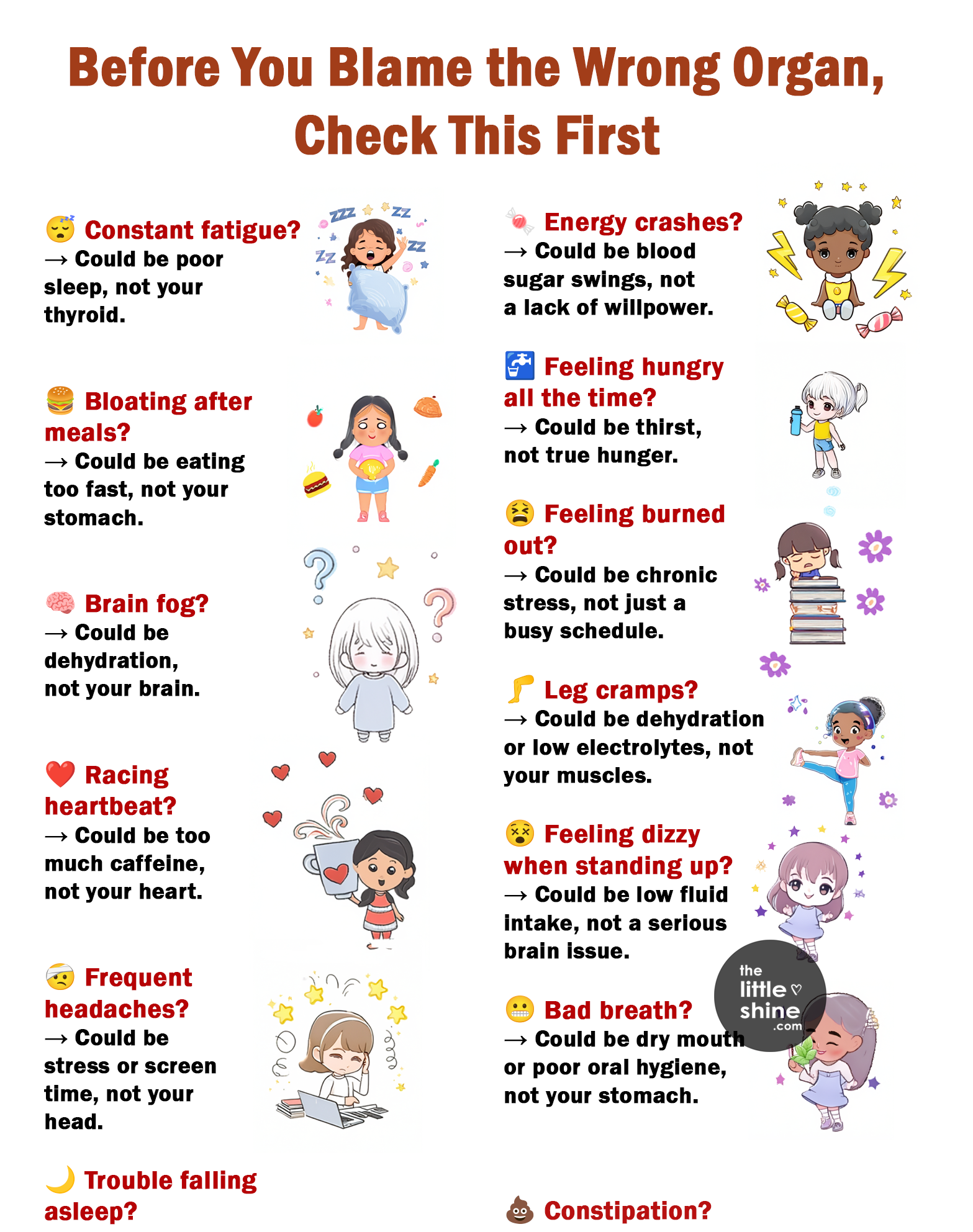
😴 Constant fatigue?
→ Could be poor sleep, not your thyroid.
🍔 Bloating after meals?
→ Could be eating too fast, not your stomach.
🧠 Brain fog?
→ Could be dehydration, not your brain.
❤️ Racing heartbeat?
→ Could be too much caffeine, not your heart.
🤕 Frequent headaches?
→ Could be stress or screen time, not your head.
🍬 Energy crashes?
→ Could be blood sugar swings, not a lack of willpower.
🚰 Feeling hungry all the time?
→ Could be thirst, not true hunger.
😫 Feeling burned out?
→ Could be chronic stress, not just a busy schedule.
🦵 Leg cramps?
→ Could be dehydration or low electrolytes, not your muscles.
😵 Feeling dizzy when standing up?
→ Could be low fluid intake, not a serious brain issue.
😬 Bad breath?
→ Could be dry mouth or poor oral hygiene, not your stomach.
🌙 Trouble falling asleep?
→ Could be late caffeine or screen exposure, not insomnia.
🍫 Strong sugar cravings?
→ Could be lack of protein or poor sleep, not weak self-control.
💩 Constipation?
→ Could be too little fiber, water, or movement, not your colon.
👀 Dry, tired eyes?
→ Could be too much screen time, not an eye disease.
🤧 Constant throat clearing?
→ Could be allergies or acid reflux, not a throat infection.
🥶 Always feeling cold?
→ Could be not eating enough calories, not necessarily a thyroid problem.
😤 Shortness of breath during activity?
→ Could be deconditioning, not always a lung issue.
😖 Jaw pain?
→ Could be teeth grinding or stress, not a dental emergency.
🌡️ Feeling hot and sweaty?
→ Could be anxiety, spicy food, or caffeine, not a fever.
Your Body Is More Connected Than You Think
When we experience a symptom, it’s natural to focus on the body part that seems affected. A headache must be a head problem. Bloating must be a stomach problem. Fatigue must be a thyroid problem.
But the human body doesn’t work in isolated compartments.
Poor sleep can affect hormones, energy, appetite, memory, and mood. Dehydration can trigger headaches, dizziness, brain fog, and cravings. Stress can contribute to digestive symptoms, muscle tension, sleep disturbances, and even a racing heart.
That’s why healthcare professionals look at the whole picture rather than a single symptom.
Common Habits That Can Cause Surprising Symptoms
✔ Not drinking enough water
✔ Sleeping less than 7–8 hours
✔ Excess caffeine
✔ Long hours of screen time
✔ Eating too quickly
✔ High stress levels
✔ Lack of physical activity
✔ Irregular meal patterns
✔ Poor posture
✔ Nutrient-poor diets
Small daily habits can create symptoms that feel much bigger than their actual cause.
When Should You Get Checked?
While many symptoms have simple explanations, persistent, severe, worsening, or unexplained symptoms should never be ignored.
Seek medical advice if symptoms:
- Last for several weeks
- Interfere with daily life
- Become progressively worse
- Are accompanied by alarming signs such as chest pain, fainting, unexplained weight loss, or severe pain
The Bottom Line
Symptoms are clues—not diagnoses. Before assuming the worst, take a look at your sleep, hydration, nutrition, stress levels, and daily habits. Sometimes the simplest explanation is the one hiding in plain sight.
This article is for educational purposes only and is not intended to diagnose, treat, or replace professional medical advice.