
Some everyday foods quietly pack an impressive amount of nutrition. From almonds and leafy greens to watermelon and chia seeds, these foods provide vitamins, minerals, fiber, healthy fats, protein, and protective plant compounds that help support normal body functions.
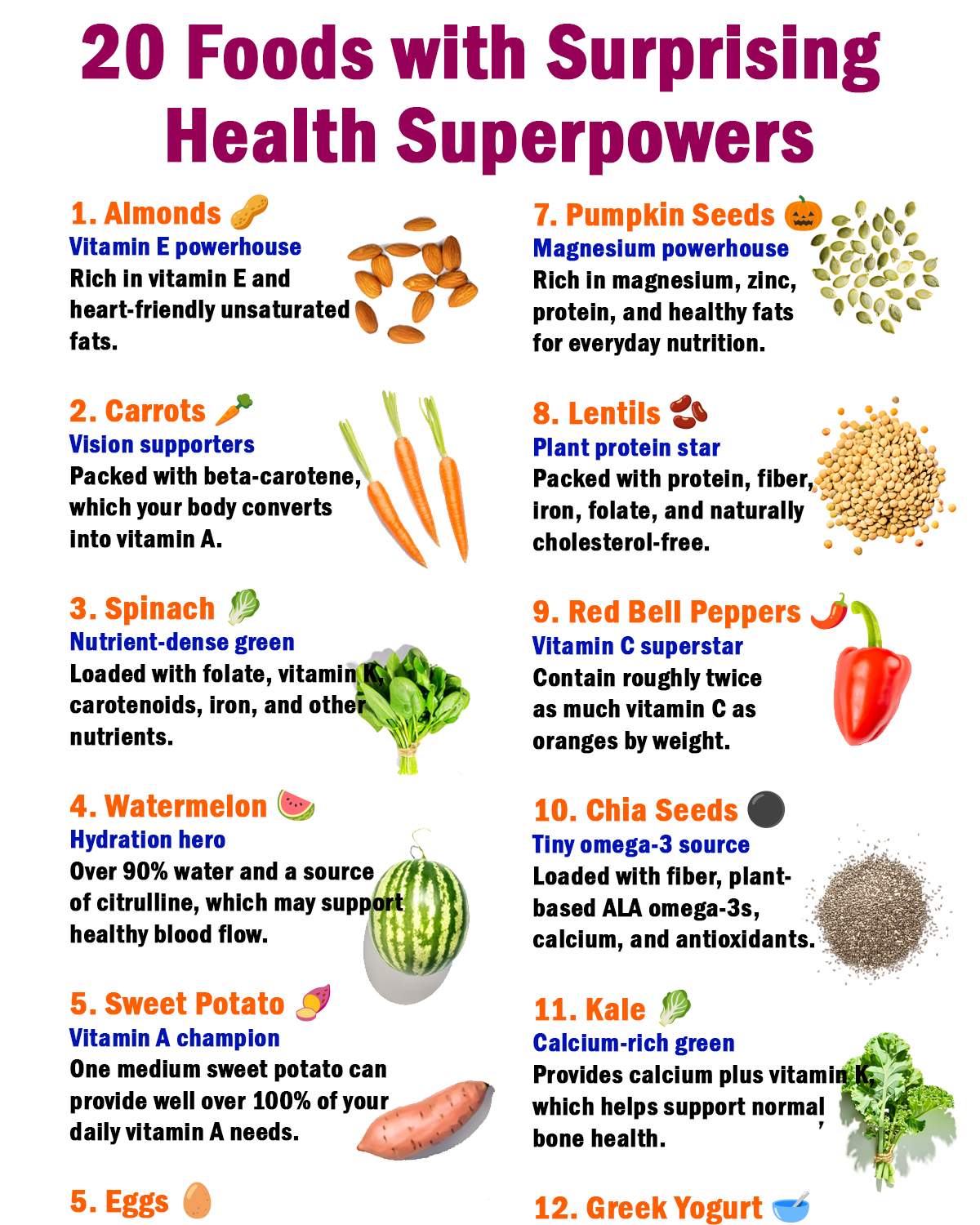
Of course, no single food is a magic cure. The real “superpower” comes from eating a varied, balanced diet. Here are 20 nutrient-rich foods worth putting on your plate more often.
1. Almonds 🥜
Vitamin E powerhouse
Almonds are rich in vitamin E, an antioxidant that helps protect cells from oxidative damage. They also provide heart-friendly unsaturated fats, fiber, magnesium, and plant protein. A small handful makes an easy snack or crunchy topping for yogurt, oatmeal, and salads.
2. Carrots 🥕
Vision supporters
Carrots are packed with beta-carotene, a plant pigment that the body can convert into vitamin A. Vitamin A is important for normal vision, immune function, and healthy skin. Carrots also provide fiber and other antioxidants.
3. Spinach 🥬
Nutrient-dense green
Spinach delivers a lot of nutrition for very few calories. It contains folate, vitamin K, carotenoids, iron, and several other vitamins and minerals. Add it to eggs, soups, pasta, salads, or smoothies for an easy nutritional boost.
4. Watermelon 🍉
Hydration hero
Watermelon is more than 90% water, making it a refreshing way to help with hydration. It also contains vitamin C, lycopene, and the amino acid citrulline, which has been studied for its potential role in supporting normal blood flow.
5. Sweet Potato 🍠
Vitamin A champion
Sweet potatoes are especially rich in beta-carotene. Depending on its size and variety, one sweet potato can provide a substantial amount of your daily vitamin A needs. Sweet potatoes also supply fiber, potassium, and vitamin C.
6. Pumpkin Seeds 🎃
Magnesium powerhouse
Pumpkin seeds may be tiny, but they are loaded with nutrients. They provide magnesium, zinc, plant protein, iron, and healthy unsaturated fats. Sprinkle them over salads, yogurt, oatmeal, or roasted vegetables for extra crunch.
7. Lentils 🫘
Plant-protein star
Lentils are an affordable source of plant protein and fiber. They also contain iron, folate, potassium, and other minerals while being naturally cholesterol-free. Their combination of protein and fiber can also make meals more satisfying.
8. Red Bell Peppers 🌶️
Vitamin C superstar
Red bell peppers are remarkably rich in vitamin C and can contain considerably more vitamin C by weight than oranges. They also provide vitamin A precursors and colorful antioxidants called carotenoids.
9. Chia Seeds ⚫
Tiny omega-3 source
Chia seeds contain plenty of fiber along with plant-based ALA omega-3 fats, calcium, magnesium, and antioxidants. When mixed with liquid, they absorb water and form a gel, making them useful for chia pudding, overnight oats, and smoothies.
10. Kale 🥬
Calcium-rich green
Kale supplies calcium along with vitamin K, vitamin C, carotenoids, and fiber. Vitamin K plays an important role in normal blood clotting and bone health. Kale works well in salads, soups, stir-fries, and roasted vegetable dishes.
11. Blueberries 🫐
Antioxidant powerhouse
Blueberries are rich in anthocyanins, the pigments responsible for their deep blue-purple color. They also provide vitamin C, fiber, and other plant compounds. Fresh or frozen blueberries are easy additions to breakfast bowls, yogurt, and smoothies.
12. Greek Yogurt 🥣
Protein + probiotic boost
Greek yogurt is typically higher in protein than regular yogurt and is also a good source of calcium. Varieties containing live cultures provide beneficial bacteria that can contribute to a healthy gut microbiome. Choose lower-sugar options when possible.
13. Broccoli 🥦
Vitamin C champion
Broccoli provides vitamin C, vitamin K, folate, fiber, and several beneficial plant compounds. It is nutritious whether eaten raw or cooked, although gentle steaming can help preserve many of its nutrients.
14. Eggs 🥚
Nutrition in a shell
Eggs provide high-quality protein along with choline, vitamin B12, selenium, and several other nutrients. Choline is particularly important for normal brain and nervous-system function. Eggs are also wonderfully versatile, from scrambled breakfasts to quick salads.
15. Oats 🌾
Heart-friendly fiber
Oats contain a soluble fiber called beta-glucan. Regular consumption of oat beta-glucan as part of a healthy diet can help support healthy cholesterol levels. Oats also provide manganese, magnesium, iron, and plant protein.
16. Tomatoes 🍅
Lycopene superstar
Tomatoes are one of the best-known dietary sources of lycopene, a red antioxidant pigment. They also provide vitamin C, potassium, and folate. Interestingly, cooking tomatoes can make some of their lycopene easier for the body to absorb.
17. Avocado 🥑
Healthy-fat hero
Avocados are rich in monounsaturated fats, the same general type of unsaturated fat found in olive oil. They also contain fiber, potassium, folate, vitamin K, and vitamin E. Their creamy texture makes them useful far beyond avocado toast.
18. Sardines 🐟
Tiny calcium powerhouse
Sardines pack a surprising amount of nutrition into a small fish. They provide protein, omega-3 fats, vitamin B12, selenium, and vitamin D. Canned sardines eaten with their soft edible bones can also be an excellent source of calcium.
19. Kiwi 🥝
Vitamin C surprise
Kiwi fruit is particularly rich in vitamin C and also provides fiber, potassium, vitamin K, and antioxidants. One or two kiwis make an easy snack and can add a bright sweet-tart flavor to breakfast bowls and fruit salads.
20. Beans 🫘
Fiber + protein combo
Beans provide an impressive combination of plant protein and fiber along with iron, potassium, magnesium, and folate. Black beans, kidney beans, chickpeas, pinto beans, and other varieties can help turn simple meals into filling, nutrient-rich dishes.
The Bigger Picture
The most useful lesson isn’t that one food deserves a superhero cape. 🦸♀️ It’s that different foods bring different nutrients to the table.
Nuts and seeds contribute healthy fats and minerals. Fruits and vegetables provide vitamins, fiber, and colorful plant compounds. Beans and lentils bring plant protein and fiber. Eggs, yogurt, and sardines provide concentrated protein and important micronutrients.
Instead of searching for one perfect “superfood,” aim for variety. A colorful plate filled with vegetables, fruits, whole grains, beans, nuts, seeds, and quality protein sources gives your body a much broader nutritional toolkit.
Simple rule: Eat more variety, not more hype.