
Getting enough vitamins and minerals is important—but when and how you take them can also make a difference. Some nutrients work together to improve absorption and effectiveness, while others may compete for absorption if taken at the same time.
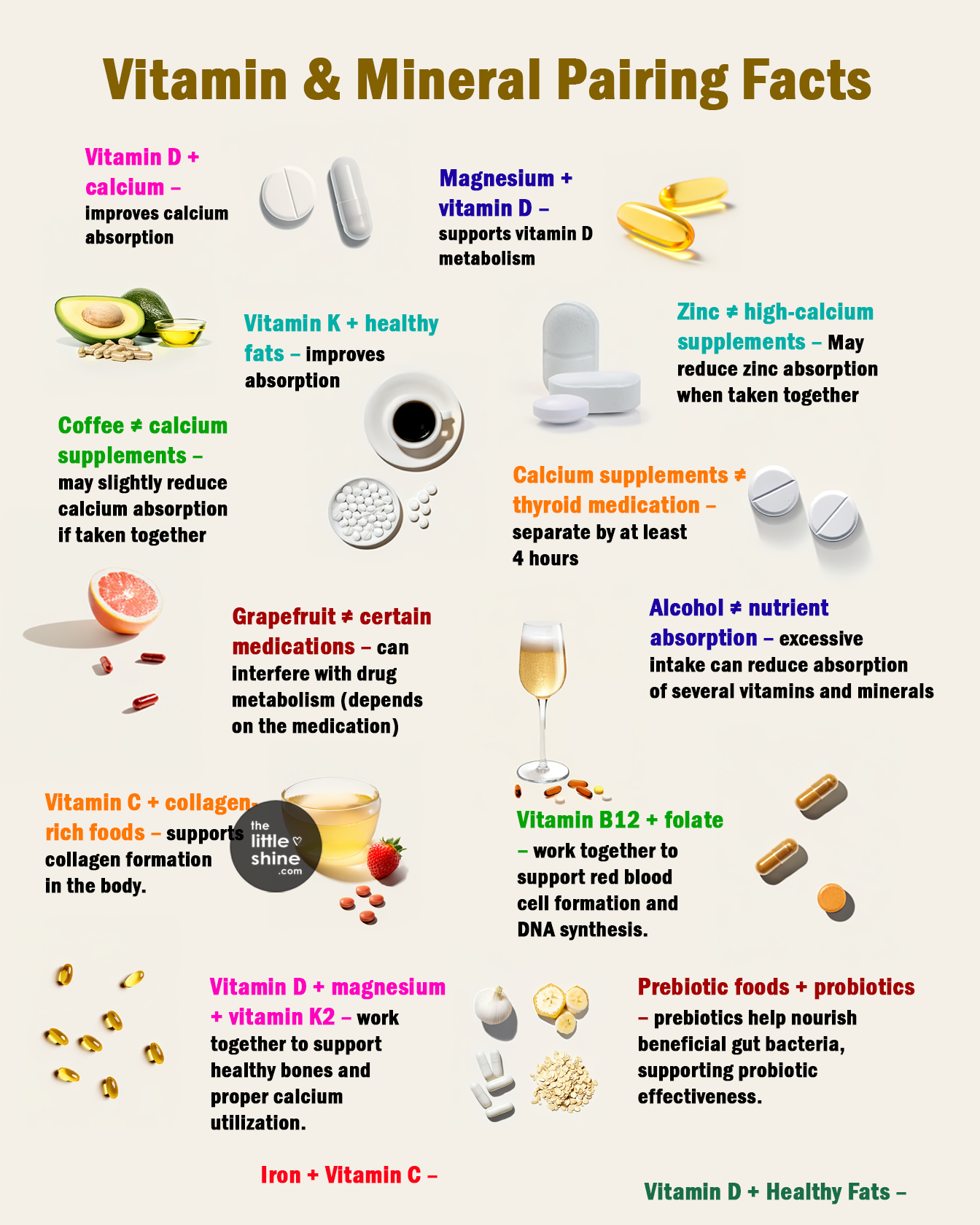
Here’s a practical guide to some of the most useful vitamin and mineral pairings.
Nutrients That Work Better Together
☀️ Vitamin D + Calcium
Vitamin D helps your body absorb calcium from food and supplements, making this one of the most important combinations for maintaining healthy bones and teeth.
🌿 Magnesium + Vitamin D
Magnesium plays a role in activating and metabolizing vitamin D. Low magnesium levels may reduce how effectively your body uses vitamin D.
🦴 Vitamin D + Magnesium + Vitamin K2
These three nutrients work together to support bone health. Vitamin D increases calcium absorption, magnesium supports vitamin D metabolism, and vitamin K2 helps direct calcium toward bones and teeth instead of soft tissues.
🍊 Iron + Vitamin C
Vitamin C significantly improves the absorption of non-heme iron, the type of iron found in plant foods and many supplements. Pair iron-rich foods with citrus fruits, strawberries, bell peppers, or tomatoes for better absorption.
🥩 Vitamin B12 + Folate
Vitamin B12 and folate work together to support DNA synthesis, healthy nerve function, and the production of red blood cells.
🍓 Vitamin C + Collagen-Rich Foods
Your body needs vitamin C to produce collagen. Eating vitamin C-rich foods alongside collagen-containing foods or collagen supplements supports normal collagen formation.
🦠 Prebiotic Foods + Probiotics
Prebiotics are fibers that feed beneficial gut bacteria. Combining prebiotic-rich foods—such as onions, garlic, bananas, oats, and asparagus—with probiotics may help support a healthy gut microbiome.
🥑 Fat-Soluble Vitamins + Healthy Fats
The fat-soluble vitamins are best absorbed when eaten with meals containing healthy fats.
- Vitamin A + Healthy Fats
- Vitamin D + Healthy Fats
- Vitamin E + Healthy Fats
- Vitamin K + Healthy Fats
Good fat sources include avocado, olive oil, nuts, seeds, fatty fish, and nut butters.
Nutrient Combinations That May Interfere with Absorption
🚫 Iron + Calcium Supplements
Calcium can reduce iron absorption when both are taken together. If you take both supplements, consider separating them by at least 2 hours unless your healthcare provider recommends otherwise.
☕ Iron + Coffee or Tea
Coffee and tea contain compounds called polyphenols and tannins that can decrease iron absorption. Try to avoid drinking them for about 1–2 hours before or after taking iron.
🌾 Iron + High-Fiber Foods
Large amounts of fiber may reduce iron absorption when consumed at the same time. If taking an iron supplement, taking it separately from very high-fiber meals may improve absorption.
⚖️ Zinc + High-Calcium Supplements
Large calcium supplements may reduce zinc absorption if taken together regularly. This interaction is generally less concerning with calcium obtained from foods.
🧲 Copper + High-Dose Zinc
Long-term use of high-dose zinc supplements can reduce copper absorption and may eventually lead to copper deficiency. Balanced supplementation is often recommended when high-dose zinc is used for extended periods.
🧈 Vitamin A + Excess Vitamin E
Very high doses of vitamin E may interfere with vitamin A function. This is mainly a concern with high-dose supplements rather than normal dietary intake.
☕ Coffee + Calcium Supplements
Coffee may slightly reduce calcium absorption if consumed at the same time. If you’re taking a calcium supplement, consider spacing it away from coffee.
🦋 Calcium Supplements + Thyroid Medication
Calcium supplements can interfere with the absorption of thyroid medications such as levothyroxine. They should generally be taken at least 4 hours apart.
🍊 Grapefruit + Certain Medications
Grapefruit and grapefruit juice can interfere with the metabolism of certain medications, increasing or decreasing their effects. This interaction depends on the specific medication, so always follow your healthcare provider’s guidance.
🍷 Alcohol + Nutrient Absorption
Excessive alcohol intake can reduce the absorption and storage of several vitamins and minerals, including B vitamins, vitamin D, calcium, magnesium, and zinc.
🦴 Calcium + Magnesium
Calcium and magnesium are generally safe to take together in moderate amounts. However, very large supplemental doses may compete for absorption in some people. If taking high-dose supplements, separating them may improve tolerance and absorption.
Quick Reference
✅ Good Pairings
- Vitamin D + Calcium
- Magnesium + Vitamin D
- Vitamin D + Magnesium + Vitamin K2
- Iron + Vitamin C
- Vitamin B12 + Folate
- Vitamin C + Collagen-Rich Foods
- Prebiotic Foods + Probiotics
- Vitamin A + Healthy Fats
- Vitamin D + Healthy Fats
- Vitamin E + Healthy Fats
- Vitamin K + Healthy Fats
⚠️ Better Taken Separately
- Iron + Calcium Supplements
- Iron + Coffee or Tea
- Iron + High-Fiber Foods
- Zinc + High-Calcium Supplements
- Copper + High-Dose Zinc
- Coffee + Calcium Supplements
- Calcium Supplements + Thyroid Medication
- Grapefruit + Certain Medications
- Excess Alcohol + Nutrient Absorption
- Very High Vitamin E + Vitamin A
Final Thoughts
A balanced diet remains the best way to obtain most vitamins and minerals. While certain nutrient combinations can improve absorption and others may interfere, these interactions are usually most relevant with supplements or high-dose intake rather than normal meals.
If you take prescription medications or multiple supplements, it’s a good idea to discuss your routine with your healthcare provider or pharmacist to ensure you’re taking them safely and effectively.