
We often blame one body part when something doesn’t feel right.
Headache? “My brain is the problem.”
Heart racing? “Something’s wrong with my heart.”
Upset stomach? “My stomach is acting up.”
But in many cases, your body isn’t broken—it’s responding to your daily habits.
Every organ is part of the same team, and they constantly communicate with each other. What feels like an organ problem can sometimes be your body’s way of asking for better sleep, nutrition, movement, hydration, or stress management.
Here’s what your body might be trying to tell you:
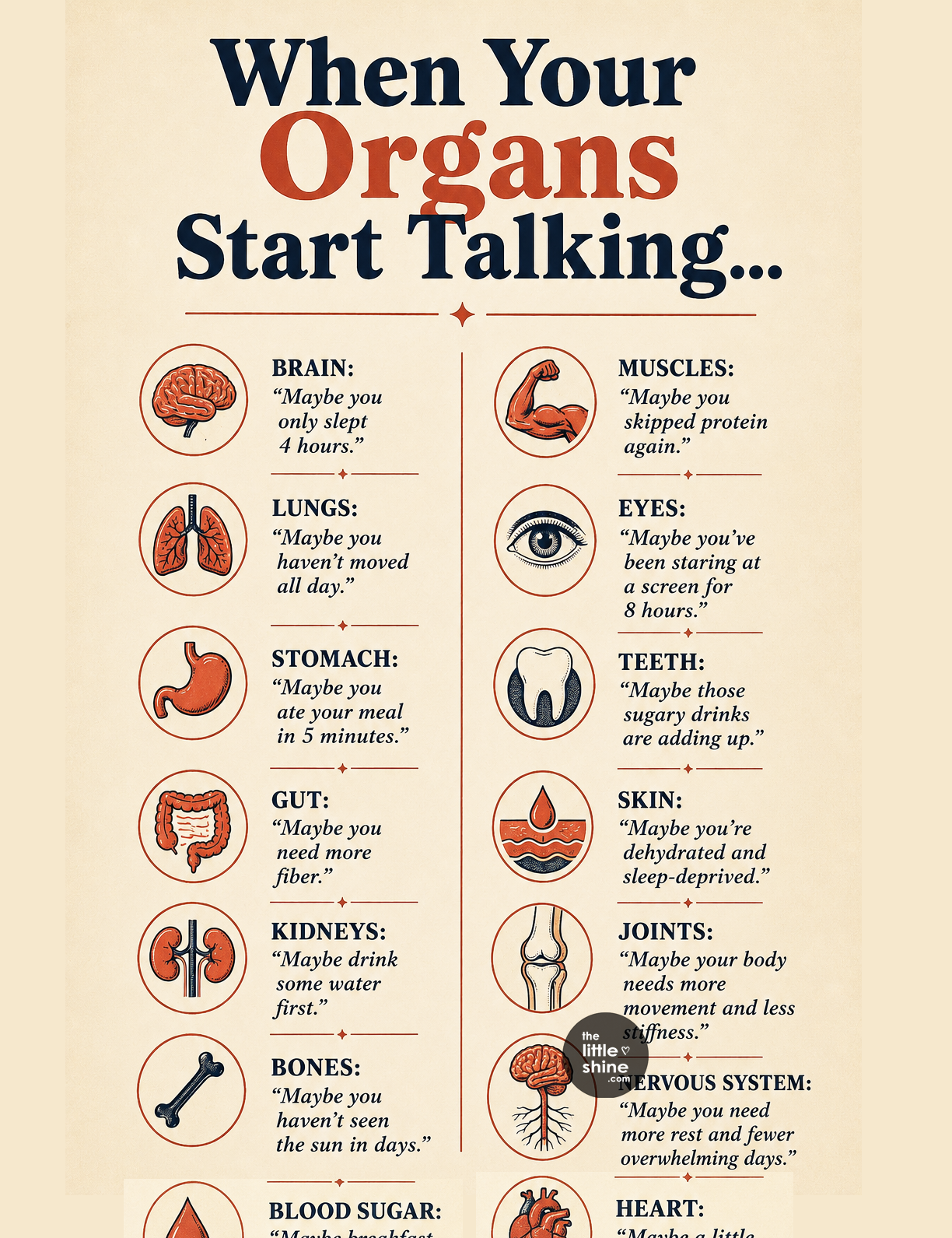
🧠 Brain:
“Maybe you only slept 4 hours.”
Sleep is when your brain restores itself. Lack of sleep can affect focus, mood, decision-making, and memory.
🫁 Lungs:
“Maybe you haven’t moved all day.”
Regular movement helps your lungs work efficiently and supports overall fitness. Even a short walk can make a difference.
🍽️ Stomach:
“Maybe you ate your meal in 5 minutes.”
Eating too quickly may contribute to indigestion and make it harder to notice when you’re full.
🦠 Gut:
“Maybe you need more fiber.”
Your gut microbes thrive on fiber from fruits, vegetables, legumes, and whole grains. They help support digestion and overall health.
🧂 Kidneys:
“Maybe drink some water first.”
Mild dehydration can leave you feeling tired and may affect how your body functions. Drinking enough water is one simple habit that supports kidney health.
🦴 Bones:
“Maybe you haven’t seen the sun in days.”
Vitamin D and weight-bearing exercise both play important roles in keeping bones strong.
💪 Muscles:
“Maybe you skipped protein again.”
Protein helps repair and maintain muscle tissue, especially after physical activity.
👀 Eyes:
“Maybe you’ve been staring at a screen for 8 hours.”
Long periods of screen time can cause eye strain. Remember to blink, take breaks, and look away from the screen regularly.
🦷 Teeth:
“Maybe those sugary drinks are adding up.”
Frequent sugar exposure can increase the risk of tooth decay. Water is often the better choice between meals.
🧴 Skin:
“Maybe you’re dehydrated and sleep-deprived.”
Hydration, sleep, nutrition, and sun protection all contribute to healthy-looking skin.
🩸 Blood Sugar:
“Maybe breakfast was just coffee.”
Balanced meals with protein, fiber, and healthy fats can help maintain steady energy levels throughout the day.
🧬 Immune System:
“Maybe stress has been running the show lately.”
Long-term stress can influence immune function. Sleep, exercise, and nutritious food all help support your body’s natural defenses.
🦵 Joints:
“Maybe sitting all day isn’t helping.”
Regular movement helps keep joints flexible and muscles strong. Small movement breaks throughout the day can add up.
🧠 Memory:
“Maybe your brain needs a break, not another tab open.”
Constant multitasking can make it harder to concentrate and remember information. Your brain benefits from moments of rest.
😴 Energy Levels:
“Maybe rest is the answer, not another energy drink.”
Fatigue isn’t always something to push through. Sometimes your body simply needs recovery.
🌿 Liver:
“Maybe ease up on the ultra-processed foods.”
Your liver works around the clock to process nutrients and filter substances. A balanced diet supports its many important jobs.
🦠 Microbiome:
“Maybe your good bacteria are hungry for real food.”
A diverse diet rich in plant foods helps nourish the trillions of beneficial microbes living in your gut.
🫀 Heart:
“Maybe a little less stress and more self-care.”
Chronic stress can keep your heart working harder than it needs to. Finding time to relax isn’t a luxury—it’s part of caring for your cardiovascular health.
❤️🩹 Nervous System:
“Maybe you haven’t had a quiet moment all week.”
Your nervous system wasn’t designed for nonstop notifications, deadlines, and constant stimulation. Taking time to relax can help your body shift into recovery mode.
Listen Before You Panic
Not every symptom means something is seriously wrong, and not every problem can be fixed by changing a habit. Persistent, severe, or concerning symptoms should always be evaluated by a healthcare professional.
But many everyday complaints are also reminders to check in with your routine.
Ask yourself:
- Am I getting enough sleep?
- Have I been drinking enough water?
- Am I eating balanced meals?
- Have I moved my body today?
- Have I been under constant stress?
- When was the last time I truly rested?
Small habits, repeated consistently, often have a bigger impact than dramatic changes.
Your body is constantly talking to you. Sometimes the symptoms aren’t the problem—the habits are. Listening early may help you take better care of yourself—one healthy choice at a time.