
Vitamins often get all the attention, but minerals are just as important. Your body relies on them every day to keep your heart beating, muscles moving, bones strong, and brain functioning properly. Since your body can’t produce most minerals on its own, you need to get them from the foods you eat.
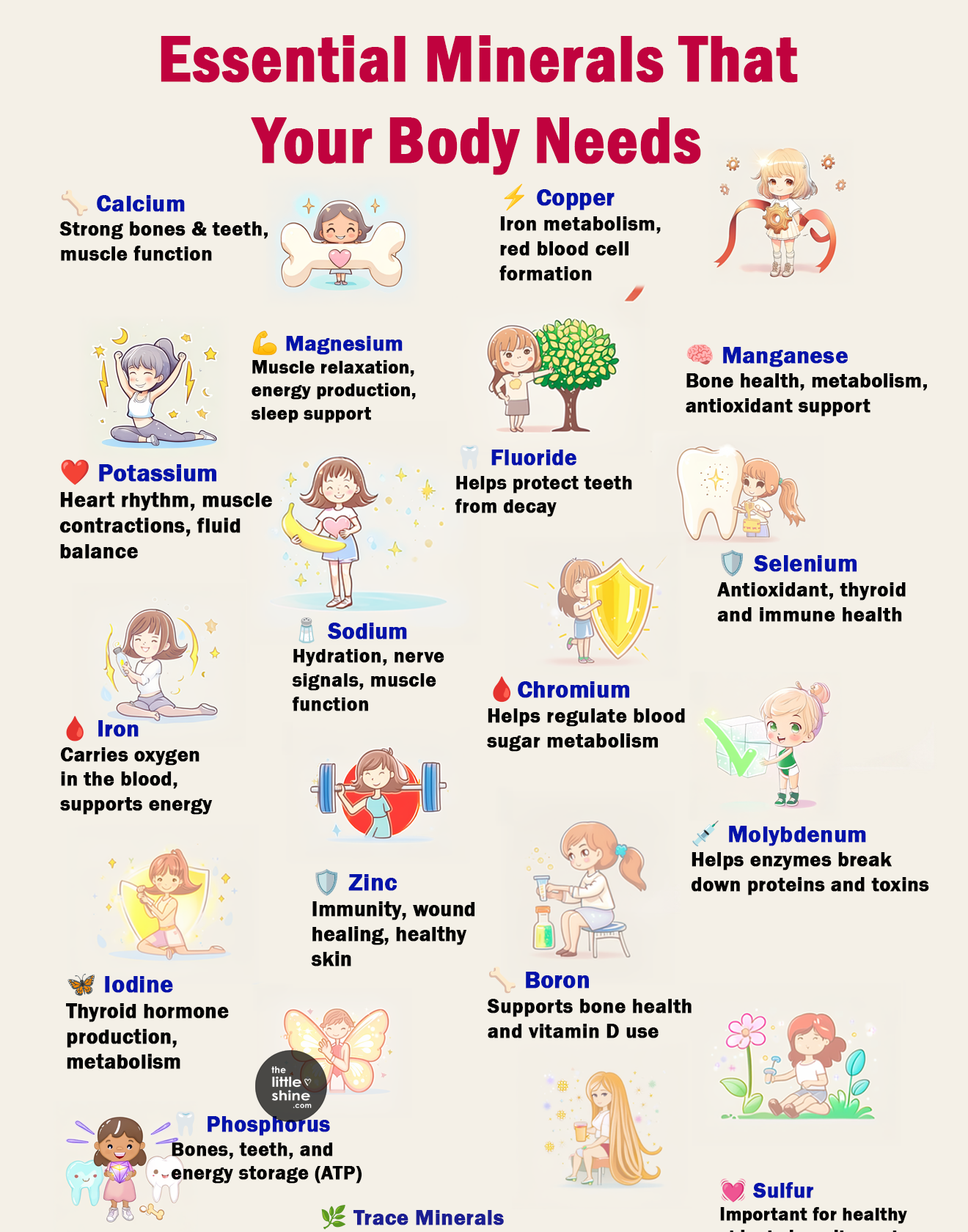
🦴 Calcium
What it does: Builds strong bones and teeth, supports muscle contractions, and helps nerves send signals.
Good sources: Milk, yogurt, cheese, fortified plant milks, tofu, kale, broccoli.
💪 Magnesium
What it does: Helps muscles relax, supports hundreds of chemical reactions, promotes healthy sleep, and produces energy.
Good sources: Pumpkin seeds, almonds, spinach, black beans, whole grains.
❤️ Potassium
What it does: Helps regulate blood pressure, supports heart rhythm, balances fluids, and keeps muscles working properly.
Good sources: Bananas, potatoes, avocados, beans, oranges, spinach.
🧂 Sodium
What it does: Maintains fluid balance, supports nerve function, and helps muscles contract.
Good sources: Naturally found in many foods and added to table salt. Most people already get enough.
🩸 Iron
What it does: Carries oxygen throughout your body and helps prevent fatigue.
Good sources: Red meat, poultry, seafood, lentils, beans, spinach, fortified cereals.
🛡️ Zinc
What it does: Supports immunity, wound healing, healthy skin, and normal growth.
Good sources: Meat, shellfish, dairy, nuts, seeds, legumes.
🦋 Iodine
What it does: Essential for making thyroid hormones that regulate metabolism.
Good sources: Iodized salt, seafood, dairy products, seaweed.
🦷 Phosphorus
What it does: Works with calcium to build bones and teeth while helping your body produce energy.
Good sources: Dairy products, meat, fish, eggs, nuts, beans.
⚡ Copper
What it does: Helps your body use iron, supports red blood cell production, and contributes to healthy nerves.
Good sources: Liver, shellfish, nuts, seeds, cocoa, whole grains.
🧠 Manganese
What it does: Supports metabolism, bone formation, and antioxidant defenses.
Good sources: Whole grains, nuts, leafy greens, tea.
🦷 Fluoride
What it does: Strengthens tooth enamel and helps prevent cavities.
Good sources: Fluoridated water, tea, seafood.
🛡️ Selenium
What it does: Acts as an antioxidant and supports thyroid and immune function.
Good sources: Brazil nuts, seafood, eggs, poultry.
🩸 Chromium
What it does: Helps your body process carbohydrates and supports normal blood sugar metabolism.
Good sources: Broccoli, whole grains, meat, green beans.
💉 Molybdenum
What it does: Helps enzymes break down proteins and remove certain waste products.
Good sources: Beans, lentils, peas, whole grains.
🦴 Boron
What it does: Supports bone health and helps your body use vitamin D, calcium, and magnesium efficiently.
Good sources: Raisins, prunes, almonds, peanuts, avocados.
💓 Sulfur
What it does: Important for healthy skin, hair, nails, joints, and connective tissues.
Good sources: Eggs, garlic, onions, broccoli, cabbage, legumes.
Trace Minerals (Needed in Tiny Amounts)
🦷 Chloride
Supports hydration, fluid balance, and stomach acid production.
🩸 Cobalt
A component of vitamin B12 that helps produce healthy red blood cells.
💪 Nickel
May assist certain enzyme functions in very small amounts.
⚙️ Silicon
Supports healthy bones, skin, hair, and connective tissues.
🦴 Vanadium
May contribute to bone health and glucose metabolism, although it isn’t considered essential by all health authorities.
The Bottom Line
Your body needs a wide variety of minerals every single day. The easiest way to get them is by eating a colorful, balanced diet that includes fruits, vegetables, whole grains, legumes, nuts, seeds, dairy or fortified alternatives, seafood, eggs, and lean proteins.
Instead of focusing on one “superfood,” aim for variety. Different foods provide different minerals, and together they help keep your body strong, energized, and functioning at its best.