
We often hear that certain foods are “superfoods” and others are “bad.” But the truth is more interesting: almost every natural food contains small compounds that could be harmful in very high amounts.
These compounds are usually part of the plant or food’s natural defense system. In normal diets, they are harmless or even beneficial, but they sound scary when you hear their chemical names.
Let’s meet some of the tiny villains hiding in everyday foods.
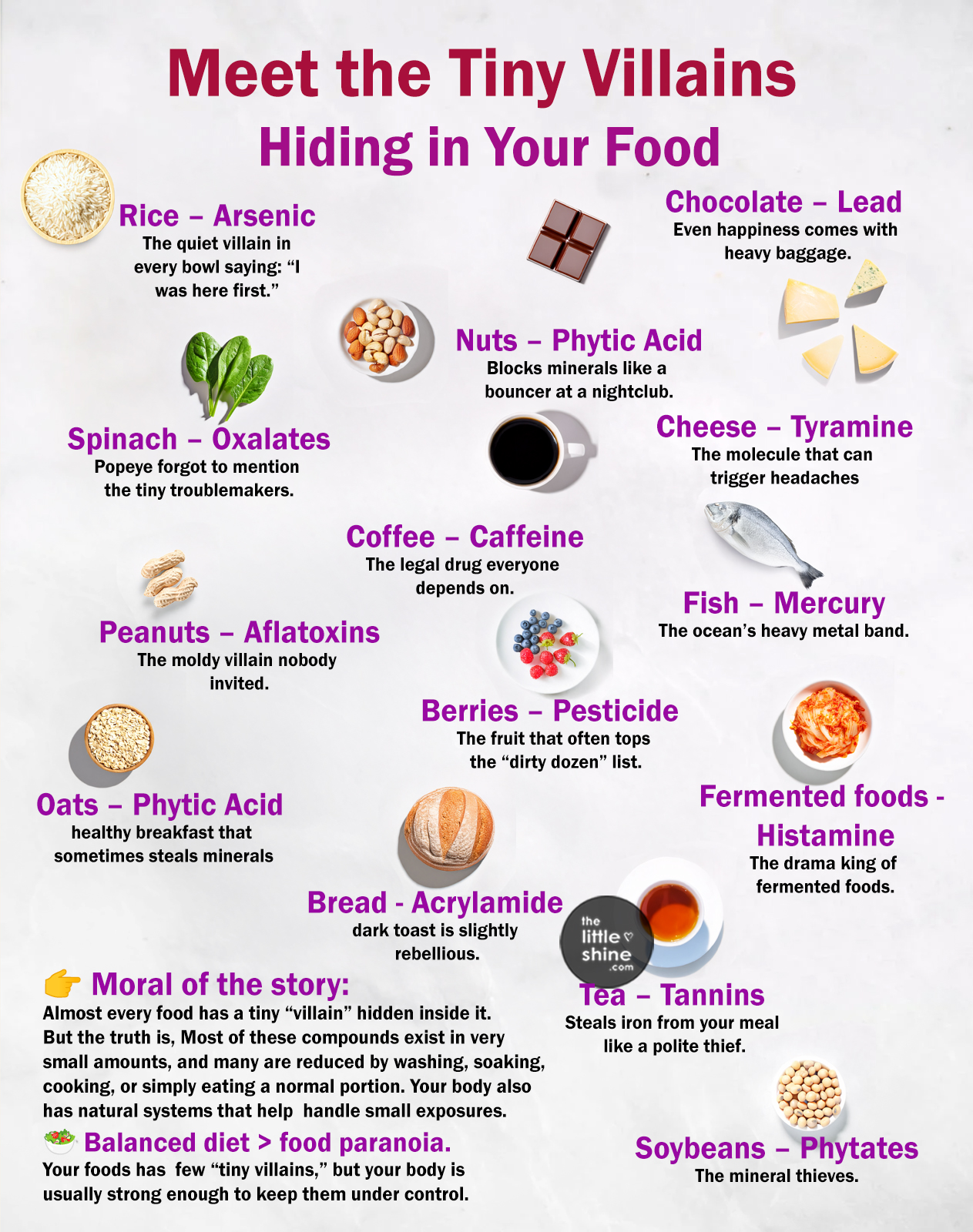
🍚 Rice – Arsenic
Rice naturally absorbs arsenic from soil and water. It’s one reason experts recommend washing rice well and not eating extremely large amounts daily.
🍫 Chocolate (Cocoa) – Lead & Cadmium
Cocoa plants can absorb heavy metals from soil. That means your favorite chocolate may contain tiny traces of lead or cadmium, especially dark chocolate.
🥜 Nuts – Phytic Acid
Nuts contain phytic acid, which can bind minerals like iron and zinc and reduce their absorption.
This is why soaking or roasting nuts is common in many traditional diets.
🥬 Spinach – Oxalates
Spinach is packed with nutrients but also contains oxalates, compounds that can contribute to kidney stones in sensitive individuals.
🥔 Potatoes (Green or Sprouted) – Solanine
When potatoes turn green or start sprouting, they produce solanine, a natural toxin.
That’s why green potatoes should be avoided.
🌿 Cassava – Cyanogenic Compounds
Cassava contains cyanogenic glycosides that can release cyanide if not processed properly.
Traditional cooking methods remove these compounds.
🫘 Kidney Beans (Raw) – Lectins
Raw or undercooked kidney beans contain phytohaemagglutinin, a lectin that can cause stomach problems.
Proper boiling destroys it.
🌰 Apricot Kernels – Amygdalin
Apricot kernels contain amygdalin, which can release cyanide when digested.
Eating large quantities is unsafe.
🐟 Tuna & Large Fish – Mercury
Large fish accumulate mercury from ocean pollution over time, which is why intake is often recommended in moderation.
🥜 Peanuts – Aflatoxins
Peanuts can develop aflatoxins, mold toxins that grow if peanuts are poorly stored.
Modern food safety systems monitor and limit these.
🌿 Cinnamon (Cassia) – Coumarin
Cassia cinnamon contains coumarin, which in very high doses can affect the liver.
🥯 Poppy Seeds – Trace Opiates
Poppy seeds naturally contain tiny traces of opiates from the plant.
🍎 Apple Seeds – Amygdalin
Apple seeds also contain amygdalin, which can release small amounts of cyanide if crushed and eaten in large quantities.
🍄 Wild Mushrooms – Natural Toxins
Some wild mushrooms contain powerful toxins, which is why proper identification is critical before consuming them.
🍵 Green Tea – Tannins
Green tea contains tannins, which can interfere with iron absorption when consumed in very high amounts.
☕ Coffee – Caffeine
Coffee’s active compound, caffeine, is a natural stimulant designed by plants to deter insects.
🍞 Bread (Especially Burnt Toast) – Acrylamide
When bread is over-toasted, a compound called acrylamide can form.
🧀 Aged Cheese – Tyramine
Aged cheeses contain tyramine, which may trigger headaches in some people.
🥛 Milk – Lactose
Milk contains lactose, which many adults struggle to digest due to lactose intolerance.
🥚 Raw Eggs – Avidin
Raw egg whites contain avidin, which can bind to biotin and reduce its absorption.
🌶 Chili Peppers – Capsaicin
The compound that makes chili peppers spicy is capsaicin, which literally causes the burning sensation.
🧩 The Real Lesson
The surprising truth is that almost every natural food contains chemical compounds that sound scary.
But the key point is this:
👉 Dose matters.
👉 Preparation matters.
👉 Variety in diet matters.
In normal amounts, these foods are perfectly safe and often extremely healthy.
Nature doesn’t make perfect foods — it makes balanced ones.