
Living longer is no longer the only goal—living healthier for longer is what truly matters. Scientists call this healthspan, the number of years you live free from chronic disease, pain, and cognitive decline. The good news is that longevity is not just determined by genetics. Research shows that daily lifestyle choices influence up to 80% of how well we age. Here is a simple blueprint to help build a longer, healthier life.
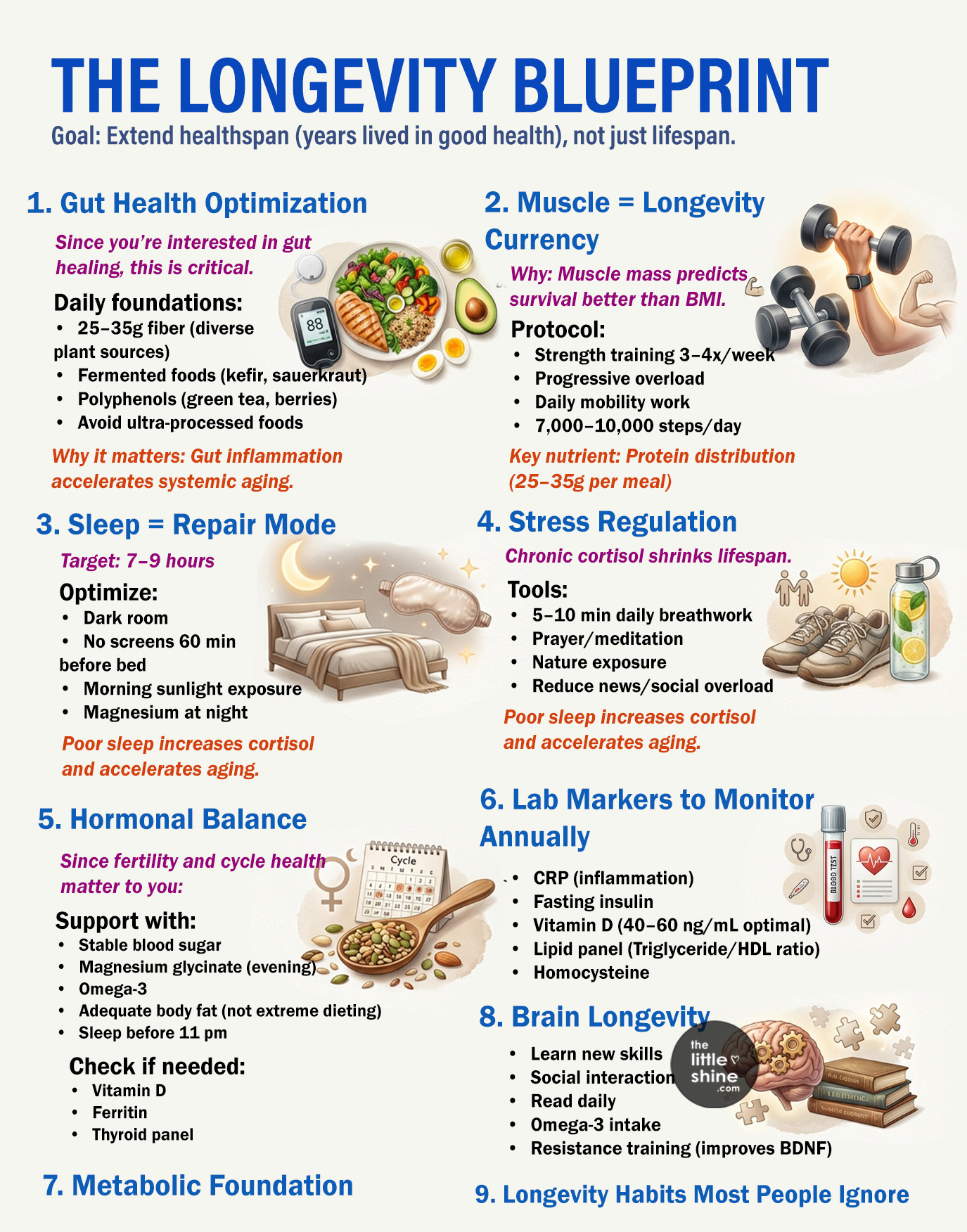
1. Build a Strong Metabolic Foundation
One of the biggest drivers of aging today is poor metabolic health. Frequent spikes in blood sugar and insulin can accelerate inflammation, weight gain, and chronic disease.
To support metabolic health:
- Focus on protein-rich meals
- Combine carbohydrates with fiber and healthy fats
- Avoid constant snacking throughout the day
- Maintain a 12–14 hour overnight fasting window
- Take a 10–15 minute walk after meals
Keeping blood sugar stable helps protect the brain, heart, and hormones as you age.
2. Maintain Muscle Mass
Muscle is often called the currency of longevity. Studies show that people with more muscle mass tend to live longer and maintain independence as they age.
Simple ways to protect muscle:
- Strength train 3–4 times per week
- Stay active with 7,000–10,000 steps daily
- Include protein in every meal
Muscle helps regulate blood sugar, protect bones, and maintain energy levels.
3. Support Gut Health
Your gut plays a powerful role in immunity, digestion, and even mood. A balanced gut microbiome reduces inflammation and improves overall health.
Daily habits for gut health include:
- Eating 25–35 grams of fiber per day
- Including fermented foods like yogurt, kefir, or pickled vegetables
- Consuming polyphenol-rich foods such as berries, green tea, and dark-colored fruits
- Limiting ultra-processed foods
A healthy gut often translates to better energy, clearer skin, and stronger immunity.
4. Choose Anti-Inflammatory Foods
Chronic inflammation is linked to many age-related diseases including heart disease, diabetes, and arthritis.
Foods that fight inflammation include:
- Fatty fish rich in omega-3
- Extra virgin olive oil
- Leafy greens and cruciferous vegetables
- Berries and colorful fruits
- Nuts and seeds
At the same time, it helps to reduce refined sugar, heavily processed foods, and excessive alcohol.
5. Maintain Hormonal Balance
Hormones influence metabolism, mood, fertility, and aging. Lifestyle habits can strongly affect hormonal health.
Helpful practices include:
- Maintaining stable blood sugar
- Getting adequate sleep
- Managing stress levels
- Ensuring enough micronutrients such as magnesium, vitamin D, and iron
Balanced hormones support energy, reproductive health, and long-term well-being.
6. Prioritize Quality Sleep
Sleep is when the body repairs tissues, balances hormones, and clears toxins from the brain. Chronic sleep deprivation is linked to obesity, heart disease, and cognitive decline.
To improve sleep:
- Aim for 7–9 hours per night
- Limit screens before bedtime
- Keep the bedroom dark and cool
- Get morning sunlight exposure
Consistent sleep patterns are one of the most powerful longevity tools.
7. Manage Stress
Long-term stress raises cortisol levels and contributes to inflammation and aging. Learning to regulate stress can improve both mental and physical health.
Effective stress-reducing practices include:
- Meditation or prayer
- Deep breathing exercises
- Spending time in nature
- Maintaining supportive social connections
Even a few minutes of relaxation daily can make a significant difference.
8. Keep the Brain Active
A healthy brain is essential for longevity. Mental stimulation helps maintain cognitive function as we age.
Support brain health by:
- Learning new skills
- Reading regularly
- Engaging in conversations and social activities
- Exercising regularly
Physical activity also boosts brain-derived neurotrophic factor (BDNF), which supports memory and learning.
9. Monitor Key Health Markers
Regular health checks can detect problems early. Important markers to monitor include:
- Blood sugar and HbA1c
- Lipid profile
- Vitamin D levels
- Inflammatory markers such as CRP
Preventive health monitoring allows small issues to be corrected before they become serious.
10. Adopt Simple Daily Habits
Longevity is built through small, consistent habits.
A simple daily routine might look like this:
- Start the morning with sunlight and hydration
- Eat balanced, nutrient-dense meals
- Move your body daily
- Spend time outdoors
- Sleep on a consistent schedule
Over time, these small actions add up to powerful health benefits.
The Bottom Line
Longevity is not about extreme diets or complicated routines. Instead, it comes from consistent habits that support metabolism, muscle, gut health, sleep, and mental well-being.
By focusing on these foundations, you can increase not only the number of years you live but also the quality of those years.