
Cooking beef correctly is less about the recipe and more about understanding the cut. Each cut comes from a different part of the cow, which determines its tenderness, fat content, and ideal cooking method.
This guide breaks down how to cook each major beef cut, why the method works, and the exact techniques to get tender, flavorful results every time.
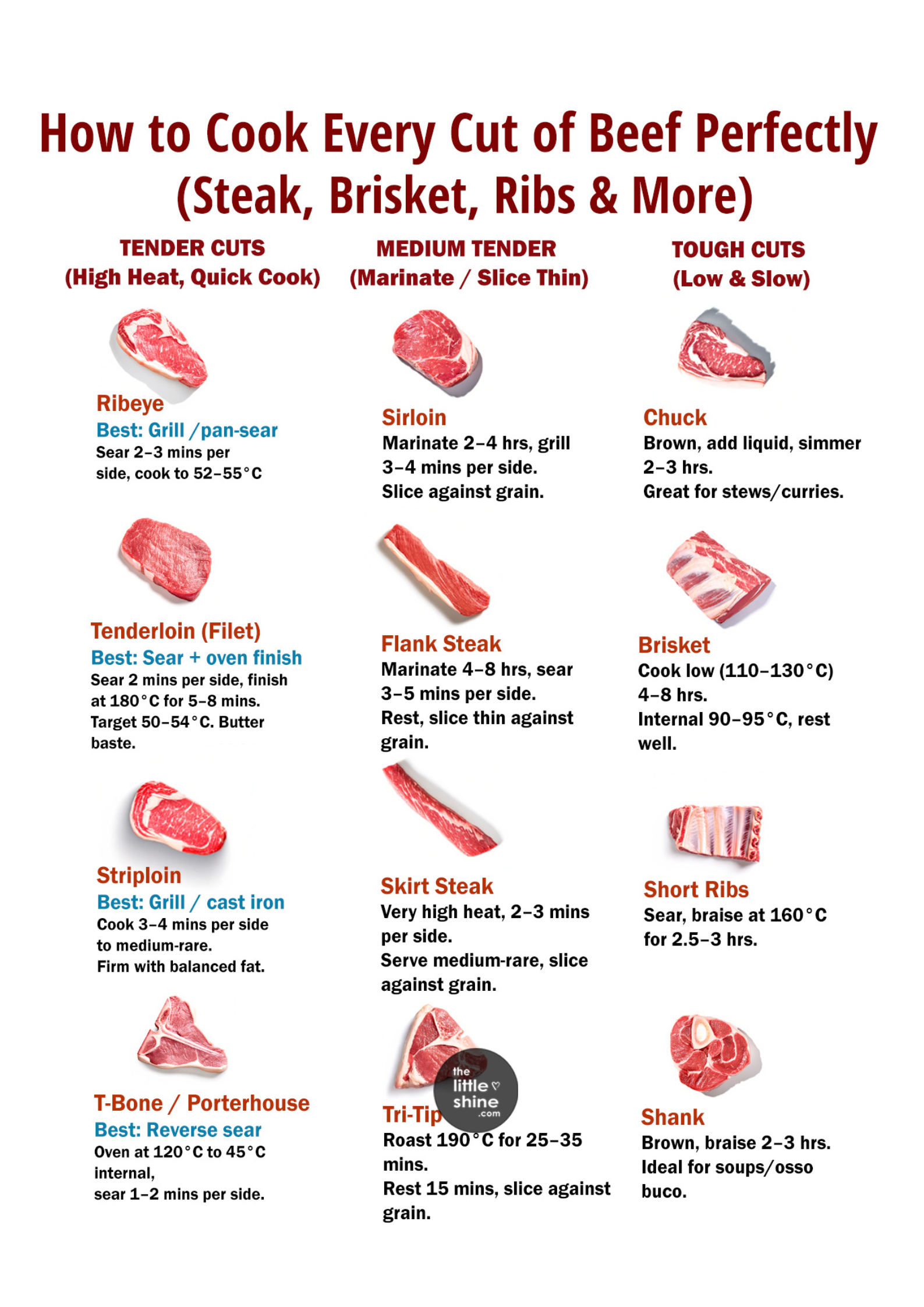
Understanding Beef: The 3 Cooking Categories
Beef cuts fall into three main groups:
- Tender Cuts → High heat, quick cooking
- Moderately Tender Cuts → Marinate or slice thin
- Tough Cuts → Low and slow cooking
If you cook a tough cut like a steak, it becomes chewy.
If you braise a ribeye, you waste its natural tenderness.
Method matters.
🥩 Tender Cuts (High Heat, Short Time)
These come from the rib and loin area — muscles that don’t work hard.
1. Ribeye
Best method: Pan-sear or grill
Why it works: High marbling keeps it juicy
How to cook:
- Salt 30–60 minutes before cooking
- Sear in a hot pan (2–3 minutes per side)
- Finish to 52–55°C for medium-rare
- Rest 5–10 minutes before slicing
Pro tip: No marinade needed — fat provides flavor.
2. Tenderloin (Filet Mignon)
Best method: Sear + oven finish
Why it works: Extremely tender but very lean
How to cook:
- Sear 2 minutes per side in hot pan
- Transfer to 180°C oven for 5–8 minutes
- Target 50–54°C internal
- Baste with butter and herbs
Do not overcook — it dries out quickly.
3. Striploin (New York Strip)
Best method: Grill or cast iron
Texture: Firmer than ribeye
How to cook:
- High heat sear
- 3–4 minutes per side
- Medium-rare preferred
- Rest before slicing
4. T-Bone / Porterhouse
Two steaks in one (strip + tenderloin).
Best method: Reverse sear
How:
- Cook in oven at 120°C until 45°C internal
- Sear both sides 1–2 minutes
- Rest well
Reverse searing prevents overcooking the tenderloin side.
🥩 Moderately Tender Cuts (Marinate or Slice Thin)
These benefit from acid marinades and proper slicing.
5. Sirloin
Best method: Grill, stir-fry
How to cook:
- Marinate 2–4 hours
- Grill 3–4 minutes per side
- Slice against the grain
Lean cut — avoid overcooking.
6. Flank Steak
Best method: Quick high-heat sear
How to cook:
- Marinate 4–8 hours
- Sear 3–5 minutes per side
- Rest 10 minutes
- Slice very thin against the grain
Cutting technique determines tenderness.
7. Skirt Steak
Perfect for fajitas.
How to cook:
- Extremely high heat
- 2–3 minutes per side
- Keep medium-rare
- Slice thin against grain
Overcooking makes it rubbery.
8. Tri-Tip
Best method: Roast or grill
How to cook:
- Season generously
- Roast at 190°C for 25–35 minutes
- Rest 15 minutes
- Slice according to grain direction (it changes)
🥩 Tough Cuts (Low & Slow Cooking)
These cuts contain more connective tissue (collagen), which breaks down with slow heat into gelatin.
9. Chuck
Best for: Stew, pot roast, curry
How to cook:
- Brown meat first
- Add stock or sauce
- Simmer 2–3 hours
Becomes fork-tender when cooked slowly.
10. Brisket
Best method: Slow roast or smoke
How to cook:
- Cook at 110–130°C
- 4–8+ hours
- Internal temp 90–95°C
- Rest wrapped for at least 1 hour
Low temperature transforms collagen.
11. Short Ribs
Best method: Braising
How to cook:
- Sear first
- Add wine + stock
- Cover and bake at 160°C for 2.5–3 hours
Meat should fall off the bone.
12. Shank
Used in osso buco and soups.
How to cook:
- Brown
- Braise 2–3 hours
- Cook until marrow softens
Adds rich body to sauces.
13. Oxtail
Best for: Stews and soups
How to cook:
- Brown thoroughly
- Simmer 3–4 hours
- Skim fat as needed
Creates deep, gelatin-rich broth.
🥩 Ground Beef
Fat percentage determines use:
- 80/20 → Best for burgers
- 85/15 → Meatballs
- 90/10 → Lean dishes
Cook to at least 70°C internal temperature.
Beef Doneness Temperature Guide
- Rare → 50°C
- Medium-rare → 52–55°C
- Medium → 57–60°C
- Medium-well → 63–68°C
- Well-done → 70°C+
Use a thermometer for accuracy.
Key Cooking Principles
✔ Tender cuts → High heat, short time
✔ Tough cuts → Moisture + low temperature + time
✔ Always rest meat after cooking
✔ Slice against the grain
✔ Salt early for better crust and flavor
Final Thoughts
Cooking beef properly is about matching the cut to the cooking method. When you understand muscle structure and fat distribution, you don’t need complicated recipes — just the right heat and timing.
Master these fundamentals and you can confidently cook any beef cut — from a quick weeknight sirloin to a slow-braised brisket.