
Traditional Chinese Medicine (TCM) views the human body as an interconnected energy system governed by Qi (vital life force). One of its most practical and fascinating concepts is the Body Clock, also known as the Organ Clock. This system explains how Qi flows through the body’s 12 primary organs in a predictable 24-hour cycle, with each organ having a 2-hour peak period when it performs its functions most efficiently.
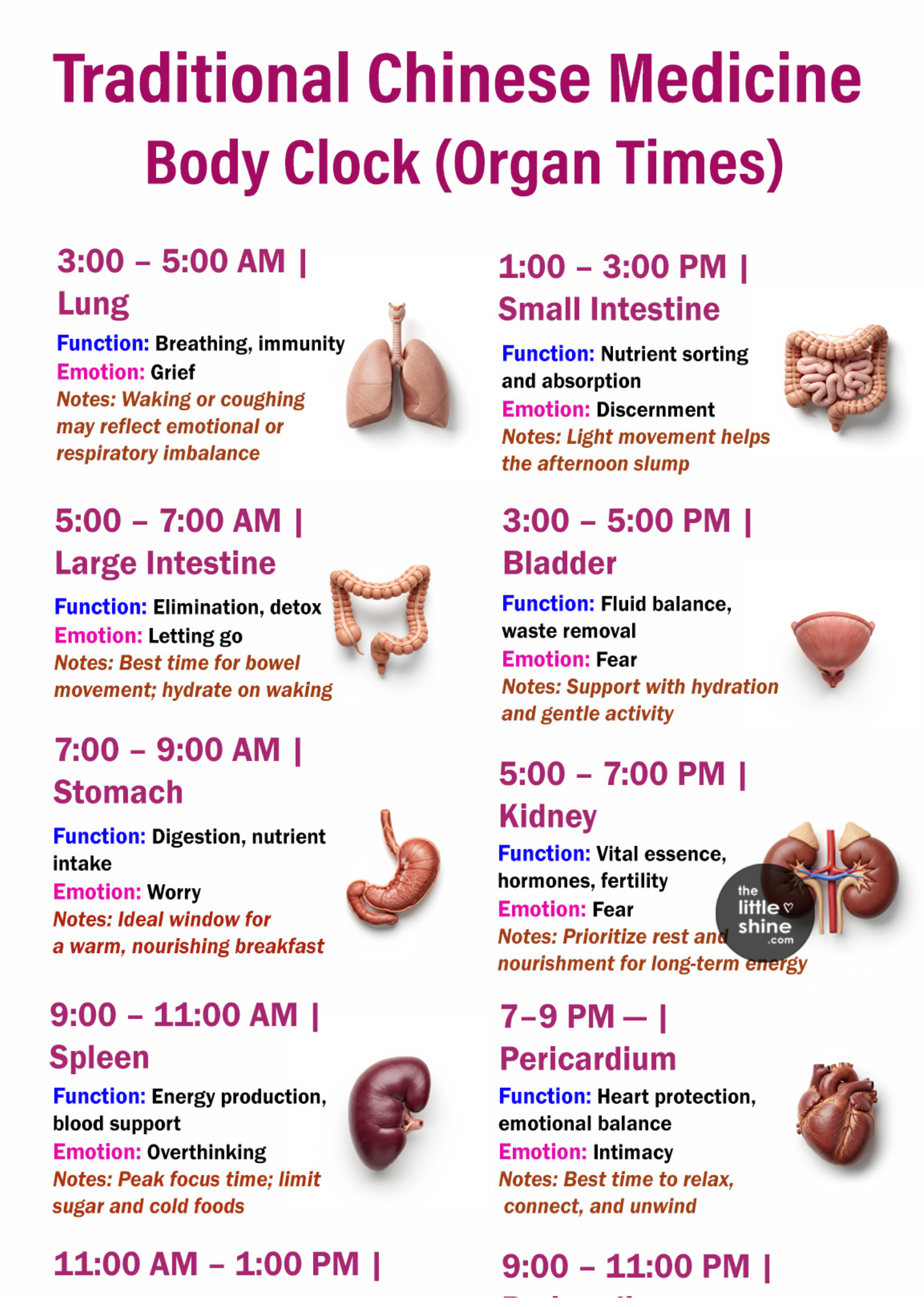
Understanding the TCM Body Clock helps explain sleep disturbances, digestive issues, emotional patterns, hormonal imbalances, and chronic fatigue—and offers guidance on when to eat, rest, work, and heal.
How the TCM Body Clock Works
According to TCM theory:
- Qi circulates continuously through the meridian system
- Every organ has a specific time of maximum energy
- Physical symptoms and emotional states often correspond to the organ active at the time they occur
When Qi flows smoothly, the body remains balanced. When it stagnates or becomes deficient, symptoms appear—often at consistent times of day or night.
The 24-Hour TCM Organ Clock Explained
3:00 – 5:00 AM | Lung
Function: Respiration, oxygen exchange, immunity
Emotional link: Grief, sadness
Insights: Waking up, coughing, or breathlessness during this time may reflect lung weakness or unresolved grief. Deep breathing and fresh air support lung Qi.
5:00 – 7:00 AM | Large Intestine
Function: Elimination, detoxification
Emotional link: Letting go
Insights: This is the ideal time for bowel movements. Regular elimination indicates healthy Qi flow and proper detox.
7:00 – 9:00 AM | Stomach
Function: Digestion, nutrient breakdown
Emotional link: Worry, anxiety
Insights: The stomach works best in the morning. A warm, nourishing breakfast strengthens digestion and energy for the day.
9:00 – 11:00 AM | Spleen
Function: Energy production, blood nourishment
Emotional link: Overthinking
Insights: Mental clarity and productivity peak now. Excess sugar or cold foods can weaken spleen Qi and cause fatigue.
11:00 AM – 1:00 PM | Heart
Function: Circulation, consciousness, joy
Emotional link: Joy, love
Insights: This is a socially active time. Emotional stress during this window may affect heart balance.
1:00 – 3:00 PM | Small Intestine
Function: Nutrient absorption and separation
Emotional link: Discernment
Insights: A post-lunch energy dip is common. Gentle movement helps digestion and prevents stagnation.
3:00 – 5:00 PM | Bladder
Function: Fluid metabolism, toxin elimination
Emotional link: Fear
Insights: Hydration is essential during this time. Light exercise supports detox pathways.
5:00 – 7:00 PM | Kidney
Function: Vital essence (Jing), hormones, fertility, aging
Emotional link: Fear
Insights: Overwork during this time depletes long-term energy. Rest, warmth, and nourishment strengthen kidney Qi.
7:00 – 9:00 PM | Pericardium
Function: Protection of the heart, emotional balance
Emotional link: Intimacy, connection
Insights: Ideal time to relax, bond, and reduce stress. Screen overuse can disturb emotional calm.
9:00 – 11:00 PM | Triple Burner (San Jiao)
Function: Hormonal regulation, temperature control, metabolism
Emotional link: Stress
Insights: This is the optimal window to fall asleep. Staying awake disrupts immune and hormonal repair.
11:00 PM – 1:00 AM | Gallbladder
Function: Decision-making, fat digestion
Emotional link: Resentment, indecision
Insights: Sleeping late may impair confidence and clarity. Chronic wakefulness here is linked to frustration.
1:00 – 3:00 AM | Liver
Function: Detoxification, blood storage, emotional regulation
Emotional link: Anger
Insights: Waking at this time often reflects liver overload, stress, or suppressed emotions.
Emotional Health and the Body Clock
TCM emphasizes that emotions directly affect organs. Repeated emotional stress during an organ’s peak time can weaken it, while physical imbalance can intensify certain emotions.
For example:
- Chronic worry weakens the spleen
- Suppressed anger stagnates liver Qi
- Long-term fear depletes kidney energy
Practical Benefits of Following the TCM Body Clock
Aligning daily habits with the Body Clock can help:
- Improve sleep quality
- Enhance digestion and metabolism
- Support hormonal balance and fertility
- Reduce chronic fatigue and stress
- Identify root causes of recurring symptoms
Final Thoughts
The TCM Body Clock offers a time-based map to health, reminding us that when we do things matters just as much as what we do. By respecting the natural rhythm of Qi, we support the body’s innate ability to heal, regulate, and thrive.
This ancient wisdom aligns closely with modern circadian rhythm science—proving that traditional knowledge remains deeply relevant in today’s world.
This article is for educational purposes and does not replace professional medical advice.