
Preventive blood tests help doctors detect early warning signs before symptoms appear. Instead of looking at a single number, doctors assess patterns, ratios, and changes over time to identify hidden risks and guide early intervention.
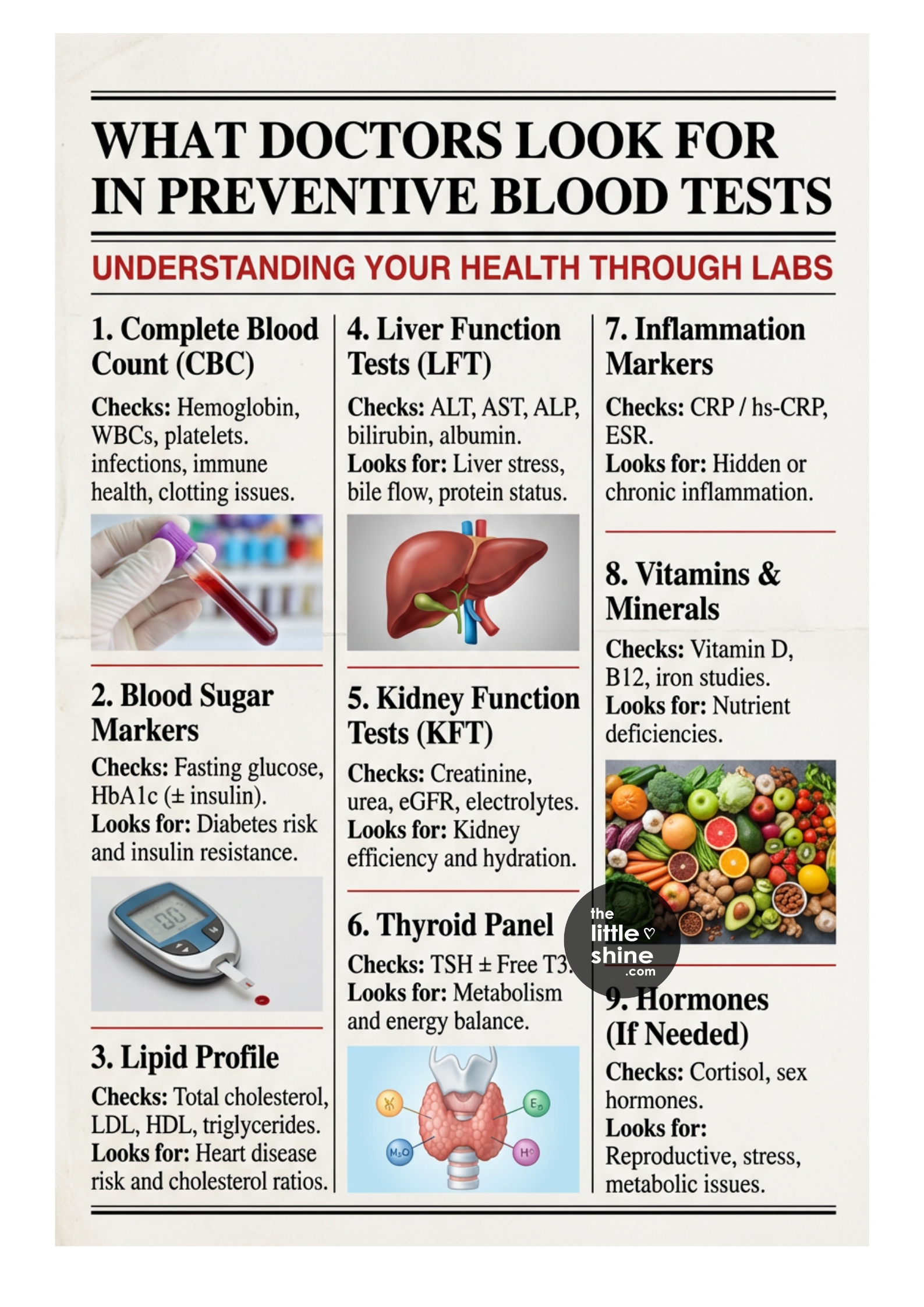
1. Complete Blood Count (CBC)
Purpose: Overall health and early disease signals
Doctors assess:
- Hemoglobin & RBCs → anemia, nutrient deficiencies
- WBC count → infections, inflammation, immune status
- Platelets → clotting disorders, bleeding risk
2. Blood Sugar Markers
Purpose: Diabetes and metabolic risk
Doctors assess:
- Fasting glucose → current sugar control
- HbA1c → 2–3 month average blood sugar
- Insulin (if ordered) → insulin resistance
3. Lipid Profile
Purpose: Heart disease risk
Doctors assess:
- Total cholesterol
- LDL (“bad” cholesterol)
- HDL (“good” cholesterol)
- Triglycerides
They look at ratios, not just individual numbers.
4. Liver Function Tests (LFT)
Purpose: Liver health and detox capacity
Doctors assess:
- ALT, AST → liver stress or damage
- ALP, bilirubin → bile flow and liver function
- Albumin → protein synthesis, nutrition
5. Kidney Function Tests (KFT)
Purpose: Kidney filtration and hydration status
Doctors assess:
- Creatinine & urea
- eGFR → kidney efficiency
- Electrolytes → fluid balance
6. Thyroid Panel
Purpose: Metabolism and energy regulation
Doctors assess:
- TSH (primary screening marker)
- Free T3 & Free T4 (if needed)
Subtle imbalances are often caught here before symptoms worsen.
7. Inflammation Markers
Purpose: Hidden inflammation and chronic disease risk
Doctors assess:
- CRP or hs-CRP
- ESR
Low-grade inflammation often precedes lifestyle diseases.
8. Vitamin & Mineral Levels
Purpose: Nutrient deficiencies affecting daily function
Common checks:
- Vitamin D
- Vitamin B12
- Iron studies (ferritin, iron, TIBC)
Deficiencies can exist even with a “normal” diet.
9. Hormone Markers (When Indicated)
Purpose: Reproductive, stress, and metabolic health
May include:
- Cortisol
- Sex hormones (estrogen, progesterone, testosterone)
Ordered based on age, symptoms, and history.
10. Trends Over Time
Most important factor doctors watch:
➡️ Changes compared to your previous reports, not just reference ranges.
Key takeaway:
Preventive blood tests help doctors detect risk years before disease develops, allowing early lifestyle or medical intervention.