
Healthy eating does not require strict diets, food rules, or constant tracking. The most sustainable approach is understanding how often to eat certain foods. When foods are categorized into everyday, weekly, and monthly choices, nutrition becomes simpler, more flexible, and easier to maintain long term.
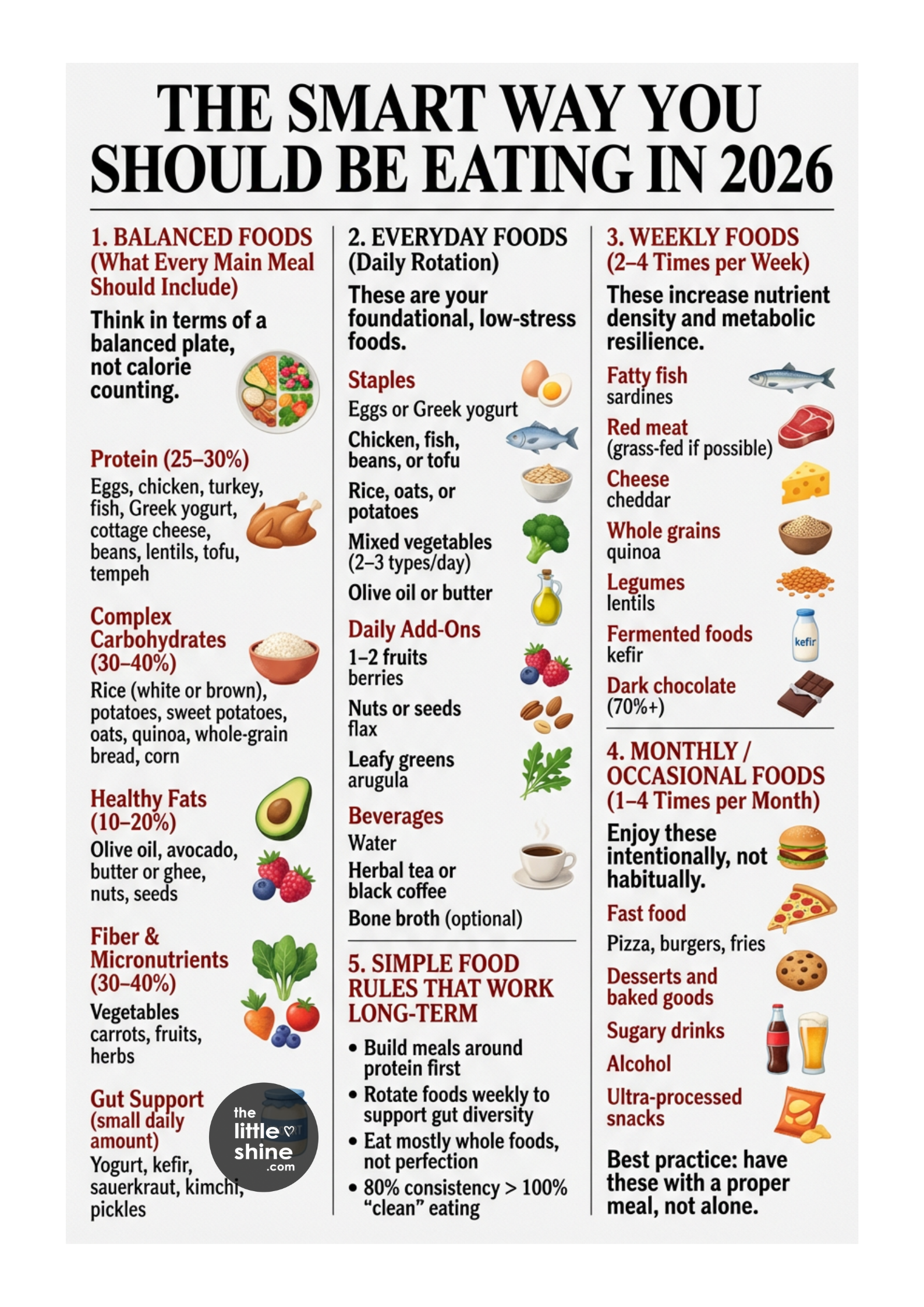
This framework supports gut health, hormone balance, stable energy, and metabolic health—without restriction.
What Are Balanced Foods?
Balanced foods refer to how a meal is built, not a specific ingredient list. Every main meal should include a mix of macronutrients and micronutrients to keep blood sugar stable and digestion efficient.
A Balanced Plate Includes:
- Protein (25–30%)
Eggs, chicken, turkey, fish, Greek yogurt, cottage cheese, beans, lentils, tofu, tempeh - Complex Carbohydrates (30–40%)
Rice, oats, potatoes, sweet potatoes, quinoa, whole-grain bread, corn - Healthy Fats (10–20%)
Olive oil, avocado, butter or ghee, nuts, seeds - Fiber & Micronutrients (30–40%)
Vegetables, leafy greens, fruits, herbs - Gut Support (small daily amount)
Yogurt, kefir, sauerkraut, kimchi, pickles
Balanced meals reduce cravings, prevent energy crashes, and support long-term health.
Everyday Foods: Your Nutritional Foundation
Everyday foods are low-stress, familiar, and easy to digest. These should make up the majority of your diet.
Everyday Staples
- Eggs or Greek yogurt
- Chicken, fish, beans, or tofu
- Rice, oats, or potatoes
- Mixed vegetables (2–3 types daily)
- Olive oil or butter
Daily Add-Ons
- 1–2 fruits (berries, apples, bananas)
- Nuts or seeds (almonds, walnuts, chia, flax)
- Leafy greens (spinach, kale, arugula)
Beverages
- Water
- Herbal tea or black coffee
- Bone broth (optional)
These foods support consistent digestion, steady energy, and nutrient adequacy.
Weekly Foods: Nutrient Boosters
Weekly foods add variety and nutrient density without overwhelming digestion. Aim for these 2–4 times per week.
- Fatty fish (salmon, sardines)
- Red meat (preferably grass-fed)
- Cheese (cheddar, mozzarella, feta)
- Whole grains (quinoa, farro, barley)
- Legumes (lentils, chickpeas)
- Fermented foods (kefir, kimchi)
- Dark chocolate (70% cocoa or higher)
These foods support iron levels, omega-3 intake, gut diversity, and hormone health.
Monthly Foods: Enjoy, Don’t Eliminate
Monthly foods are not “bad”—they are simply not everyday foods. Consuming them occasionally helps maintain balance without guilt.
Monthly or Occasional Foods
- Fast food
- Pizza, burgers, fries
- Desserts and baked goods
- Sugary beverages
- Alcohol
- Ultra-processed snacks
Best practice: enjoy these foods with a proper meal, not on an empty stomach, to minimize blood sugar spikes.
Simple Rules for Long-Term Success
- Build meals around protein first
- Rotate foods weekly to improve gut diversity
- Eat seasonally when possible
- Focus on consistency, not perfection
- Aim for 80% nourishing foods, 20% flexibility
Final Thought
Healthy eating works best when it fits real life. By understanding which foods belong daily, weekly, and monthly, you create a system that is sustainable, flexible, and supportive of long-term health.
This approach is not a diet—it is a lifestyle structure that evolves with you.