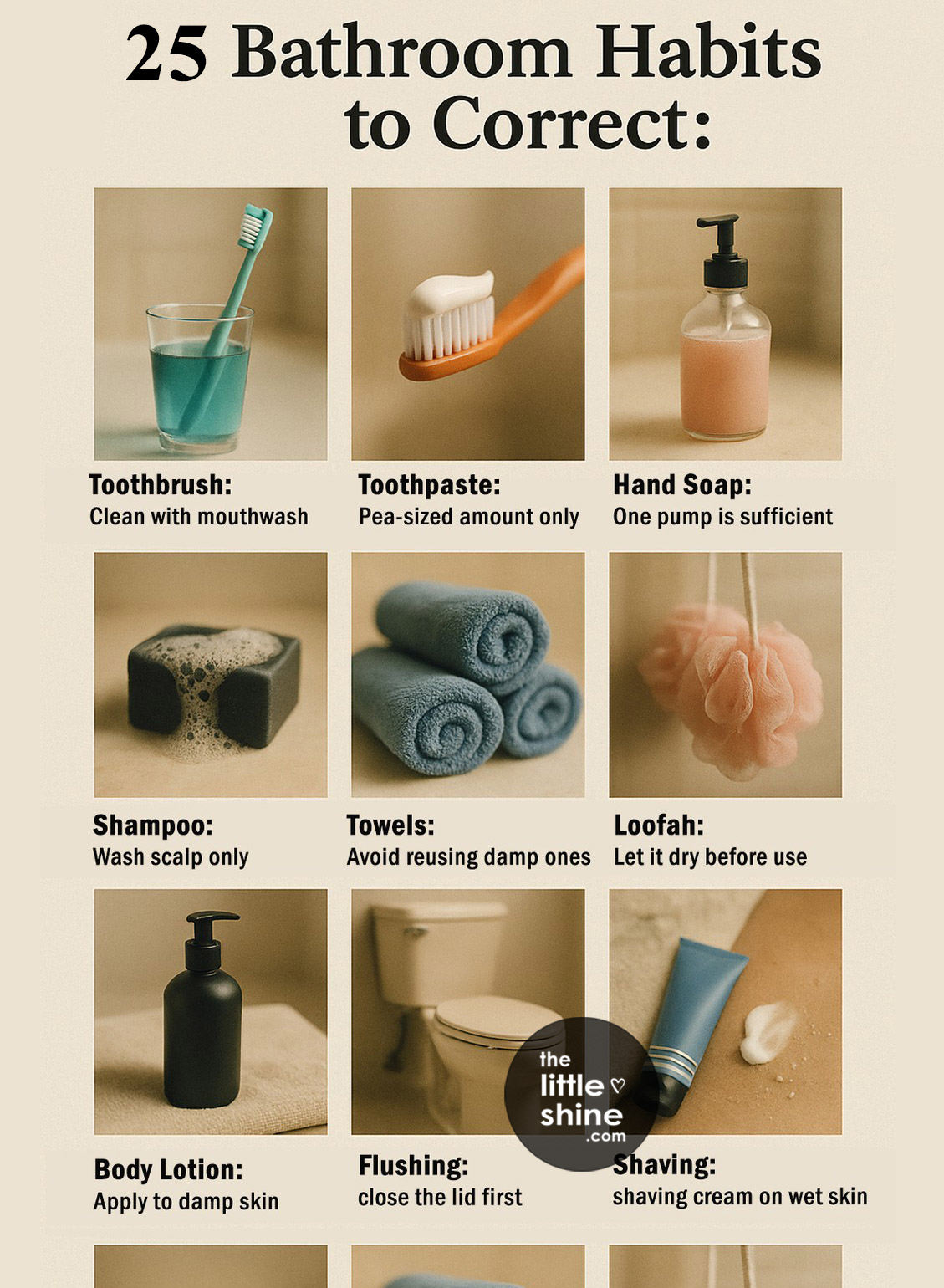
Your daily bathroom routine might be undermining your health and hygiene without you even realizing it. Many common practices, from how we clean our teeth to how we store our towels, are actually doing more harm than good. It’s time to reassess these habits for a cleaner, healthier you. Here are 25 essential tips to transform your bathroom routine.
Here are 25 essential tips with explanations to optimize your routine:
Toothbrush Care: Denture cleaner dissolves biofilm and bacteria your rinse can’t, ensuring a truly clean brush.
Toothpaste Amount: A pea-sized portion is all adults need for effective cleaning; more can create excessive foam and lead to swallowing too much fluoride.
Mouthwash Timing: Using it immediately after brushing rinses away the concentrated fluoride from your toothpaste. Wait to let the fluoride work.
Hand Soap: One pump effectively removes germs. Over-washing with more soap strips natural oils, causing dryness and irritation.
Shampoo Focus: Your scalp produces oil; your ends are the oldest and driest part. Washing just the scalp prevents ends from becoming brittle.
Wet Hair Care: Hair is most fragile when wet. A wide-tooth comb glides through tangles gently, preventing breakage.
Fresh Towels: Damp towels are a breeding ground for mildew and bacteria, which you then rub all over your clean skin.
Toilet Brush Hygiene: If it’s dirty after cleaning the toilet, it contaminates the holder and the air until its next use.
Gentle Wiping: Over-zealous wiping can cause micro-tears and irritation. Be gentle, and consider water-based options for a cleaner feel.
Perfume on Skin: Spraying on pulse points (wrists, neck) uses your body heat to diffuse the scent naturally. On clothes, it can stain and alters the fragrance.
Dry Your Loofah: A wet loofah in a dark shower is the perfect environment for mold and bacteria to multiply.
Warm Showers: Hot water strips your skin of its essential natural oils, leading to dryness, itching, and eczema flare-ups.
Lid Down Flushing: Flushing, known as a “toilet plume,” aerosolizes microscopic waste particles, spraying them onto surfaces like your countertop and toothbrush.
Proper Shaving: Shaving cream creates a protective layer, reducing friction for a closer shave and less irritation, razor burn, and nicks.
Safe Q-tip Use: Inserting them pushes earwax deeper, potentially causing impacted wax, reduced hearing, and eardrum damage.
Lock in Moisture: Applying lotion to damp skin traps water on the surface, hydrating more effectively than applying to dry skin.
Use the Fan: Removing moisture is key to preventing mold and mildew growth on walls, ceilings, and grout.
Cooler Hair Drying: High heat damages the hair cuticle, leading to frizz, breakage, and loss of shine. Cool air is gentler and sets style.
Germy Items: Books and phones can carry bathroom bacteria to other rooms and vice versa. It’s best to keep them out.
Razor Maintenance: A rusty, dirty blade is less effective and can introduce bacteria into small nicks, causing infections.
Gentle Acne Care: Scrubbing inflamed skin worsens irritation and spreads bacteria. Gentle cleansing calms the skin.
Soft Nail Trimming: Warm water softens nails, making them easier to cut cleanly and preventing splintering or cracking.
Clean Makeup Tools: Dirty brushes harbor bacteria and oils, which can be transferred back to your skin, clogging pores and causing breakouts.
Nighttime Deodorant: Applying at night allows the active ingredients to fully absorb into sweat glands, making them more effective the next day.
Conditioner Placement: Conditioner weighs down fine hair at the roots. Focusing on the ends hydrates what needs it most without making hair greasy.
By adopting these smarter habits, you can ensure your bathroom routine is truly working for you, promoting better hygiene, healthier skin and hair, and overall well-being.