
Hitting a weight loss plateau can be incredibly frustrating, especially when you feel like you’re doing everything right. Often, the obstacle isn’t a lack of willpower—it’s a hidden physiological imbalance. Your body is a complex system, and factors like hormones, stress, and metabolism can powerfully influence its ability to shed fat.
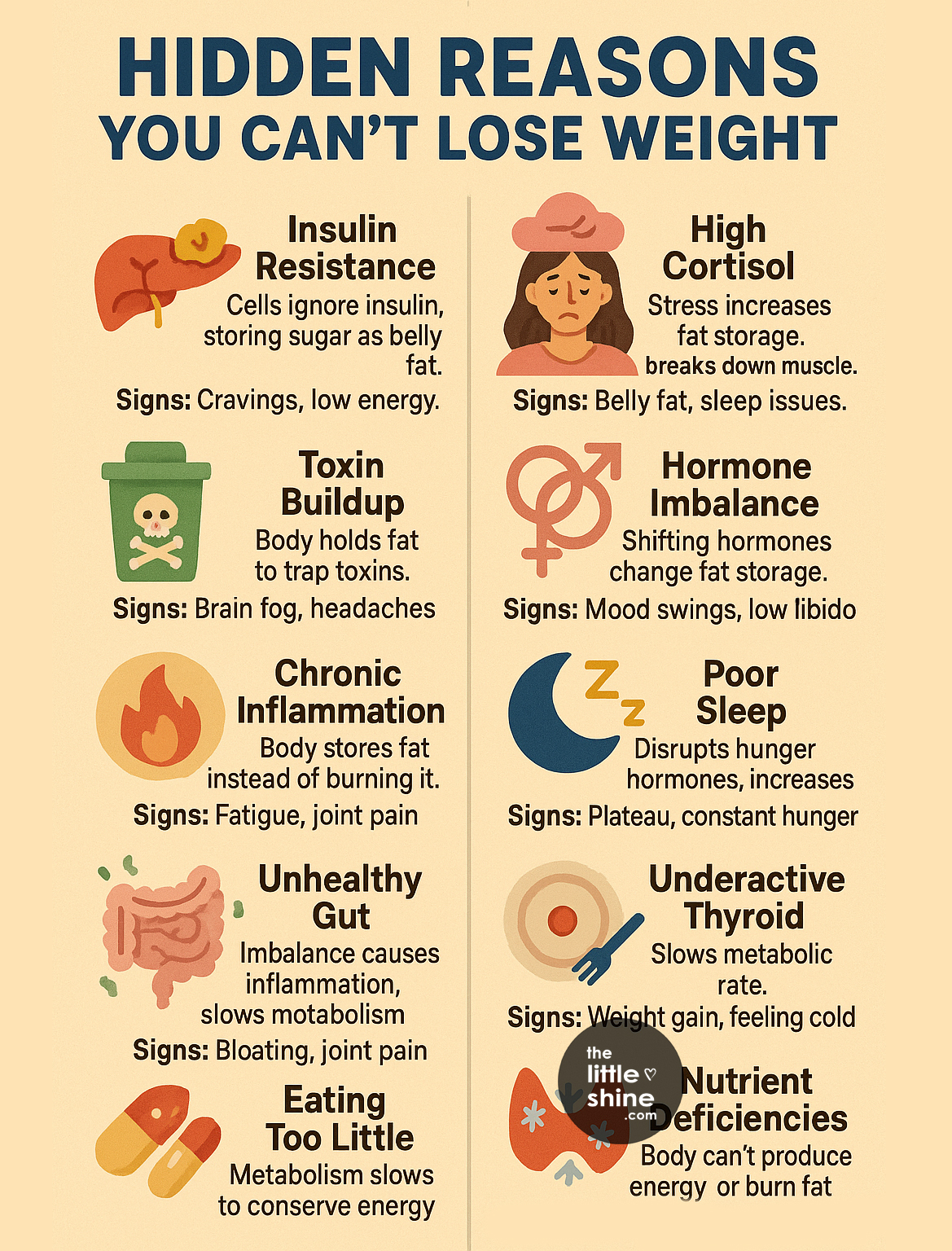
If the scale won’t budge, one of these twelve hidden reasons is likely the culprit. Understanding them is the first step toward breaking through your plateau and achieving sustainable results.
1. Insulin Resistance (“Sugar Crash Syndrome”)
- What Happens: Cells become numb to insulin, causing the body to store excess sugar as fat, especially around the belly.
- Signs: Belly fat, energy crashes, intense sugar cravings.
2. Cortisol Imbalance (“Stress & Adrenal Panic”)
- What Happens: Chronic stress elevates cortisol, which promotes fat storage (especially abdominal) and breaks down muscle.
- Signs: Stubborn belly fat, fatigue, anxiety, sleep troubles.
3. High Toxicity (“Toxin Traffic Jam”)
- What Happens: The body holds onto fat cells to sequester stored toxins, preventing them from circulating in the bloodstream.
- Signs: Brain fog, headaches, new sensitivities, aches.
4. Hormone Imbalances (“Hormonal Havoc”)
- What Happens: Shifts in sex hormones (estrogen, progesterone, testosterone) can alter where the body stores fat.
- Signs: Belly/hip fat, hot flashes, low libido, mood swings.
5. Chronic Inflammation (“Body on Fire”)
- What Happens: Persistent inflammation signals the body to hoard energy and store fat instead of burning it.
- Signs: Constant fatigue, joint pain, headaches, skin/gut issues.
6. Poor Gut Health (“Gut Barrier Breach”)
- What Happens: An imbalanced microbiome and “leaky gut” cause inflammation and impair nutrient absorption, stalling metabolism.
- Signs: Bloating, food sensitivities, irregular digestion, brain fog.
7. Poor Sleep (“Sleep Deprivation Spiral”)
- What Happens: Lack of sleep disrupts hunger hormones (ghrelin and leptin), increasing cravings and slowing metabolism.
- Signs: Fatigue, intense cravings, daytime drowsiness, poor focus.
8. Metabolic Adaptation (“Starvation Defense Mode”)
- What Happens: Eating too few calories for too long slows your metabolism to conserve energy, halting weight loss.
- Signs: Constant hunger, low energy, irritability, weight loss plateau.
9. Thyroid Dysfunction (“Metabolic Slowdown”)
- What Happens: An underactive thyroid slows your metabolic rate, reducing the calories you burn at rest.
- Signs: Weight gain, fatigue, hair loss, feeling cold, brain fog.
10. Nutrient Deficiencies (“Missing Fuel Factor”)
- What Happens: Lack of key vitamins and minerals cripples the body’s ability to produce energy and burn fat efficiently.
- Signs: Low energy, muscle cramps, slow recovery, brain fog.
11. Overtraining (“Breaking Down Mode”)
- What Happens: Excessive exercise spikes stress hormones like cortisol, which can lead to muscle breakdown and fat storage.
- Signs: Plateaus, constant soreness, frequent illness, sleep issues.
12. Poor Energy Balance (“Calorie Guessing Game”)
- What Happens: Consistently underestimating calorie intake or overestimating burn leads to a hidden surplus, preventing a deficit.
- Signs: Frustrating plateaus, sneaky snacking, stalled progress.