
Small science-backed habits that can make a surprisingly big difference
Most health advice focuses on eating more vegetables or exercising regularly. Those habits matter, but there are plenty of lesser-known tricks that can help you get even more from the foods you already eat. Here are 30 simple, practical habits worth knowing.
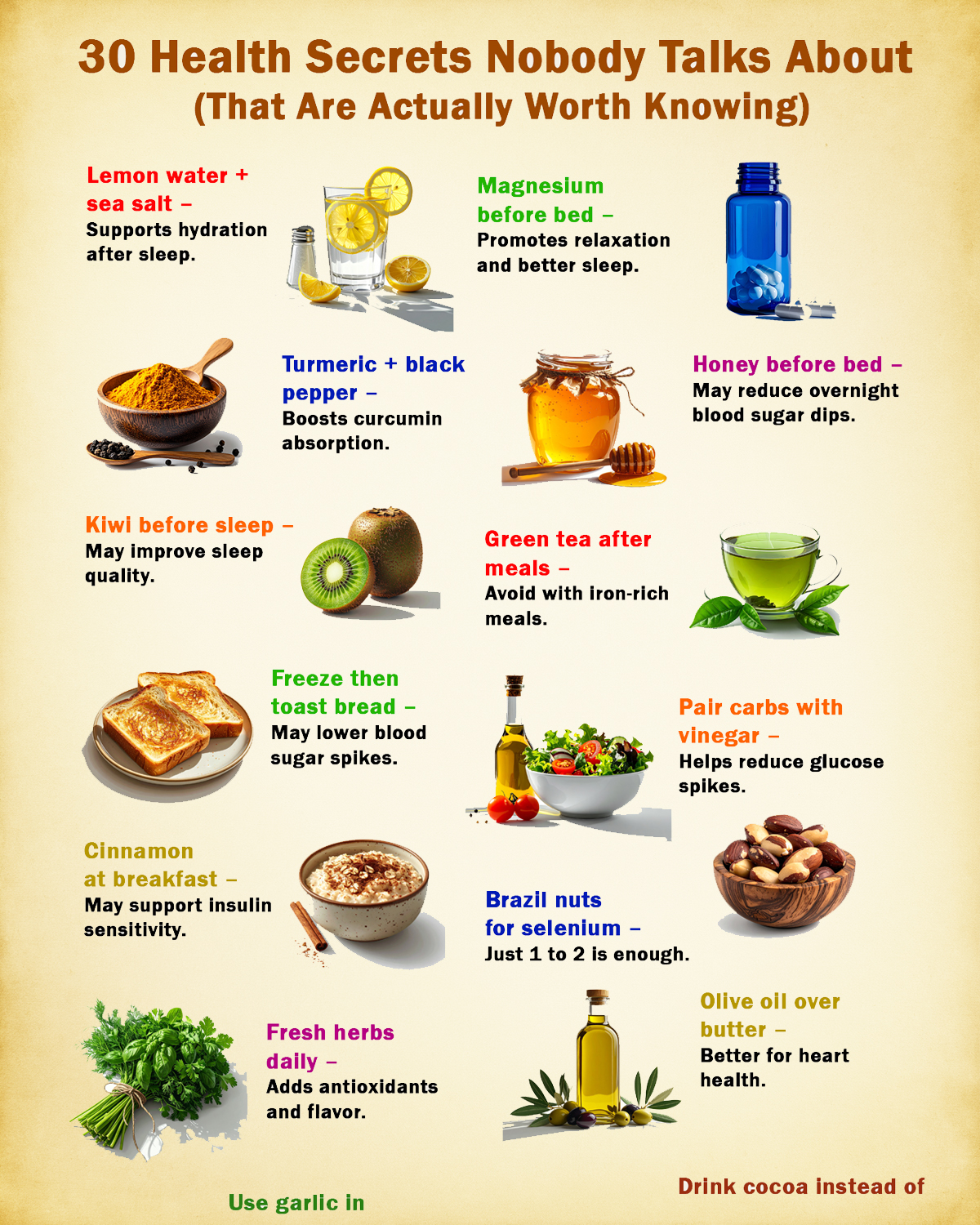
1. Cook then cool potatoes
Cooling cooked potatoes increases resistant starch, which can support gut health and reduce blood sugar spikes.
2. Eat protein before carbs
Starting a meal with protein may slow digestion and reduce post-meal blood sugar rises.
3. Add mustard to broccoli
Mustard contains an enzyme that may help restore sulforaphane, one of broccoli’s most beneficial compounds, especially after cooking.
4. Eat an apple before meals
An apple’s fiber and water may help increase fullness before eating.
5. Pair citrus with leafy greens
Vitamin C from oranges or lemons helps your body absorb iron from spinach, kale, and other leafy vegetables.
6. Chew your food thoroughly
Eating more slowly gives your brain time to recognize fullness and may improve digestion.
7. Walk for 10 minutes after meals
Even a short walk after eating can help support healthy blood sugar levels.
8. Choose frozen berries
Frozen berries are often picked at peak ripeness and retain most of their nutrients.
9. Cool cooked rice before reheating
Cooling rice increases resistant starch, which may reduce its effect on blood sugar.
10. Eat fermented foods regularly
Foods like yogurt, kefir, kimchi, and sauerkraut help support a healthy gut microbiome.
11. Store tomatoes at room temperature
Refrigeration can reduce flavor and alter texture.
12. Crush garlic and wait 10 minutes
Letting garlic sit before cooking allows allicin, one of its beneficial compounds, to develop.
13. Snack on pumpkin seeds
They’re naturally rich in magnesium, zinc, healthy fats, and protein.
14. Choose unsweetened cocoa
Real cocoa contains beneficial flavanols without the added sugar found in many hot chocolate mixes.
15. Add ground flaxseed to yogurt
Flaxseed provides fiber, plant omega-3 fats, and lignans.
16. Buy UV-exposed mushrooms
These mushrooms naturally contain much more vitamin D.
17. Rinse canned beans
A quick rinse removes much of the excess sodium while keeping the fiber and protein.
18. Cook tomatoes with olive oil
Healthy fats improve the absorption of lycopene, a powerful antioxidant in tomatoes.
19. Freeze your nuts
Cold storage helps prevent healthy fats from becoming rancid.
20. Eat cherries in the evening
Cherries naturally contain small amounts of melatonin and may support sleep quality.
21. Drink peppermint tea after meals
Peppermint tea may help ease occasional bloating and digestive discomfort.
22. Season with herbs instead of extra salt
Fresh herbs add flavor while providing antioxidants.
23. Sprinkle cinnamon on oats
Cinnamon adds antioxidants and pairs well with fiber-rich oatmeal.
24. Add lemon to lentils
Vitamin C improves the absorption of plant-based iron.
25. Try sourdough bread
Its fermentation process may produce a gentler blood sugar response than some refined breads.
26. Eat kiwi with the skin
After washing thoroughly, the skin adds extra fiber and nutrients.
27. Add microgreens to meals
Tiny greens often contain concentrated amounts of vitamins and antioxidants.
28. Sprinkle nutritional yeast
It adds a cheesy flavor and is often fortified with B vitamins.
29. Eat a rainbow every week
Different colored fruits and vegetables provide different protective plant compounds.
30. Drink water before meals
A glass of water before eating may support hydration and help with portion control.
The Bottom Line
Good health isn’t built from one miracle food or supplement. It’s often the small, consistent habits that add up over time. Pairing the right foods together, preparing them differently, and making simple daily choices can help you get more nutrition from every meal. While these tips can support overall health, they’re not a substitute for medical advice or treatment. If you have a health condition or take medications, consult your healthcare provider before making significant dietary changes.