
From removing stubborn stains to opening impossible jar lids, these surprisingly simple tricks can make everyday life a little easier.
Sometimes the best household solutions are hiding in plain sight. A spoon from your kitchen drawer, a little baking soda, or even a piece of dental floss can solve problems you never expected.
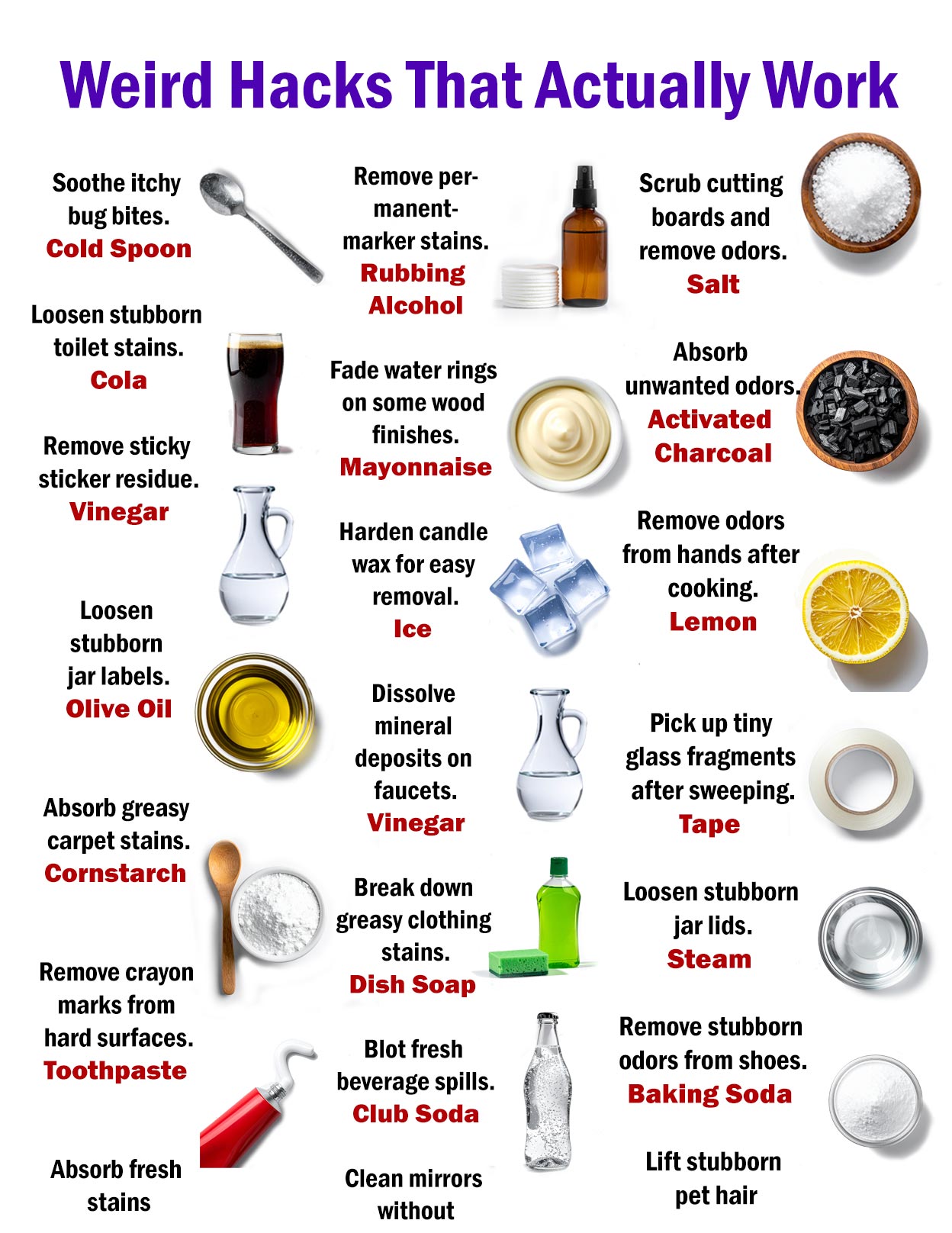
Before spending money on specialty cleaners and gadgets, take a look around your home. These 28 clever hacks use everyday items to tackle sticky labels, lingering odors, greasy stains, and other little annoyances.
Here are some surprisingly useful tricks worth knowing.
Kitchen Hacks That Make Life Easier
1. Salt: Refresh Wooden Cutting Boards
Wooden cutting boards can develop lingering food odors and stubborn surface residue. Sprinkle coarse salt over the board and gently scrub with half a lemon. Wipe away the residue and dry thoroughly.
Best for: Removing surface buildup and reducing food odors. This does not replace proper washing and sanitizing.
2. Lemon: Remove Cooking Odors From Your Hands
Chopping garlic, onions, or fish can leave unwanted smells on your fingers. Rub a little lemon juice over your hands, then rinse and wash with soap.
Best for: Reducing lingering cooking smells. Avoid using lemon on cuts or irritated skin.
3. Olive Oil: Loosen Stubborn Jar Labels
Some jar labels leave behind an annoying layer of glue. Rub a little olive oil onto the sticky residue, leave it for 10–15 minutes, and gently scrape or wipe it away.
Best for: Removing adhesive residue from glass jars.
4. Vinegar: Dissolve Mineral Deposits on Faucets
White vinegar can help dissolve hard-water buildup around faucets. Dampen a cloth with vinegar, hold it against the deposits for a few minutes, then scrub gently and rinse thoroughly.
Best for: Removing mineral buildup from compatible fixtures. Avoid acid-sensitive finishes and natural stone.
5. Steam: Help Loosen Stubborn Jar Lids
A tightly sealed jar can feel impossible to open. Run warm water over the metal lid for 30–60 seconds. The warmth may help loosen the seal and soften sticky residue.
Best for: Opening jars with stubborn metal lids. Dry the lid before gripping it.
6. Uncooked Rice: Clean Narrow Bottles
Have a bottle that’s too narrow for a sponge? Add a spoonful of uncooked rice, warm water, and a drop of dish soap. Shake gently, then empty and rinse thoroughly.
Best for: Scrubbing residue from sturdy, narrow-necked bottles.
7. Dental Floss: Slice Soft Cheese Perfectly
Soft cheeses can stick to knives and lose their shape. Use a piece of plain, unflavored dental floss to cut straight through the cheese without squishing it.
Best for: Cutting soft cheese, cheesecake, and other delicate foods.
8. Rubber Band: Open Stubborn Jar Lids
Wrap a wide rubber band around a slippery jar lid. The rubber provides extra grip, making it easier to twist the lid open.
Best for: Jars that are difficult to open because of slippery lids.
Clever Cleaning Hacks for Stubborn Stains
9. Rubbing Alcohol: Remove Permanent Marker
Permanent marker stains don’t always have to be permanent. Apply a little rubbing alcohol to a cloth and gently dab the mark until it starts lifting.
Best for: Certain glass, metal, and compatible hard surfaces. Test first because alcohol can damage paint, plastics, and finishes.
10. Cola: Loosen Stubborn Toilet Stains
Cola contains mild acids that may help loosen some mineral deposits. Pour it over stained areas, leave it for a while, then scrub with a toilet brush and flush.
Best for: Light mineral staining. It’s less effective than dedicated toilet cleaners and does not disinfect.
11. Cornstarch: Absorb Greasy Carpet Stains
Fresh grease stains can be difficult to remove. Sprinkle cornstarch over the affected area and let it sit for 20–30 minutes before vacuuming.
Best for: Absorbing some fresh oil and grease before further cleaning.
12. Dish Soap: Break Down Greasy Clothing Stains
A little dish soap can work wonders on greasy spots. Apply a small amount to the stain, rub gently, let it sit briefly, and wash according to the clothing label.
Best for: Cooking oil, butter, and other greasy stains.
13. Club Soda: Blot Fresh Beverage Spills
Spilled a drink on the carpet? Blot up as much liquid as possible, apply a small amount of plain club soda, and blot again with a clean towel.
Best for: Diluting and lifting some fresh, water-soluble spills. Avoid soaking the fabric.
14. Toothpaste: Remove Crayon Marks
Crayon marks on hard surfaces can sometimes be removed with a dab of plain white toothpaste. Rub gently with a soft damp cloth, then wipe clean.
Best for: Some durable, washable surfaces. Avoid delicate paint, polished finishes, and abrasive scrubbing.
15. White Chalk: Absorb Fresh Grease
White chalk can help absorb fresh grease before it settles into fabric. Rub plain white chalk gently over the oily spot, allow it to sit, then brush off and wash.
Best for: Small, fresh grease stains on washable clothing.
16. Coffee Filters: Clean Mirrors Without Lint
Paper towels can leave tiny fibers behind when cleaning mirrors. Try wiping a mirror with a clean coffee filter and a suitable glass cleaner.
Best for: Polishing mirrors and glass without leaving lint.
17. Tape: Pick Up Tiny Glass Fragments
Even after sweeping up broken glass, tiny fragments can remain behind. Press a piece of sticky tape gently over the area to collect small remaining shards.
Best for: Collecting tiny fragments from hard surfaces. Use gloves and dispose of the tape safely.
18. Pencil Eraser: Remove Light Scuff Marks
Some black scuff marks on hard surfaces can be rubbed away with a clean white pencil eraser. Gently rub the mark, then wipe away the eraser residue.
Best for: Light scuffs on compatible hard surfaces. Test an inconspicuous spot first.
Smart Tricks for Sticky Household Problems
19. Vinegar: Remove Sticky Sticker Residue
Old price tags and stickers can leave behind stubborn adhesive. Dampen the residue with white vinegar, allow it to soften briefly, then gently scrape it away.
Best for: Removing adhesive residue from glass and other vinegar-safe surfaces.
20. Ice: Harden Candle Wax for Easier Removal
Spilled candle wax can be frustrating to clean. Place ice cubes in a sealed plastic bag and hold it against the wax until it hardens. Carefully lift away the brittle pieces.
Best for: Removing larger pieces of hardened wax without spreading them.
21. Mayonnaise: Fade Some Water Rings on Wood
A fresh, whitish water ring on a sealed wooden table may respond to a little mayonnaise. Apply a small amount, leave it briefly, then wipe clean and buff dry.
Best for: Some moisture marks on compatible sealed wood finishes. Always spot-test first.
22. Hair Dryer: Loosen Sticky Labels
Removing a label doesn’t have to involve endless scraping. Warm it gently with a hair dryer on low heat for a few seconds, then slowly peel it away.
Best for: Removing price stickers and labels from heat-safe surfaces.
23. Ice Cubes: Remove Chewing Gum From Fabric
Chewing gum stuck to clothing can be a nightmare. Hold a sealed bag of ice against the gum until it becomes firm, then carefully lift away as much as possible.
Best for: Removing gum from sturdy fabrics without spreading the sticky mess.
24. Candle Wax: Help Sticky Drawers Slide
Wooden drawers sometimes become difficult to open because of friction. Rub a little plain candle wax along the wooden runners to help them slide more smoothly.
Best for: Sticky wooden drawers with unfinished contact surfaces.
25. Rubber Gloves: Lift Pet Hair From Furniture
Pet hair has a remarkable ability to cling to upholstery. Put on a slightly damp rubber glove and run your hand over the fabric. The friction helps gather loose hair into clumps.
Best for: Removing pet hair from couches, chairs, and some carpets.
Simple Hacks for Odors and Everyday Comfort
26. Cold Spoon: Temporarily Soothe Itchy Bug Bites
An itchy mosquito bite can be incredibly distracting. Chill a clean spoon in the refrigerator and gently hold its cool surface against the bite for a short time.
Best for: Temporary relief from mild itching and irritation. Don’t use a frozen spoon directly against the skin.
27. Activated Charcoal: Absorb Unwanted Odors
Activated charcoal has a porous structure that can trap certain odor-causing compounds. Place it in a breathable pouch or a purpose-made odor absorber and leave it in the affected area.
Best for: Reducing some odors in shoes, closets, and other enclosed spaces.
28. Baking Soda: Freshen Smelly Shoes
Shoes can develop unpleasant odors from moisture and everyday wear. Sprinkle a little baking soda inside dry shoes, leave it overnight, and shake or vacuum it out before wearing them.
Best for: Absorbing moisture and reducing mild shoe odors.
Why These Simple Hacks Are Worth Remembering
The secret behind many household hacks isn’t magic. It’s basic science.
Salt provides gentle abrasion. Baking soda can help absorb odors. Vinegar dissolves certain mineral deposits. Dish soap breaks up grease, while cold temperatures can make sticky substances easier to remove.
And sometimes, the answer isn’t a cleaning product at all. A rubber band provides extra grip, dental floss makes a remarkably neat cutting tool, and rubber gloves gather pet hair without an expensive gadget.
Of course, not every trick works on every surface. Always test an unfamiliar cleaning method on a hidden area first, follow fabric and manufacturer care instructions, and never mix household cleaning chemicals.
Final Thoughts
You don’t always need an expensive gadget or a cabinet full of specialized products to solve everyday household problems.
Sometimes all it takes is a spoon, an ice cube, a coffee filter, or something that’s been sitting in your kitchen cupboard for years.
The best household hacks aren’t necessarily the fanciest. They’re the ones that save you time, reduce frustration, and make you wonder why you didn’t try them sooner.
Which of these 28 weird household hacks have you tried, and which one surprised you the most?