The internet is one of the greatest sources of information ever created. But it’s also one of the fastest ways for misinformation and myths to spread. A simple post, meme, or viral video can make something sound like a fact—even when it isn’t.
Over the years, many everyday “facts” people believe actually started as misunderstood science, marketing claims, or internet rumors. Here are some of the most common ones.
Health and Food Myths
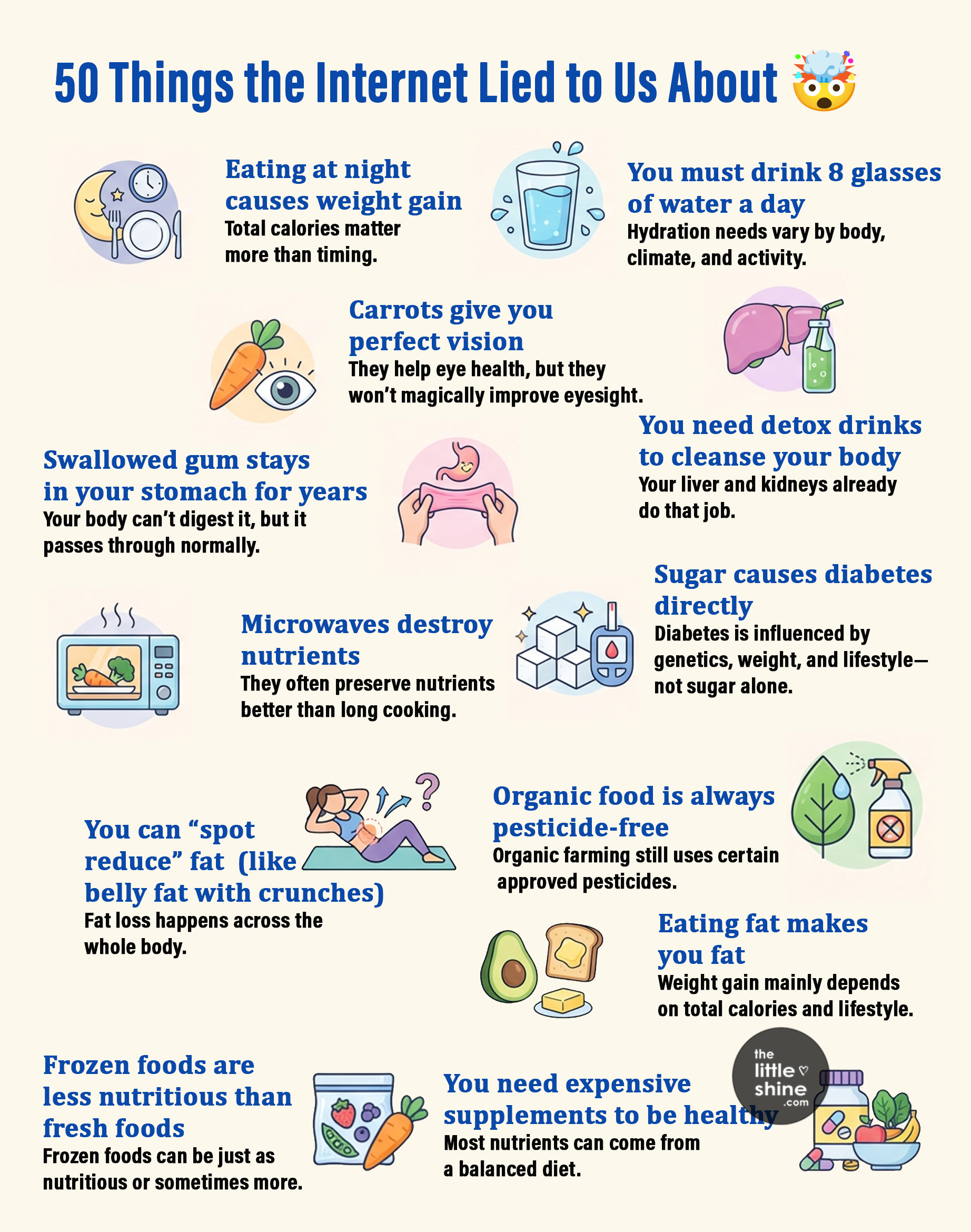
You must drink exactly 8 glasses of water a day
Hydration needs vary based on body size, climate, and activity. Many foods and drinks also contribute to daily water intake.
Eating fat makes you fat
Weight gain depends mostly on total calories and lifestyle, not just fat intake.
Sugar makes kids hyper
Most scientific studies have found little evidence that sugar directly causes hyperactivity.
You should eat every 2–3 hours to boost metabolism
Meal frequency has very little effect on metabolism for most people.
Coffee dehydrates you
Moderate coffee intake contributes to daily fluid intake rather than causing dehydration.
Detox drinks cleanse your body
Your liver and kidneys already remove toxins effectively.
Frozen food is less nutritious than fresh food
Frozen foods are often preserved quickly and can retain nutrients very well.
Brown bread is always healthier than white bread
Some brown bread is simply colored white bread. Whole-grain ingredients matter more.
Organic food means pesticide-free
Organic farming can still use certain approved pesticides.
Milk increases mucus when you have a cold
Research shows milk does not significantly increase mucus for most people.
Body and Health Myths
Cracking knuckles causes arthritis
Research has not found a strong connection between knuckle cracking and arthritis.
Reading in dim light ruins your eyes
It may cause temporary eye strain but not permanent damage.
Hair grows back thicker after shaving
Shaved hair feels thicker because the ends are blunt.
You can lose belly fat with specific exercises
Fat loss happens throughout the body, not just in one area.
Sweating means you had a good workout
Sweat depends on temperature and genetics, not workout effectiveness.
Cold weather causes colds
Viruses cause colds—not cold temperatures.
You must wait 30 minutes after eating before swimming
There’s no strong scientific rule for this.
Eggs are bad if eaten daily
For most healthy people, eggs are a nutritious source of protein and healthy fats.
Science and Nature Myths
Humans only use 10% of their brain
Brain imaging shows we use most parts of the brain.
Goldfish have a 3-second memory
Goldfish can remember things for months.
Bats are blind
Bats actually have good eyesight and also use echolocation.
Lightning never strikes the same place twice
Lightning often strikes the same tall structures repeatedly.
Chameleons change color to match their surroundings
They mostly change color due to mood, temperature, or communication.
Dogs only see in black and white
Dogs see colors, mainly blues and yellows.
Bananas grow on trees
Banana plants are actually giant herbs, not trees.
Everyday Myths
Swallowed gum stays in your stomach for 7 years
It passes through the digestive system like other indigestible materials.
You lose most body heat through your head
Heat escapes from any uncovered body part.
Touching baby birds makes the mother abandon them
Most birds rely on sight rather than smell.
A penny dropped from a skyscraper could kill someone
It wouldn’t reach enough speed to cause fatal injury.
Microwaves destroy nutrients in food
Microwave cooking can actually preserve nutrients better than long cooking methods.
Microwaved food becomes radioactive
Microwaves simply heat food—they do not add radiation.
You swallow spiders in your sleep
There’s no evidence this commonly happens.
Cheese causes nightmares
There’s no reliable scientific proof of this.
Alcohol warms you up in cold weather
It creates a warm sensation but actually lowers core body temperature.
The Truth About Internet “Facts”
The internet spreads information faster than ever before. While that can be helpful, it also means myths can spread quickly and stick around for years.