Self-neglect isn’t always dramatic. It’s rarely about a conscious decision to harm oneself. Instead, it manifests in the small, daily choices we make—or avoid—that slowly erode our well-being. These are the quiet forms of self-neglect, a series of subtle betrayals against our own bodies and minds that accumulate over time. Unlike more overt crises, they are easy to justify, ignore, or simply not notice amidst the noise of daily life. Recognizing them is the first step toward cultivating a kinder, more attentive relationship with oneself.
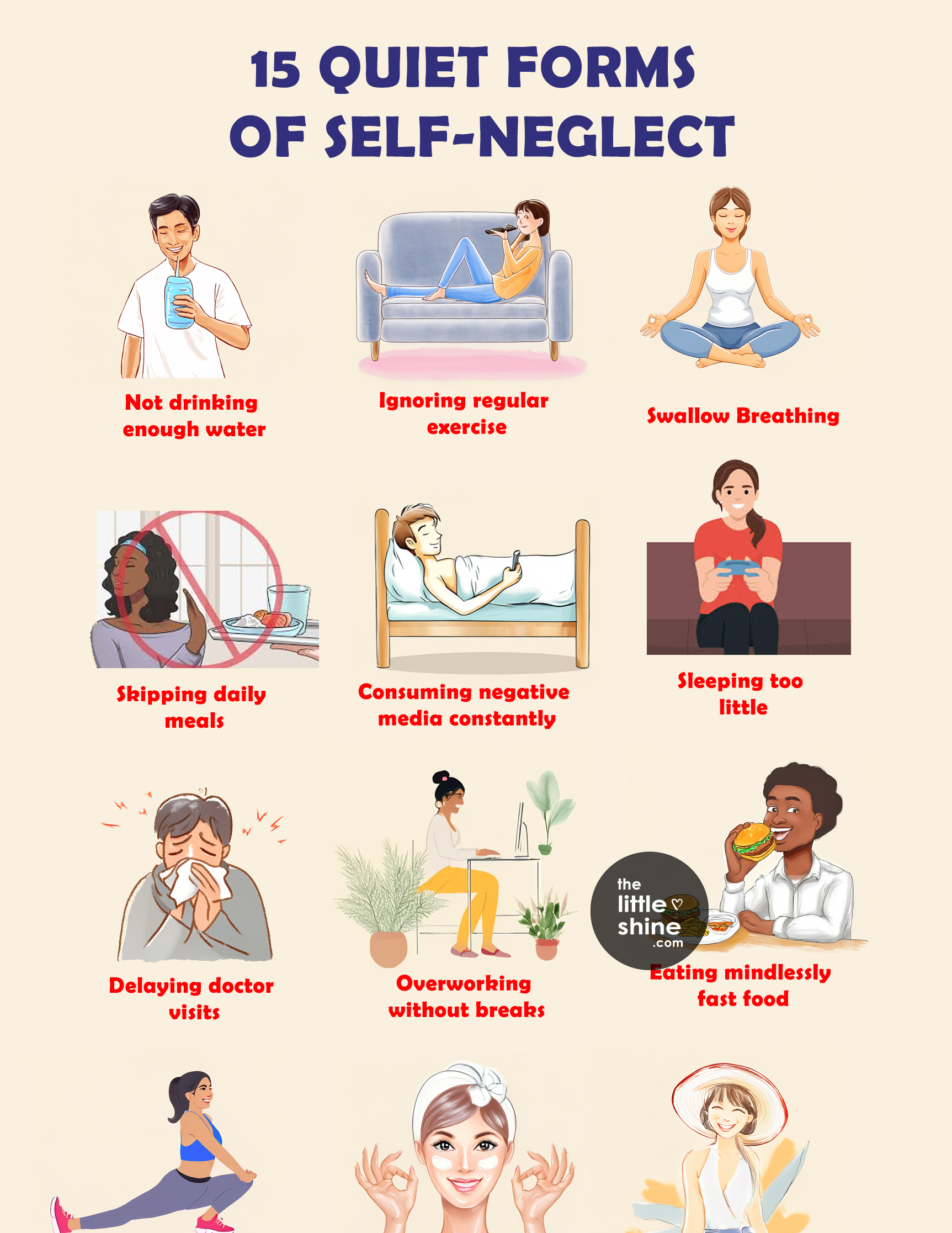
Here is a deeper look into these common, yet often overlooked, behaviors:
- The Foundation of Physical Health: This category includes the most basic pillars of self-care that we often sacrifice for convenience or productivity.
- Not drinking enough water & Skipping daily meals: We replace hydration with caffeine and fuel with quick snacks, ignoring the body’s signals for genuine nourishment. This leads to low energy, brain fog, and long-term strain on our organs.
- Ignoring regular exercise & Never stretching your body: A sedentary lifestyle weakens muscles, compromises posture, and reduces cardiovascular health. The simple act of not stretching creates chronic tension, reducing flexibility and increasing pain.
- Sleeping too little & Scrolling late at night: We trade restorative sleep for artificial stimulation. The blue light from screens disrupts melatonin production, creating a vicious cycle of poor sleep that impacts mood, cognitive function, and immune response.
- Delaying doctor visits: This is a profound form of avoidance, often rooted in fear or a belief that we are too busy to attend to our health. It allows small, manageable issues to potentially develop into serious problems.
- The Quality of Our Environment and Inputs: Neglect extends beyond our physical body to what we surround ourselves with and consume mentally.
- Living in constant clutter: A disorganized space creates subconscious cognitive load, increasing stress and anxiety. It reflects an internal state of chaos and makes relaxation difficult.
- Consuming negative media constantly: A diet of alarming news and social comparison feeds anxiety and hopelessness. It’s a form of psychological self-harm that we often dismiss as “staying informed.”
- Neglecting sunlight and fresh air & Breathing shallowly all day: Confining ourselves to artificial environments deprives us of essential Vitamin D and oxygen. Shallow, stress-induced breathing keeps the nervous system in a constant state of low-grade fight-or-flight.
- The Erosion of Joy and Presence: The most insidious forms of neglect are those that strip away our engagement with life.
- Overworking without breaks: This glorifies burnout. By not allowing for moments of pause, we deplete our creative and emotional reserves, leading to resentment and fatigue.
- Eating mindlessly fast food: This isn’t just about nutrition; it’s about denying ourselves the pleasure and mindfulness of a proper meal. It’s treating our body as a machine to be refueled, not a vessel to be cared for.
- Procrastinating on small joys: Continuously postponing activities that bring us light—reading a book, calling a friend, pursuing a hobby—sends a message that our happiness is the lowest priority.
Conclusion
Quiet self-neglect is a habit, not a character flaw. The path to change begins with gentle awareness. Instead of a complete overhaul, choose one small act of self-kindness. Drink the glass of water. Take a five-minute walk. Open a window. Clear one surface. These tiny corrections, made consistently, are a powerful rebellion against the silent erosion of self. They are a way of whispering to yourself, “You matter.”