Taming the Stress-Gut Cycle: Practical Solutions to Heal Your Gut from Cortisol Damage
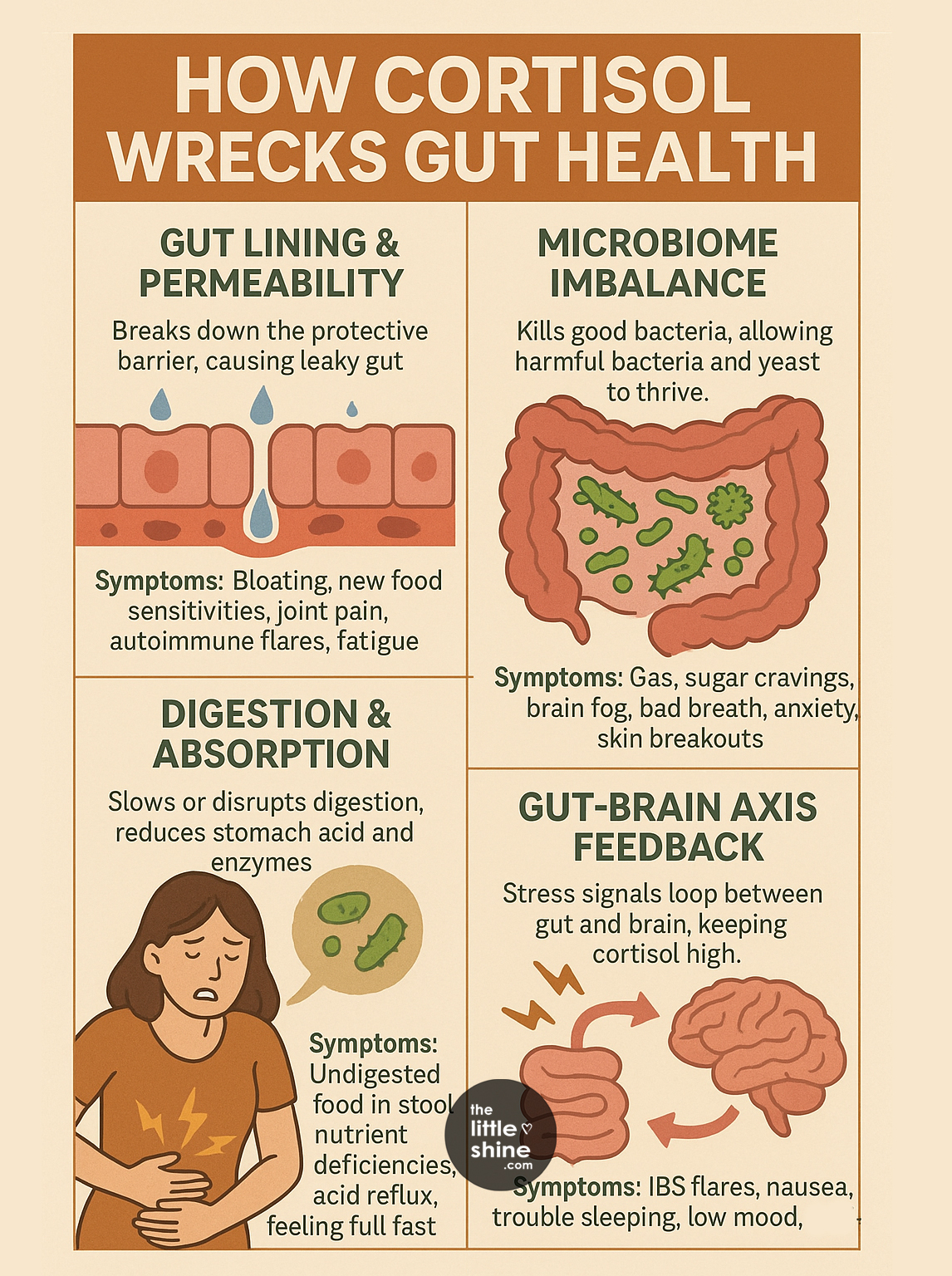
That bloated, gassy, or off-feeling you get during stressful times isn’t in your head—it’s in your gut. As the infographic clearly illustrates, chronic stress elevates cortisol, which acts like a wrecking ball on your digestive system. It breaks down your gut lining, unbalances your microbiome, and halts proper digestion, creating a vicious cycle that impacts your entire well-being.
The good news is this cycle can be broken. By adopting targeted strategies to manage stress and support gut repair, you can calm the storm and build a more resilient system. Here’s how to fight back.
1. Reinforce the Gut Lining (Seal the Leaks)
The first priority is to repair and protect the intestinal barrier.
- Embrace Gut-Healing Nutrients: Incorporate foods rich in collagen and amino acids that act as building blocks for repair. Focus on:
- Bone broth: A fantastic source of collagen and glutamine.
- L-Glutamine: Consider supplementing with this amino acid, a primary fuel source for intestinal cells.
- Zinc: Found in pumpkin seeds, meat, and shellfish, zinc is crucial for maintaining intestinal integrity.
2. Rebalance the Microbiome (Feed the Good Bugs)
Cortisol kills beneficial bacteria, so we need to actively replenish them.
- Prebiotics: Feed your good bacteria with fibrous foods like garlic, onions, leeks, asparagus, and green bananas.
- Probiotics: Introduce beneficial bacteria through fermented foods like live yogurt, kefir, sauerkraut, kimchi, and kombucha. A high-quality probiotic supplement can also be beneficial.
- Starve the Bad Bugs: Reduce your intake of refined sugars and processed carbohydrates, which feed harmful yeast and bacteria.
3. Support Digestion & Nutrient Absorption
When stress halts digestion, we need to give it a gentle nudge.
- Practice Mindful Eating: Never eat on the run. Sit down, take a few deep breaths before your meal, and chew your food thoroughly. This signals the “rest and digest” nervous system to activate.
- Consider Digestive Aids: If low stomach acid is a concern (symptoms like bloating or undigested food in stool), try drinking apple cider vinegar in water before meals or consulting a professional about betaine HCL supplements.
- Prioritize Nutrient-Dense Foods: Ensure every meal contains easily absorbable nutrients. Think cooked vegetables, lean proteins, and healthy fats like avocado and olive oil.
4. Master Your Stress Response (The Ultimate Remedy)
Since cortisol is the root cause, managing stress is non-negotiable.
- Diaphragmatic Breathing: This is your fastest tool to lower cortisol. Practice deep, slow belly breathing for 5 minutes, 2-3 times a day to activate the vagus nerve and shift your body into “rest and digest” mode.
- Regular Moderate Movement: Gentle exercise like walking, yoga, or swimming is fantastic for gut motility and stress relief. Avoid intense, prolonged cardio when you’re highly stressed, as it can further elevate cortisol.
- Prioritize Sleep: Quality sleep is essential for cortisol regulation and gut repair. Aim for 7-8 hours per night and maintain a consistent sleep schedule.
- Adaptogenic Herbs: Herbs like Ashwagandha and Rhodiola can help your body adapt to stress and modulate cortisol levels. Consult a healthcare provider before starting.
5. Break the Gut-Brain Feedback Loop
- Vagus Nerve Toning: Activities like humming, singing, gargling, and cold exposure can strengthen vagal tone, improving the gut-brain connection and promoting relaxation.
- Cognitive Behavioral Therapy (CBT) or Counseling: For chronic stress and anxiety, therapy can be incredibly effective in breaking the negative thought patterns that perpetuate the physical stress response.
The Bottom Line: Healing your gut from stress is a two-pronged approach: remove the source of damage (stress) while providing the tools for repair (diet and lifestyle). By committing to consistent daily habits that lower cortisol and nourish your gut, you can transform your digestive health and overall vitality.