Modern homes look clean, organized, and comfortable — but many everyday household products quietly expose us to chemicals that affect hormones, lungs, skin, and long-term health. From cleaning sprays to cookware and air fresheners, small daily choices can add up to a significant toxic load.
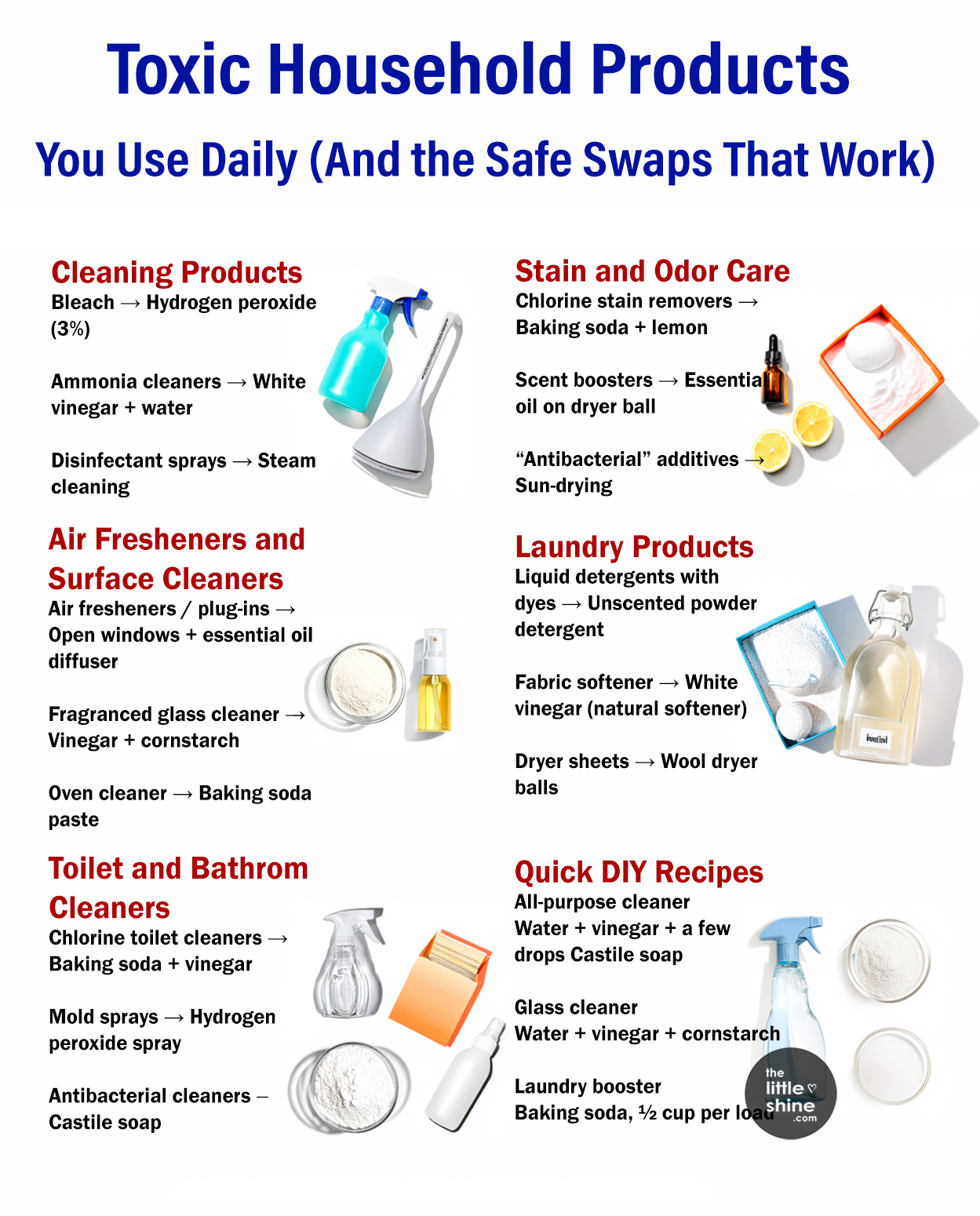
The good news? You don’t need a perfect “toxin-free” home overnight. Simple swaps can dramatically reduce exposure while saving money and improving indoor air quality.
Let’s walk through the most common toxic household items — and practical, healthier replacements.
Why Household Toxins Matter
Many conventional products release volatile organic compounds (VOCs), endocrine disruptors, and irritants that accumulate over time. These are linked to:
- Respiratory issues and headaches
- Hormonal imbalance
- Skin sensitivities
- Reduced immunity
- Long-term chronic inflammation
Children, pets, and anyone with gut, fertility, or immune concerns are especially vulnerable.
Reducing exposure is less about fear — and more about creating a healthier environment for daily living.
1. Cleaning Products
Common toxic items
- Bleach
- Ammonia-based cleaners
- Conventional disinfectant sprays
- Toilet cleaners with chlorine
- Glass cleaners with synthetic fragrance
Why they’re harmful:
These release harsh fumes, irritate airways, and often contain hormone-disrupting chemicals.
Healthy alternatives
- White vinegar + water (all-purpose cleaner)
- Baking soda (scrubbing)
- Castile soap
- Hydrogen peroxide (3%) for disinfecting
- Lemon + salt for tough stains
- Steam cleaning for floors and upholstery
Simple rule: If it burns your nose, it doesn’t belong in your home.
2. Air Fresheners & Home Fragrance
Common toxic items
- Plug-in air fresheners
- Aerosol sprays
- Paraffin candles
- Synthetic incense
Why they’re harmful:
They often contain phthalates and VOCs that disrupt hormones and worsen indoor air quality.
Healthy alternatives
- Open windows daily (best detox)
- Beeswax or soy candles (unscented)
- Essential oil diffuser (short use only)
- Simmer pots with citrus peels, cinnamon, or cloves
- Activated charcoal or baking soda for odor control
Fresh air beats artificial fragrance every time.
3. Cookware
Common toxic items
- Non-stick pans (Teflon/PTFE)
- Aluminum cookware
- Scratched non-stick surfaces
Why they’re harmful:
At high heat, non-stick coatings release toxic fumes, and aluminum may leach into food.
Healthy alternatives
- Cast iron
- Stainless steel
- Ceramic-coated cookware
- Glass baking dishes
These last longer and don’t contaminate your meals.
4. Food Storage
Common toxic items
- Plastic containers (especially when heated)
- Plastic wrap
- Styrofoam packaging
Why they’re harmful:
Heat causes plastics to leach BPA/BPS and microplastics into food.
Healthy alternatives
- Glass containers
- Stainless steel lunch boxes
- Silicone storage bags
- Beeswax wraps
Never microwave in plastic — even “BPA-free.”
5. Personal Care & Beauty Products
Common toxic items
- Lotions with parabens
- Sulfate shampoos
- Aluminum deodorants
- Artificial fragrance
- Talcum powder
Why they’re harmful:
Your skin absorbs much of what you apply, making daily products a major exposure source.
Healthy alternatives
- Fragrance-free or plant-based products
- Coconut oil or shea butter for moisturizing
- Natural deodorants (baking soda–free)
- Arrowroot or cornstarch instead of talc
If you can’t pronounce the ingredients, rethink the product.
6. Laundry Products
Common toxic items
- Liquid detergents with dyes
- Fabric softeners
- Dryer sheets
Why they’re harmful:
They leave chemical residue on clothes and release fumes into indoor air.
Healthy alternatives
- Unscented powder detergent
- Soap nuts
- Wool dryer balls
- White vinegar as natural fabric softener
Your clothes don’t need fragrance to be clean.
7. Pest Control
Common toxic items
- Chemical insect sprays
- Rodent poison
- Mosquito coils
Why they’re harmful:
These are neurotoxic and dangerous for children and pets.
Healthy alternatives
- Diatomaceous earth
- Neem oil
- Boric acid (controlled use)
- Essential oil repellents (citronella, eucalyptus, peppermint)
Target pests — not your health.
8. Baby & Kids Products
Common toxic items
- Plastic toys with BPA
- Scented wipes
- Talc-based powders
Healthy alternatives
- Wooden or silicone toys
- Water-based or cloth wipes
- Cornstarch powders
Small bodies absorb toxins faster, so swaps matter even more here.
9. Home Furnishings
Common toxic items
- Flame-retardant mattresses
- Vinyl flooring
- Synthetic carpets
Healthy alternatives
- Organic cotton or natural latex mattresses
- Solid wood furniture
- Wool or jute rugs
These reduce long-term VOC exposure inside your home.
A Simple Detox Approach (No Overwhelm)
You don’t need to replace everything at once. Try this:
- Start with kitchen + cleaning products
- Switch food storage next
- Replace personal care as items finish
- Improve air quality daily
Progress over perfection.
Final Thoughts
Your home should support healing — not quietly stress your body.
By replacing just a few high-impact items, you can:
- Improve indoor air quality
- Reduce hormone disruption
- Support gut and immune health
- Create a calmer, cleaner living space
Healthy living isn’t about expensive products. It’s about conscious choices.