10 Intermittent Fasting Methods Explained Simply – find out which method is for you.
What Is Intermittent Fasting?
Intermittent fasting is an eating pattern that cycles between fasting and eating windows. During fasting periods, insulin levels drop, allowing the body to shift from using glucose to burning stored fat. Over time, this metabolic shift can improve insulin sensitivity, digestion, and energy regulation.
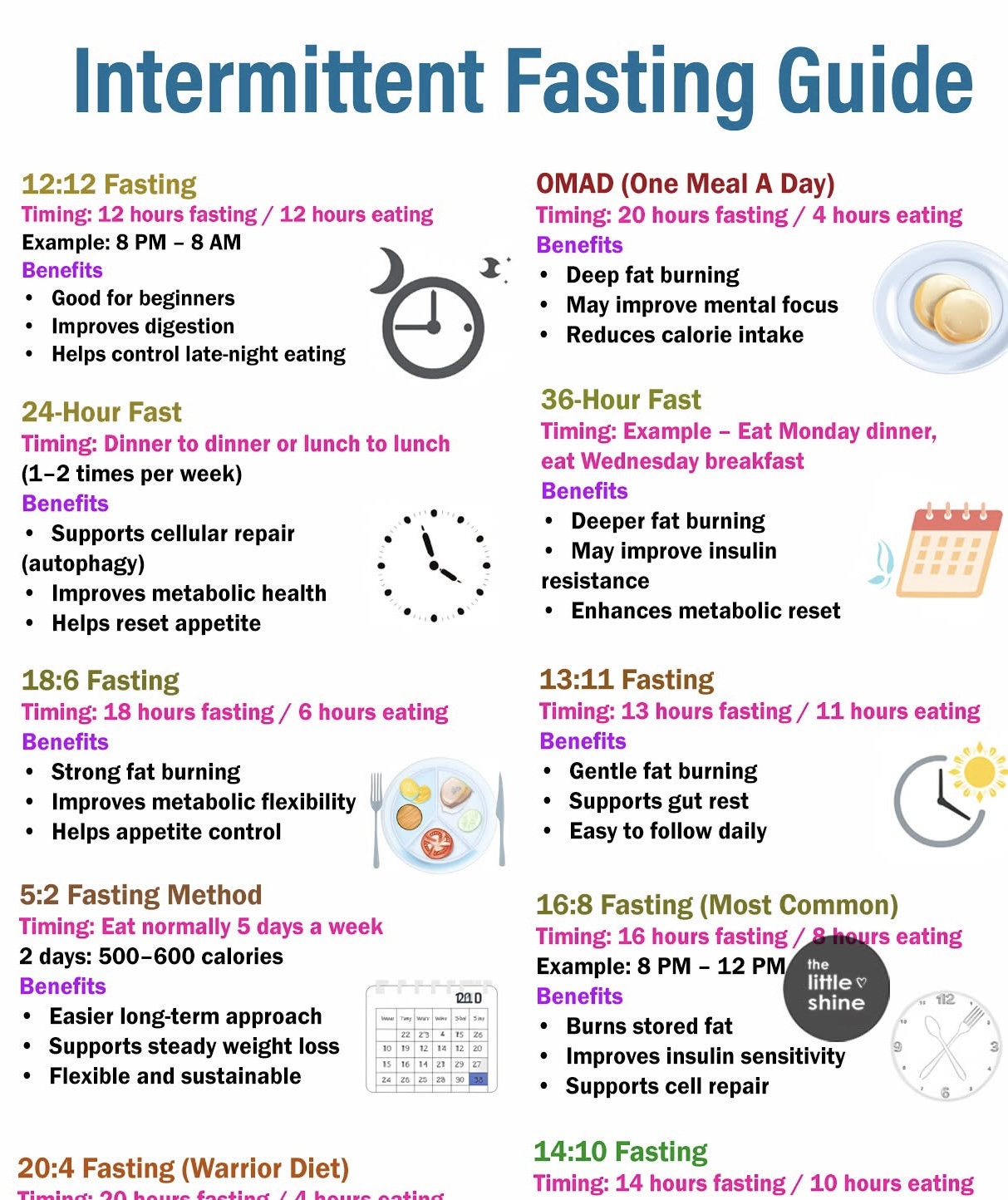
Popular Intermittent Fasting Methods
1. 12:12 Fasting (Beginner-Friendly)
- Timing: 12 hours fasting / 12 hours eating
- Example: 8 PM to 8 AM
This is the simplest entry point into fasting. It aligns closely with natural circadian rhythms and helps reduce late-night snacking.
Best for: Beginners or those with sensitive digestion
Key benefits:
- Improves digestion
- Supports consistent eating habits
- Easy to maintain long-term
2. 13:11 Fasting (Gentle Progression)
- Timing: 13 hours fasting / 11 hours eating
A slight step up from 12:12, this method gently encourages fat metabolism without being restrictive.
Best for: Those easing into fasting
Key benefits:
- Gentle fat burning
- Supports gut rest
- Low stress on the body
3. 14:10 Fasting
- Timing: 14 hours fasting / 10 hours eating
- Example: 8 PM to 10 AM
This method begins to produce noticeable metabolic benefits while still being sustainable.
Best for: Mild weight loss and reducing cravings
Key benefits:
- Improves metabolism
- Reduces hunger spikes
- Easy to integrate into daily routine
4. 16:8 Fasting (Most Common)
- Timing: 16 hours fasting / 8 hours eating
- Example: 8 PM to 12 PM
This is the most popular IF method due to its balance between effectiveness and practicality.
Best for: Weight loss and metabolic health
Key benefits:
- Burns stored fat
- Improves insulin sensitivity
- Supports cellular repair
5. 18:6 Fasting
- Timing: 18 hours fasting / 6 hours eating
A more advanced version of 16:8, this method enhances fat-burning efficiency.
Best for: Faster fat loss and appetite control
Key benefits:
- Strong fat burning
- Better metabolic flexibility
- Reduced hunger over time
6. 20:4 Fasting (Warrior Diet)
- Timing: 20 hours fasting / 4 hours eating
This approach condenses food intake into a short window, typically one large meal and a small snack.
Best for: Experienced fasters
Key benefits:
- Deep fat burning
- Improved mental focus
- Lower overall calorie intake
7. OMAD (One Meal a Day)
- Timing: ~20 hours fasting / ~4 hours eating (often one meal)
A stricter version of intermittent fasting where all daily calories are consumed in one sitting.
Best for: Advanced users with structured nutrition
Key benefits:
- Significant calorie control
- Enhanced focus
- Simplifies meal planning
8. 5:2 Fasting Method
- Timing: Eat normally 5 days/week, restrict calories (500–600) on 2 days
This method focuses on calorie cycling rather than daily fasting.
Best for: Those who prefer flexibility
Key benefits:
- Sustainable long-term
- Supports steady weight loss
- Less daily restriction
9. 24-Hour Fast
- Timing: Dinner-to-dinner or lunch-to-lunch (1–2 times per week)
A full-day fast that promotes deeper cellular repair processes like autophagy.
Best for: Intermediate to advanced users
Key benefits:
- Supports cellular repair
- Resets appetite
- Improves metabolic health
10. 36-Hour Fast
- Timing: Example: Eat Monday dinner → eat Wednesday breakfast
This extended fast significantly enhances fat burning and insulin sensitivity.
Best for: Experienced fasters under guidance
Key benefits:
- Deep metabolic reset
- Improved insulin resistance
- Accelerated fat utilization
Choosing the Right Method
The “best” fasting method depends on your goals, lifestyle, and health status:
- Beginners: Start with 12:12 or 13:11
- Weight loss: 14:10 or 16:8
- Advanced fat loss: 18:6, 20:4, or OMAD
- Flexibility: 5:2 method
- Metabolic reset: 24-hour or 36-hour fasts
Consistency matters more than intensity. A moderate plan you can follow regularly is more effective than an extreme plan you abandon.
Important Considerations
Intermittent fasting is generally safe for healthy individuals, but caution is needed if you:
- Are trying to conceive or are pregnant
- Have GERD or digestive sensitivity
- Are on long-term medication
- Have a history of disordered eating
In such cases, gentler fasting (12–14 hours) is usually more appropriate.
Final Thoughts
Intermittent fasting is not a one-size-fits-all solution—it’s a flexible framework. When done correctly, it can improve metabolic efficiency, support weight management, and simplify your eating routine. The key is to start conservatively, observe how your body responds, and scale gradually.