Modern healthcare often focuses on treating symptoms. Nutrition, however, works upstream — influencing inflammation, gut health, hormone balance, immune strength, and even brain function. While no single food “cures” disease, certain whole foods contain bioactive compounds that actively support the body’s repair systems.
Below is a science-informed guide to healing foods, organized by the systems they support.
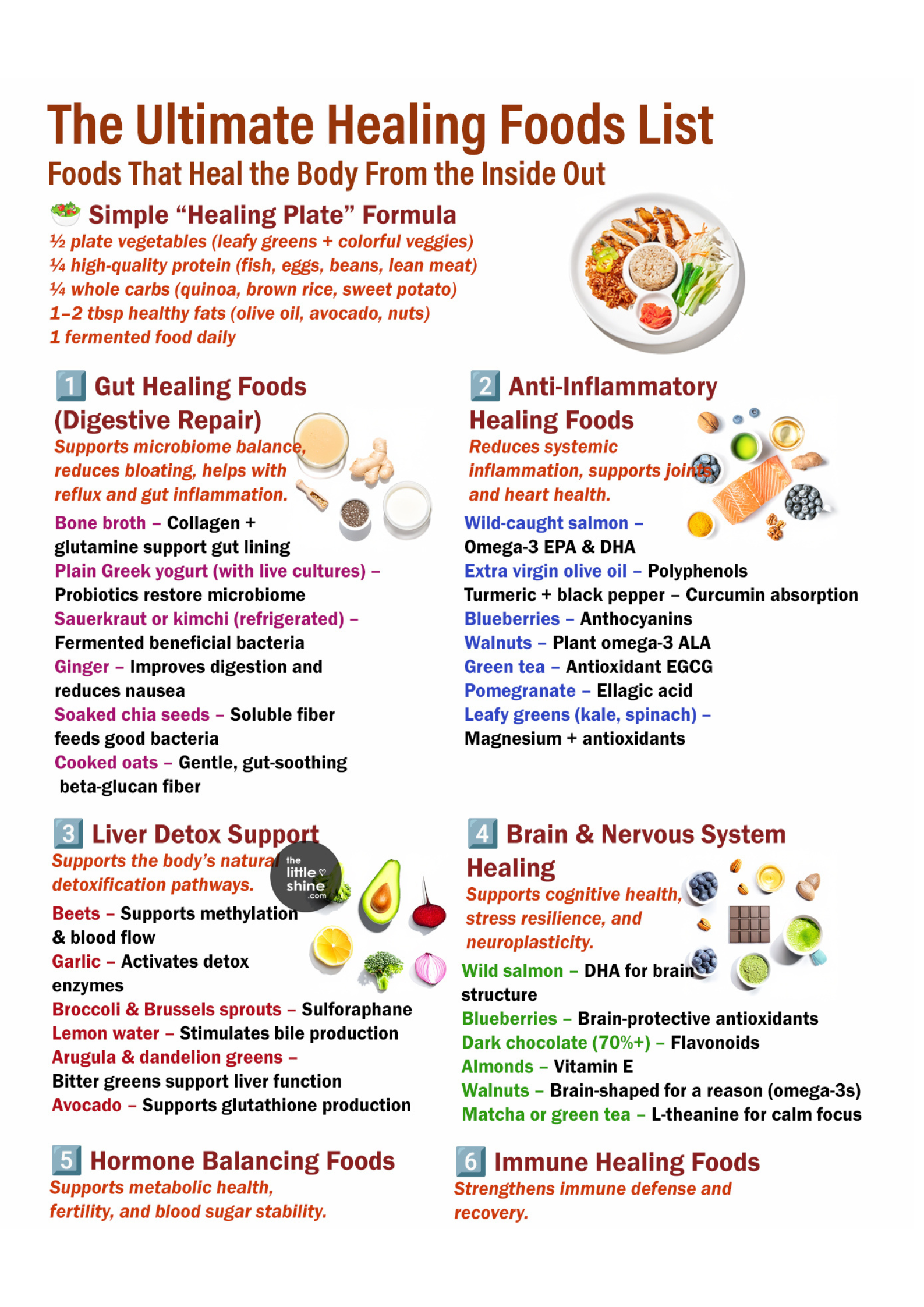
1. Gut-Healing Foods: Repair Starts in the Digestive Tract
The gut is central to immunity, nutrient absorption, inflammation control, and even mood regulation. Supporting the intestinal lining and microbiome is foundational.
Key foods:
- Bone broth – Rich in collagen, gelatin, and glutamine, which help support the gut lining.
- Plain Greek yogurt (with live cultures) – Provides probiotics that restore microbial balance.
- Sauerkraut or kimchi (refrigerated) – Fermented foods that enhance microbial diversity.
- Ginger – Improves gastric emptying and reduces bloating.
- Chia seeds (soaked) – Soluble fiber feeds beneficial gut bacteria.
- Cooked oats – Contain beta-glucans that support digestion and gut integrity.
Why it matters: A healthy gut reduces systemic inflammation, improves nutrient absorption, and supports immune resilience.
2. Anti-Inflammatory Foods: Lowering Chronic Inflammation
Chronic inflammation underlies heart disease, diabetes, arthritis, and many modern conditions. Diet is one of the most powerful modulators of inflammatory load.
Key foods:
- Wild-caught salmon – High in EPA and DHA omega-3 fatty acids.
- Extra virgin olive oil – Contains polyphenols with anti-inflammatory properties.
- Turmeric + black pepper – Curcumin becomes more bioavailable when paired with piperine.
- Blueberries – Rich in anthocyanins.
- Walnuts – Provide plant-based omega-3 (ALA).
- Green tea – Contains EGCG, a potent antioxidant.
Why it matters: Lower inflammation supports joint health, cardiovascular function, metabolic balance, and longevity.
3. Liver-Supportive Foods: Enhancing Detox Pathways
The liver processes hormones, toxins, medications, and metabolic waste. Supporting its natural detoxification pathways improves overall resilience.
Key foods:
- Beets – Support methylation and blood flow.
- Garlic – Activates detoxification enzymes.
- Broccoli & Brussels sprouts – Provide sulforaphane to assist phase II detox.
- Lemon water – Stimulates bile production.
- Arugula & dandelion greens – Bitter compounds support liver function.
- Avocado – Helps promote glutathione production.
Why it matters: Efficient detox pathways reduce toxic burden and support hormone balance.
4. Hormone-Balancing Foods: Supporting Metabolic Stability
Hormones regulate energy, mood, fertility, metabolism, and sleep. Stable blood sugar and adequate healthy fats are essential for balance.
Key foods:
- Ground flaxseed – Lignans help regulate estrogen metabolism.
- Pasture-raised eggs – Rich in choline and fat-soluble vitamins.
- Avocado – Monounsaturated fats support hormone production.
- Sweet potatoes – Provide stable carbohydrates to prevent insulin spikes.
- Pumpkin seeds – High in zinc, essential for hormone synthesis.
- Grass-fed beef (moderate portions) – Iron and B vitamins support energy and endocrine health.
Why it matters: Balanced hormones support reproductive health, weight stability, and mood regulation.
5. Immune-Supportive Foods: Strengthening Defense Systems
Your immune system requires micronutrients, antioxidants, and protein to function effectively.
Key foods:
- Citrus fruits – Vitamin C supports immune cell activity.
- Garlic – Natural antimicrobial properties.
- Raw local honey – Soothes throat irritation and supports immunity.
- Mushrooms (shiitake, maitake) – Beta-glucans enhance immune response.
- Spinach – Rich in folate and antioxidants.
- Bone broth – Provides amino acids for immune repair.
Why it matters: A nourished immune system responds faster and recovers more efficiently.
6. Brain & Nervous System Healing Foods
Cognitive clarity, mood stability, and stress resilience are strongly influenced by diet.
Key foods:
- Wild salmon – DHA is a structural component of brain tissue.
- Blueberries – Protect neurons from oxidative stress.
- Dark chocolate (70%+ cacao) – Flavonoids support blood flow to the brain.
- Almonds – Vitamin E protects brain cells.
- Walnuts – Omega-3 fatty acids support neural function.
- Green tea or matcha – L-theanine promotes calm focus.
Why it matters: Brain-supportive foods enhance memory, concentration, and emotional regulation.
The Healing Plate Formula
You don’t need a complicated diet. A simple framework works:
- ½ plate vegetables (leafy greens + colorful produce)
- ¼ high-quality protein (fish, eggs, beans, lean meats)
- ¼ whole carbohydrates (quinoa, brown rice, sweet potato)
- 1–2 tablespoons healthy fats (olive oil, avocado, nuts)
- 1 fermented food daily
Consistency matters more than perfection.
Final Perspective
Healing foods are not about trends or restrictive eating. They are about supporting biological systems with nutrient-dense, minimally processed ingredients. Over time, these choices reduce inflammation, strengthen immunity, stabilize hormones, and improve long-term health outcomes.
Food is not a replacement for medical care — but it is one of the most powerful daily tools available for prevention and repair.