
here’s a quiet irony in how we live: the body keeps sending gentle reminders, while we keep hitting “snooze.” Not because we don’t care, but because modern life is loud, fast, and full of distractions that pull us away from simple truths.
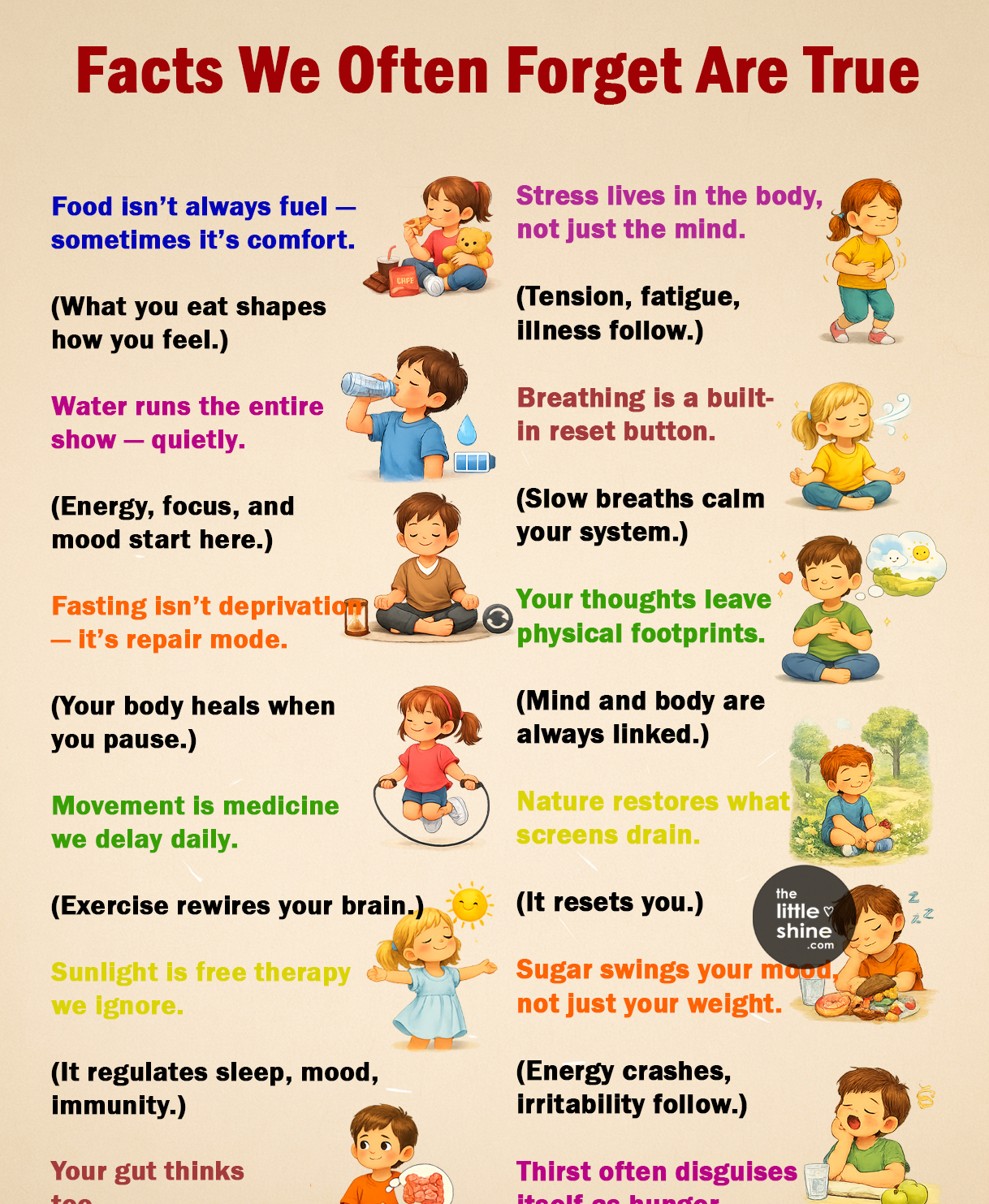
These aren’t revolutionary ideas. They’re foundational ones we tend to overlook… until something feels off. Think of this as a recalibration, not a reinvention.
1. Food isn’t always fuel — sometimes it’s comfort
We often eat to soften stress, boredom, or anxiety. The body, however, responds to nutrients, not emotions. When food becomes a coping tool, energy dips and mood follows.
2. Water runs the entire show — quietly
Hydration doesn’t announce itself dramatically, but dehydration does. Fatigue, brain fog, and irritability often trace back to simply not drinking enough water.
3. Fasting isn’t deprivation — it’s repair mode
Giving your body a break from constant digestion allows it to focus on restoration. It’s less about restriction and more about creating space for internal cleanup.
4. Movement is medicine we delay daily
Exercise isn’t just about fitness goals. It sharpens thinking, stabilizes mood, and improves resilience. Yet it’s often the first thing we postpone.
5. Sunlight is free therapy we ignore
Natural light helps regulate your internal clock, boosts mood, and strengthens immunity. A few minutes outside can do what hours indoors cannot.
6. Your gut thinks too
Your digestive system communicates constantly with your brain. When your gut is off, it shows up as low energy, irritability, or mental fog.
7. Sleep is your body’s repair shift
Sleep isn’t passive rest. It’s when your body repairs tissues, balances hormones, and processes the day. Skimping on it is like skipping maintenance on a machine you rely on.
8. Stress lives in the body, not just the mind
Stress doesn’t stay in your thoughts. It settles into muscles, disrupts sleep, and weakens immunity. What feels “mental” often becomes physical.
9. Breathing is a built-in reset button
Your breath is one of the fastest ways to influence your nervous system. Slower, deeper breathing can shift your body from tension to calm within minutes.
10. Your thoughts leave physical footprints
The mind and body are in constant conversation. Persistent negative thinking can translate into fatigue, tension, and even illness over time.
11. Nature restores what screens drain
Time outdoors recalibrates attention, reduces stress, and improves mood. Even a short walk can feel like clearing static from your mind.
12. Sugar swings your mood, not just your weight
Quick spikes in blood sugar lead to quick crashes. The result is often irritability, low energy, and cravings that keep the cycle going.
13. Silence is maintenance, not emptiness
Constant noise keeps the mind overstimulated. Quiet moments allow your brain to process, reset, and regain clarity.
14. Thirst often disguises itself as hunger
What feels like hunger is sometimes just dehydration. Drinking water first can change how your body signals its needs.
15. Your body whispers before it shouts
Fatigue, mild discomfort, and small changes are early signals. Ignoring them doesn’t make them disappear, it only delays the message.
Final Thought
Your body isn’t complicated. It’s consistent.
It responds to what you repeatedly do, not what you occasionally attempt.
Most of these truths don’t require drastic change. They ask for attention. A glass of water. A walk outside. A deeper breath. A little more sleep.
Small shifts, repeated daily, quietly reshape how you feel.