Does Your Body Feel Off? It Might Be Nutrient Deficiency
Feeling “off” without a clear reason is more common than you think. Persistent fatigue, weak immunity, hair fall, or even mood swings can often be traced back to nutrient deficiencies. Your body relies on vitamins and minerals for almost every function—from energy production to brain health—so even small gaps can show up as noticeable symptoms.
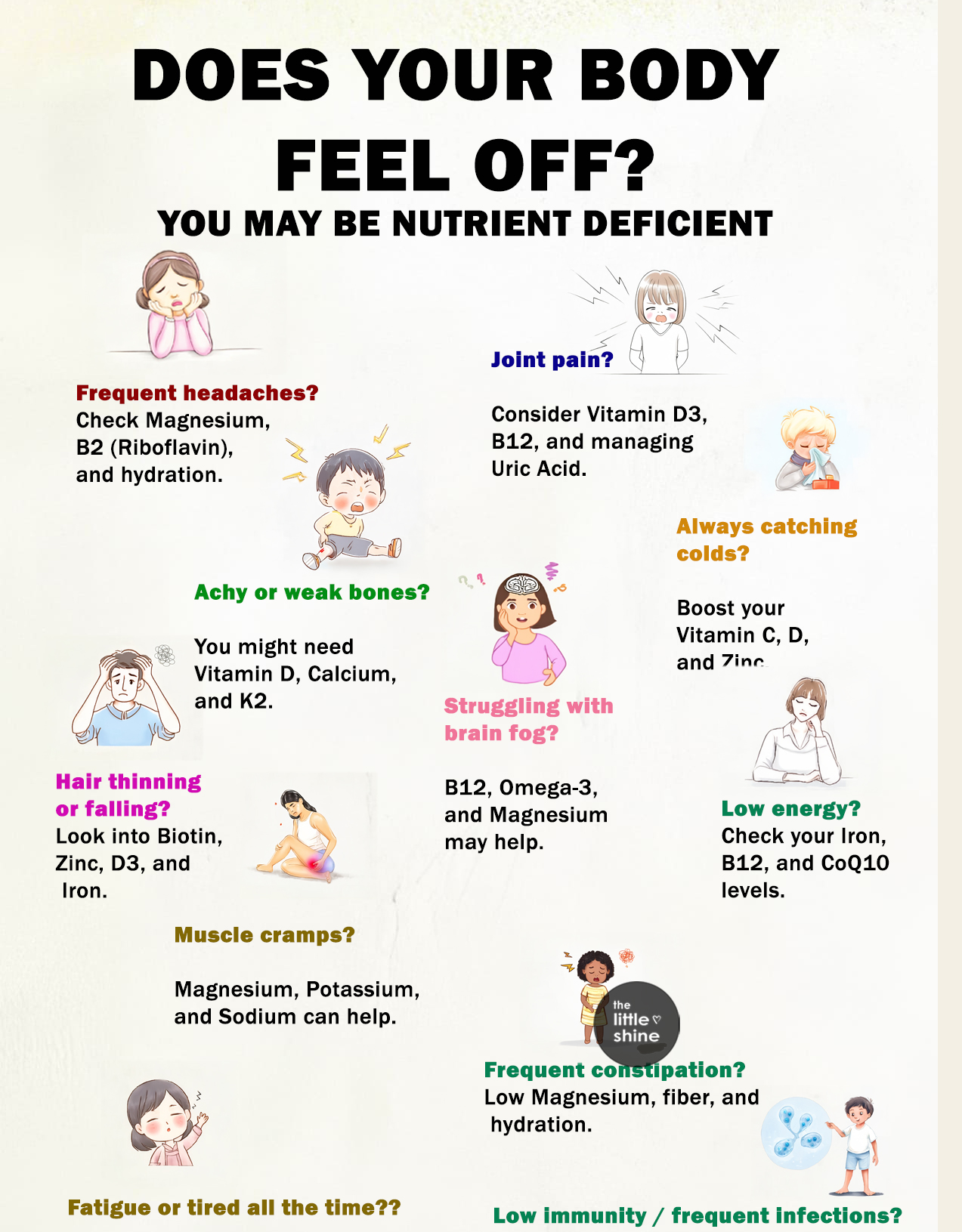
Here’s a breakdown of common signs and what your body might be lacking:
1. Fatigue or Tired All the Time
Constant exhaustion isn’t just about poor sleep. It may signal low Iron, Vitamin B12, Vitamin D, Magnesium, or even thyroid imbalance. These nutrients are crucial for energy metabolism and oxygen transport.
2. Joint Pain
If your joints feel stiff or achy, it could be linked to low Vitamin D3, B12, or high uric acid levels. These play a role in bone health and inflammation control.
3. Weak or Achy Bones
Frequent bone discomfort may point to deficiencies in Vitamin D, Calcium, and Vitamin K2, all essential for bone strength and density.
4. Frequent Colds or Low Immunity
Getting sick often? Your immune system may need support from Vitamin C, Vitamin D, and Zinc.
5. Hair Thinning or Hair Fall
Hair health depends on nutrients like Biotin, Zinc, Iron, and Vitamin D3. Deficiencies here can disrupt hair growth cycles.
6. Brain Fog or Poor Focus
Struggling to think clearly? Low levels of Vitamin B12, Omega-3 fatty acids, and Magnesium can affect cognitive function and memory.
7. Muscle Cramps
Frequent cramps may indicate low Magnesium, Potassium, or Sodium, which are vital for muscle contraction and nerve signaling.
8. Low Energy Levels
If you feel drained even after rest, check Iron, B12, and CoQ10, which are key for cellular energy production.
9. Frequent Headaches
Recurring headaches can be linked to low Magnesium, Vitamin B2 (Riboflavin), or dehydration.
10. Dry Skin or Lips
Dryness may indicate a lack of Omega-3 fatty acids, Vitamin E, or Vitamin A, which support skin hydration and repair.
11. Slow Wound Healing
If cuts take longer to heal, your body might need more Vitamin C, Zinc, and Protein.
12. Mood Swings or Anxiety
Mental health is closely tied to nutrition. Low Magnesium, Vitamin B6, Vitamin D, and Omega-3s can affect mood regulation.
13. Bleeding Gums
This is a classic sign of Vitamin C deficiency, which is essential for gum and tissue health.
14. Poor Night Vision
Difficulty seeing in low light may indicate low Vitamin A.
15. Tingling in Hands or Feet
A “pins and needles” sensation is often linked to Vitamin B12 or B-complex deficiencies affecting nerve health.
16. Irregular Heartbeat
Electrolyte imbalances, especially low Magnesium and Potassium, can impact heart rhythm.
17. White Spots on Nails
Often associated with Zinc deficiency, though minor trauma can also cause it.
18. Unusual Cravings (like ice)
Craving non-food items (pica) is commonly linked to Iron deficiency.
19. Brittle Nails
Weak nails may need more Biotin, Iron, and Protein.
20. Constipation
Low Magnesium, fiber, and hydration can slow digestion.
21. Restless Legs at Night
This uncomfortable sensation is often tied to low Iron and Magnesium.
22. Sun Sensitivity or Skin Redness
This may be linked to low Niacin (Vitamin B3).
Final Note
While these symptoms can hint at deficiencies, they’re not a diagnosis. If you notice persistent issues, it’s best to get proper blood tests and consult a healthcare professional. Self-supplementing without guidance can sometimes do more harm than good.
A balanced diet, good hydration, sunlight exposure, and mindful lifestyle habits remain the foundation of good health.