Habits That Disrupt Your Hormones (And How to Fix Them)
Your daily habits have a direct impact on your hormonal balance. Many common choices—from your morning routine to your workout intensity—can accidentally disrupt the delicate systems that regulate your mood, energy, metabolism, and overall well-being. Here’s a look at everyday habits that may be affecting your hormones, along with simple, actionable steps you can take to support your body’s natural balance.
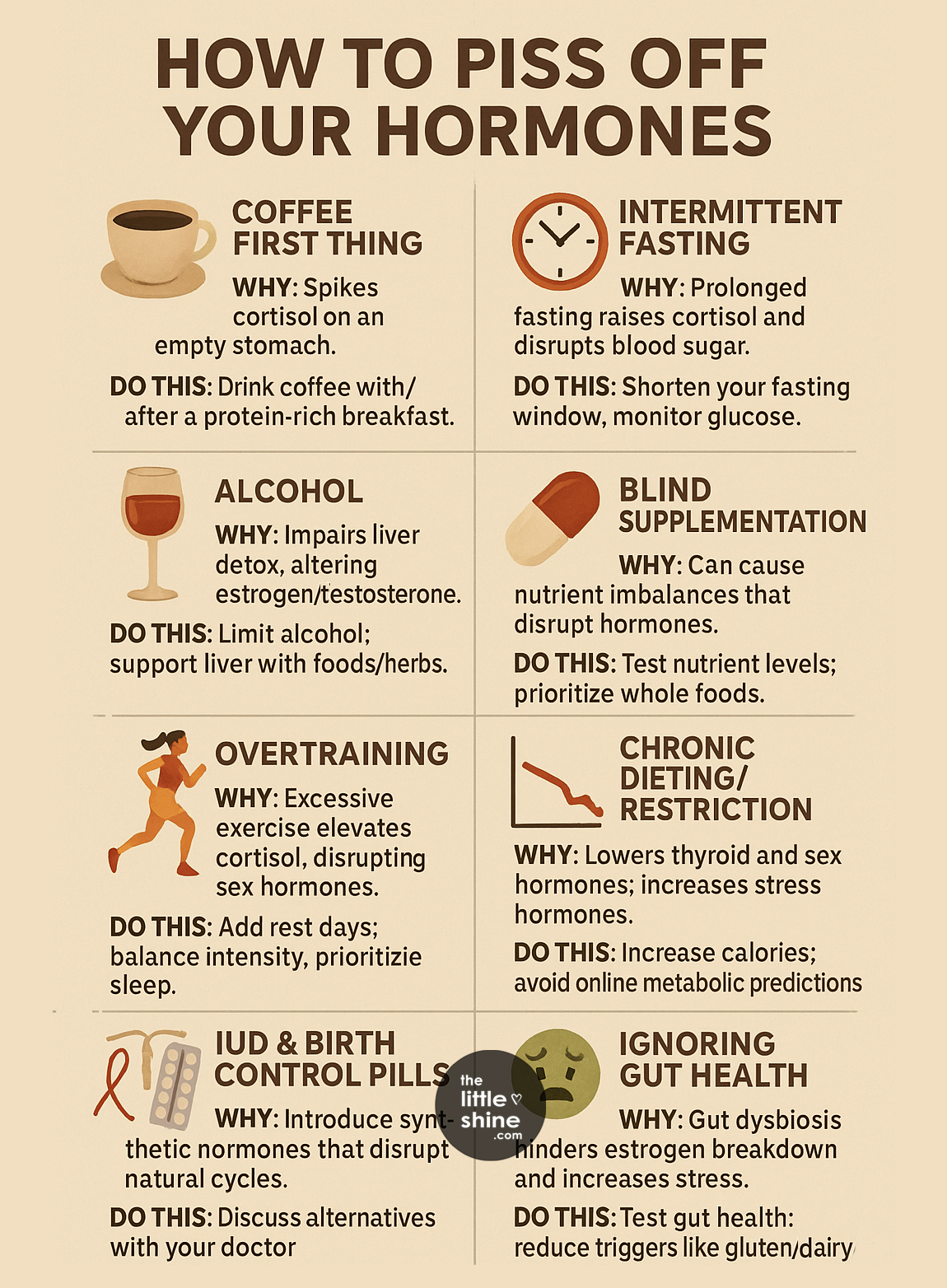
1. Drinking Coffee First Thing on an Empty Stomach
- Why it’s a problem: It causes a sharp spike in the stress hormone cortisol, which can throw off your entire hormonal rhythm for the day.
- What to do instead: Enjoy your coffee with a balanced breakfast that includes protein, or swap your first cup for a lower-caffeine option like green tea or matcha.
2. Prolonged Intermittent Fasting
- Why it’s a problem: Going too long without food is a physical stressor that raises cortisol and can disrupt blood sugar and reproductive hormones.
- What to do instead: Shorten your fasting window and consider checking your blood sugar levels to understand your body’s response.
3. Regular Alcohol Consumption
- Why it’s a problem: Alcohol burdens your liver, impairing its ability to properly process and detoxify hormones like estrogen and testosterone.
- What to do instead: Incorporate more alcohol-free days and support your liver with healthy foods and herbs.
4. Taking Supplements Without Guidance
- Why it’s a problem: Blindly supplementing can create nutrient imbalances that interfere with your body’s natural ability to produce and regulate hormones.
- What to do instead: Get your nutrient levels tested and focus on getting nutrition from whole foods first.
5. Overtraining
- Why it’s a problem: While exercise is good, too much of it is a major physical stressor that elevates cortisol and can disrupt other sex hormones.
- What to do instead: Balance high-intensity workouts with rest days, lower-intensity movement, and prioritize quality sleep for recovery.
6. Chronic Dieting or Calorie Restriction
- Why it’s a problem: Not eating enough signals to your body that it’s in a famine, which can suppress thyroid function and sex hormones while increasing stress hormones.
- What to do instead: Slowly increase your calorie intake to support your metabolism and avoid relying on online calculators to determine your needs.
7. Using Hormonal Birth Control (IUD & Pills)
- Why it’s a problem: These methods introduce synthetic hormones that override your body’s natural endocrine rhythm.
- What to do instead: Talk to your doctor about non-hormonal alternatives or ways to support your body if you choose to use them.
8. Ignoring Your Gut Health
- Why it’s a problem: An unhealthy gut microbiome can hinder the breakdown and elimination of estrogen and is a significant source of internal stress.
- What to do instead: Investigate your gut health with a test, and reduce inflammatory food triggers like gluten, dairy, and refined sugar.