Baking cookies seems simple—mix, scoop, bake—but even small ingredient or temperature changes can dramatically affect texture, shape, and flavor. If your cookies turn out too hard, too flat, too dry, or simply not how you envisioned, this guide breaks down the most common mistakes and how to fix them instantly.
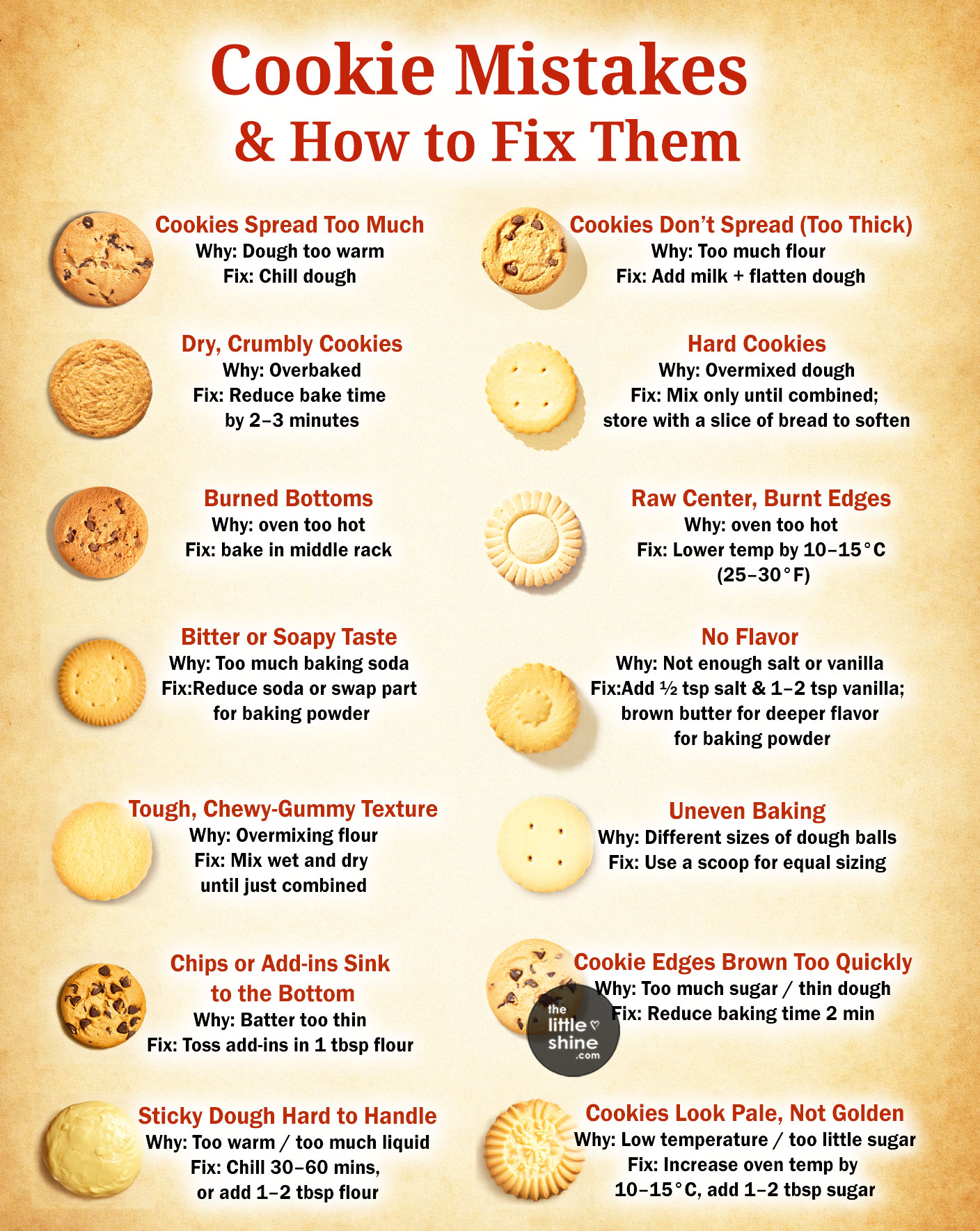
1. Cookies Spread Too Much
Why it happens: Butter is too soft, dough is warm, or there isn’t enough flour.
Fix: Chill the dough for 1–2 hours, add 1–2 tablespoons of flour, and bake on parchment paper instead of a greased tray.
2. Cookies Don’t Spread (Too Thick)
Why: Dough is too stiff or flour is too high.
Fix: Add 1–2 teaspoons of milk or melted butter, and lightly flatten dough balls before baking.
3. Dry, Crumbly Cookies
Why: Overbaking or too much flour.
Fix: Decrease bake time by 2–3 minutes; add 1 tablespoon of milk or an extra egg yolk to increase moisture.
4. Hard Cookies
Why: Overmixing or overbaking.
Fix: Mix until ingredients are just combined. To soften already-baked cookies, store them with a slice of bread or apple.
5. Burned Bottoms
Why: Dark baking tray, high heat, or baking too close to heating element.
Fix: Use a light-colored tray, bake on the middle rack, or double-layer the tray for insulation.
6. Raw Center, Burnt Edges
Why: Oven is too hot or dough balls are too large.
Fix: Lower the temperature by 10–15°C and form smaller, evenly sized dough balls.
7. Bitter or Soapy Taste
Why: Too much baking soda.
Fix: Measure precisely; consider replacing part of the soda with baking powder.
8. Cookies Taste Bland
Why: Not enough salt, vanilla, or caramelization in the butter and sugars.
Fix: Add ½ teaspoon salt, 1–2 teaspoons vanilla, or brown the butter for richer flavor.
9. Tough or Gummy Texture
Why: Overmixing develops gluten.
Fix: Stir until the flour disappears—no more.
10. Uneven Baking
Why: Dough balls are different sizes.
Fix: Use a cookie scoop for consistency.
11. Pale, Undercaramelized Cookies
Why: Low temperature or too little sugar.
Fix: Increase oven temperature slightly or add 1–2 tablespoons sugar for better browning.
12. Eggy Flavor
Why: Too much egg for the flour amount.
Fix: Add a little more flour or sugar; use correct egg size.
13. Chips or Nuts Sink
Why: Dough is too soft or thin.
Fix: Toss add-ins in flour before mixing and chill the dough.
14. Greasy Cookies
Why: Too much butter or butter melted too hot.
Fix: Reduce butter slightly or ensure melted butter cools before mixing.
15. Grainy Texture
Why: Sugar not creamed properly.
Fix: Beat butter and sugar until light and fluffy (3–4 minutes).
16. Sticky Dough
Why: Warm or overly moist dough.
Fix: Chill for 30–60 minutes or add 1–2 tablespoons flour.
17. Edges Brown Faster Than Centers
Why: High sugar or thin dough.
Fix: Thicken dough with flour or reduce baking time slightly.
18. Cracked Tops
Why: Oven temperature too high or dough too dry.
Fix: Add 1–2 teaspoons milk or lower oven temperature.
19. Metallic or Off Flavors
Why: Old baking soda/powder.
Fix: Replace leaveners every 3–6 months for best results.
20. Cookies Stick to Tray
Why: No parchment or left too long to cool.
Fix: Use parchment paper or silicone mat; remove cookies after 5–7 minutes of cooling.
Quick Ingredient Fixes
- No eggs? Use 1 tbsp flax + 3 tbsp water, or ¼ cup yogurt.
- No brown sugar? Use white sugar + 1 tbsp molasses or honey.
- No butter? Use oil: ¾ cup oil = 1 cup butter.
- Out of baking soda? Use 3× amount of baking powder.
Texture Adjustments
- For chewier cookies: Add 1 tbsp honey or corn syrup; increase brown sugar.
- For crisp cookies: Use more white sugar and bake 1–2 minutes longer.
- For softer cookies: Shorten bake time and add an extra egg yolk.
Storage Mistakes & Fixes
Cookies Turn Stale Quickly
Store in an airtight container with bread or a marshmallow to keep them soft.
Soft Cookies Turn Hard
Make sure cookies cool fully before storing and slightly underbake.
Final Tips for Perfect Cookies
- Always measure flour correctly (spoon & level).
- Use room-temperature ingredients unless recipe says otherwise.
- Bake one tray at a time for even heat.
- Cool fully before storing to prevent sogginess.