We all strive to eat healthily, but sometimes our preparation and consumption habits can unknowingly reduce the nutritional value of our food or even introduce minor health risks. From improper cooking methods to suboptimal storage, small mistakes can make a big difference. Here are 25 common food pitfalls and the simple corrections to maximize your health benefits.
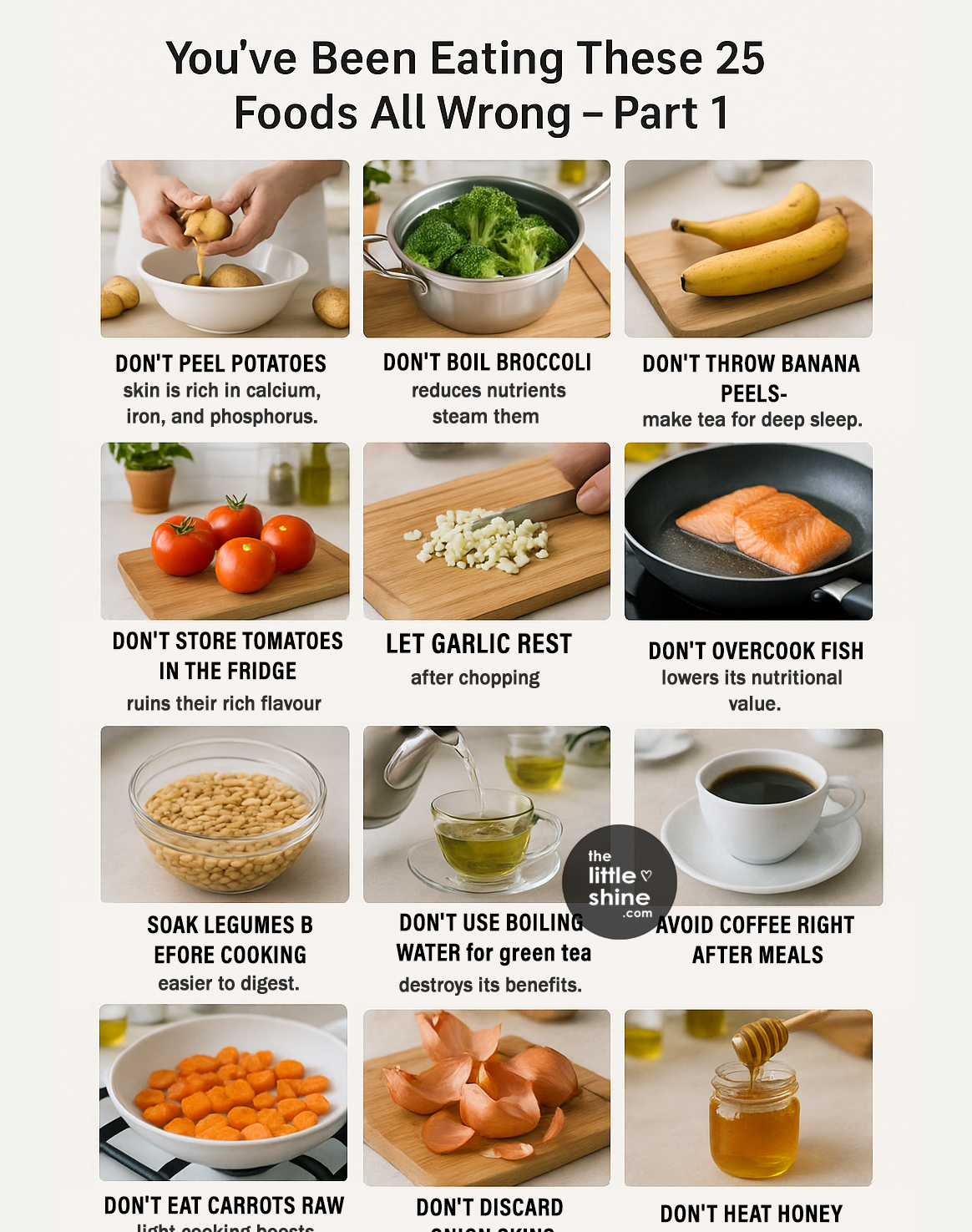
Potatoes: Don’t peel them; the skin is rich in calcium, iron, and phosphorus.
Broccoli: Avoid boiling; steam it to preserve its vital nutrients.
Bananas: Freeze them for a healthy, natural-sugar dessert.
Tomatoes: Never refrigerate; cold temperatures ruin their rich flavour.
Garlic: Let it rest for 10 minutes after chopping to activate its beneficial compounds.
Fish: Avoid overcooking to maintain its high nutritional value.
Yogurt: Don’t use metal spoons; they can harm its probiotic bacteria.
Green Tea: Never use boiling water, as it destroys antioxidants.
Carrots: Light cooking boosts Vitamin A absorption compared to eating them only raw.
Coffee: Avoid drinking right after meals, as it can inhibit iron absorption.
Onions: Use the nutrient-packed skins to make a flavourful broth.
Mushrooms: Don’t over-rinse; they absorb water and won’t brown properly.
Banana Peels: Don’t discard; they are edible and packed with potassium.
Avocado: Let it ripen fully before cutting for the best flavour and nutrients.
Olive Oil: Don’t cook with extra virgin olive oil on high heat; it breaks down.
Apple Seeds: Avoid eating; they contain a compound that releases cyanide.
Honey: Never cook it over high heat, which destroys its healthy enzymes.
Bread: Don’t store it in the fridge, as this makes it stale faster.
Legumes: Always soak before cooking to reduce cooking time and aid digestion.
Rhubarb: Never eat the leaves, as they contain toxic oxalic acid.
LETTuce: Don’t cut it with a knife; tear it by hand to prevent the edges from browning and wilting quickly.
BERRIES: Don’t wash them until right before you eat them; pre-washing introduces moisture that speeds up spoilage.
EGGS: Avoid storing them in the refrigerator door; constant temperature fluctuations from opening the door can degrade their quality.
NUTS & SEEDS: Don’t eat them raw; lightly roasting or soaking them can improve nutrient absorption and digestibility.
SPINACH: Avoid boiling it; the water-soluble vitamins like Vitamin C and Folate leach out. Sauté or steam it instead.
By making these simple adjustments, you can significantly enhance the flavour, nutritional intake, and safety of your daily diet.