Coffee is one of the most widely consumed beverages in the world, but how it is prepared, served, and enjoyed varies dramatically across cultures. In some countries, coffee is a quick ritual taken standing at a bar; in others, it is a slow social ceremony that can last for hours. Understanding coffee etiquette not only enhances your travel experience but also shows respect for local customs.
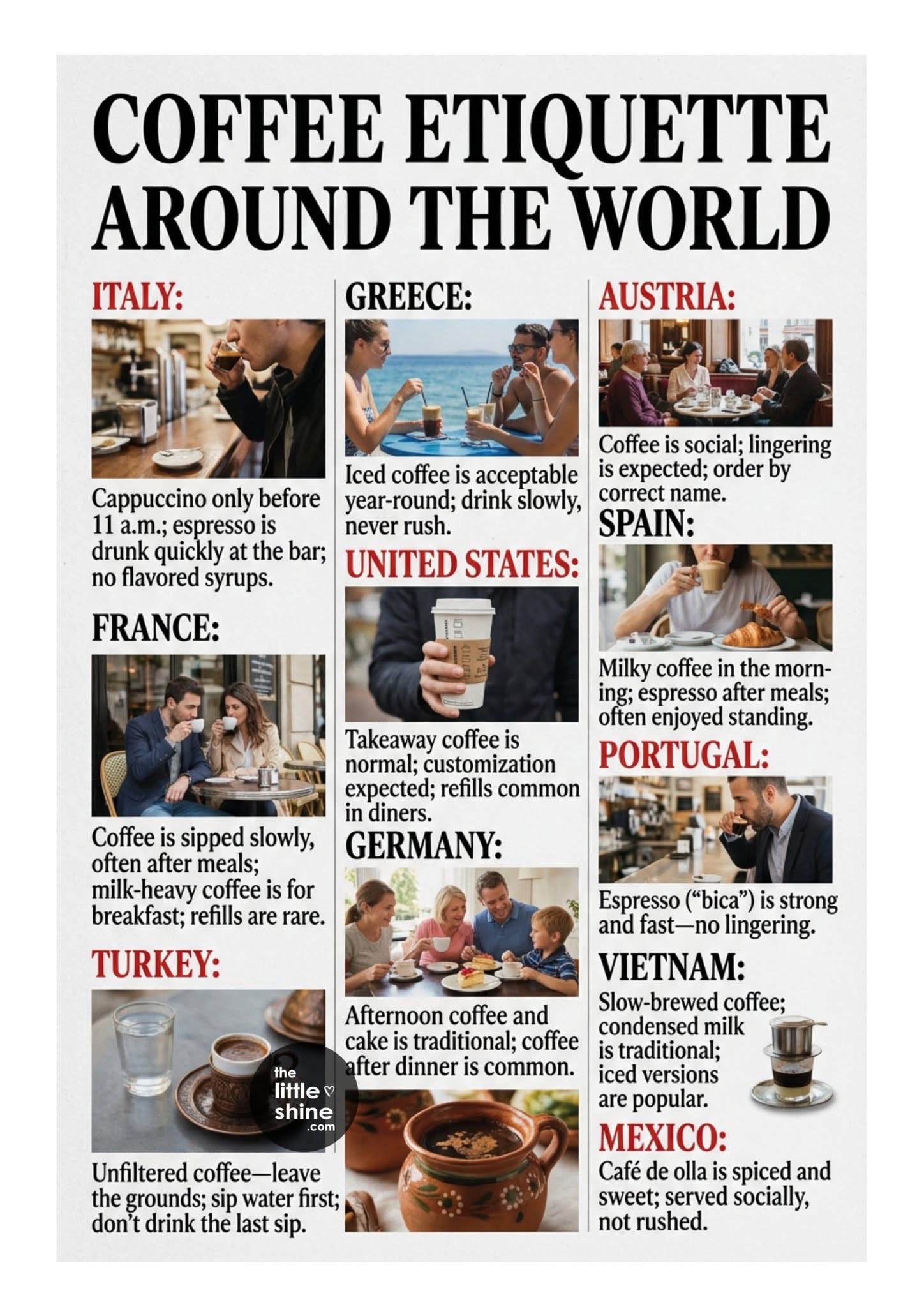
Here is a global tour of coffee etiquette and traditions from around the world.
Italy: Fast, Focused, and Traditional
In Italy, coffee is about efficiency and tradition. Espresso is typically consumed standing at the bar, often in under a minute. Cappuccinos are considered breakfast drinks and are rarely ordered after 11 a.m. Asking for a “latte” will get you a glass of milk—locals order caffè latte instead.
France: Leisure Over Speed
French coffee culture emphasizes relaxation. Coffee is usually enjoyed while seated at cafés, often alongside conversation or people-watching. Milkier coffee is common at breakfast, while espresso follows meals. Lingering at a table is normal and not rushed.
Turkey: A Symbol of Hospitality
Turkish coffee is thick, unfiltered, and rich. The grounds settle at the bottom of the cup and should never be consumed. Accepting coffee is a sign of respect, and in many homes, reading fortunes from the leftover grounds is a social tradition.
Ethiopia: A Sacred Ceremony
Ethiopia, the birthplace of coffee, treats coffee as a ceremonial experience. Traditional coffee ceremonies can last several hours and involve roasting, grinding, and brewing beans in front of guests. Leaving early is considered impolite. Coffee is often served black, sometimes with salt instead of sugar.
United States: Convenience and Customization
Coffee in the US is practical and personalized. Takeaway cups are common, refills are expected, and custom orders are encouraged. Tipping baristas is standard practice, especially in specialty coffee shops.
Japan: Quiet and Respectful
Japanese coffee etiquette emphasizes order and consideration. Drinking while walking is discouraged, and cafés are generally quiet. Interestingly, canned and vending-machine coffee is widely accepted and respected as part of daily life.
Sweden: Fika as a Way of Life
In Sweden, coffee is inseparable from fika—a social break involving coffee and pastries. It is less about the beverage and more about connection. Repeatedly declining coffee invitations may be seen as antisocial.
Saudi Arabia: Coffee as Courtesy
Arabic coffee (Gahwa) is lightly roasted and served in small cups. It is offered as a gesture of hospitality. Guests accept with their right hand and gently shake the cup when they have had enough. Flat refusal can be considered rude.
Greece: Coffee Without a Clock
Greek coffee culture is slow and social. Iced coffee varieties like Frappé and Freddo are popular year-round. Coffee outings often last hours, and rushing is uncommon.
Vietnam: Bold and Sweet
Vietnamese coffee is known for its strength and use of condensed milk. Drinks are typically stirred thoroughly before sipping. Iced coffee (Cà phê sữa đá) is a national staple, even in the morning.
Spain: Specific Orders Matter
Spain has precise coffee terminology. Milk-heavy coffee is common in the morning, while espresso dominates later in the day. Coffee breaks are short but social, often enjoyed standing at the counter.
Portugal: Small, Strong, and Quick
Portuguese espresso is called bica in Lisbon and cimbalino in Porto. It is strong, served in small cups, and consumed quickly—often with sugar.
Austria: Café Culture Royalty
Vienna’s coffeehouses are institutions. Coffee comes in many traditional styles and is meant to be enjoyed slowly. Reading, writing, or sitting for hours is perfectly acceptable with a single cup.
Germany: Coffee and Cake Tradition
In Germany, afternoon coffee is often paired with cake during Kaffee und Kuchen. This is a social ritual, particularly on weekends. Refills are rare, and quality is valued over quantity.
Australia: Serious About Quality
Australians take coffee very seriously. Espresso-based drinks dominate, with the flat white as a national favorite. Excessive customization is uncommon—customers generally trust the barista’s expertise.
New Zealand: Minimalist Coffee Culture
Similar to Australia, New Zealand prefers strong, high-quality coffee. Syrups and sweeteners are less popular, and coffee is treated as a daily essential rather than a treat.
South Korea: Coffee Meets Lifestyle
South Korean cafés are social, aesthetic spaces where people work, study, or meet friends for hours. Iced coffee is popular even in cold weather, and café culture is deeply integrated into daily life.
Mexico: Warm and Welcoming
Traditional Mexican coffee is sometimes brewed with cinnamon or spices. It is commonly served with breakfast or bread. Declining coffee in a home setting may be seen as impolite.
Brazil: Sweet Hospitality
Brazilian coffee, often served as cafezinho, is small, strong, and sweet. It is offered frequently in homes and offices as a sign of welcome. Politely declining may require explanation.
Finland: The World’s Coffee Capital
Finland consistently ranks among the highest coffee-consuming countries. Coffee breaks (kahvitauko) are built into the workday. Black coffee is the norm, and drinking it is unhurried.
Final Thoughts
Coffee etiquette reflects a country’s values—speed or slowness, individuality or community, formality or warmth. Whether you are traveling or simply exploring global cultures from home, understanding how coffee is enjoyed around the world adds depth to every cup.