Food inflation continues to pressure household budgets. The fastest way to reduce grocery spend is not extreme couponing — it’s eliminating convenience premiums. Pre-cut, pre-seasoned, single-serve, and heavily marketed items consistently cost 30–300% more per ounce than their basic equivalents.
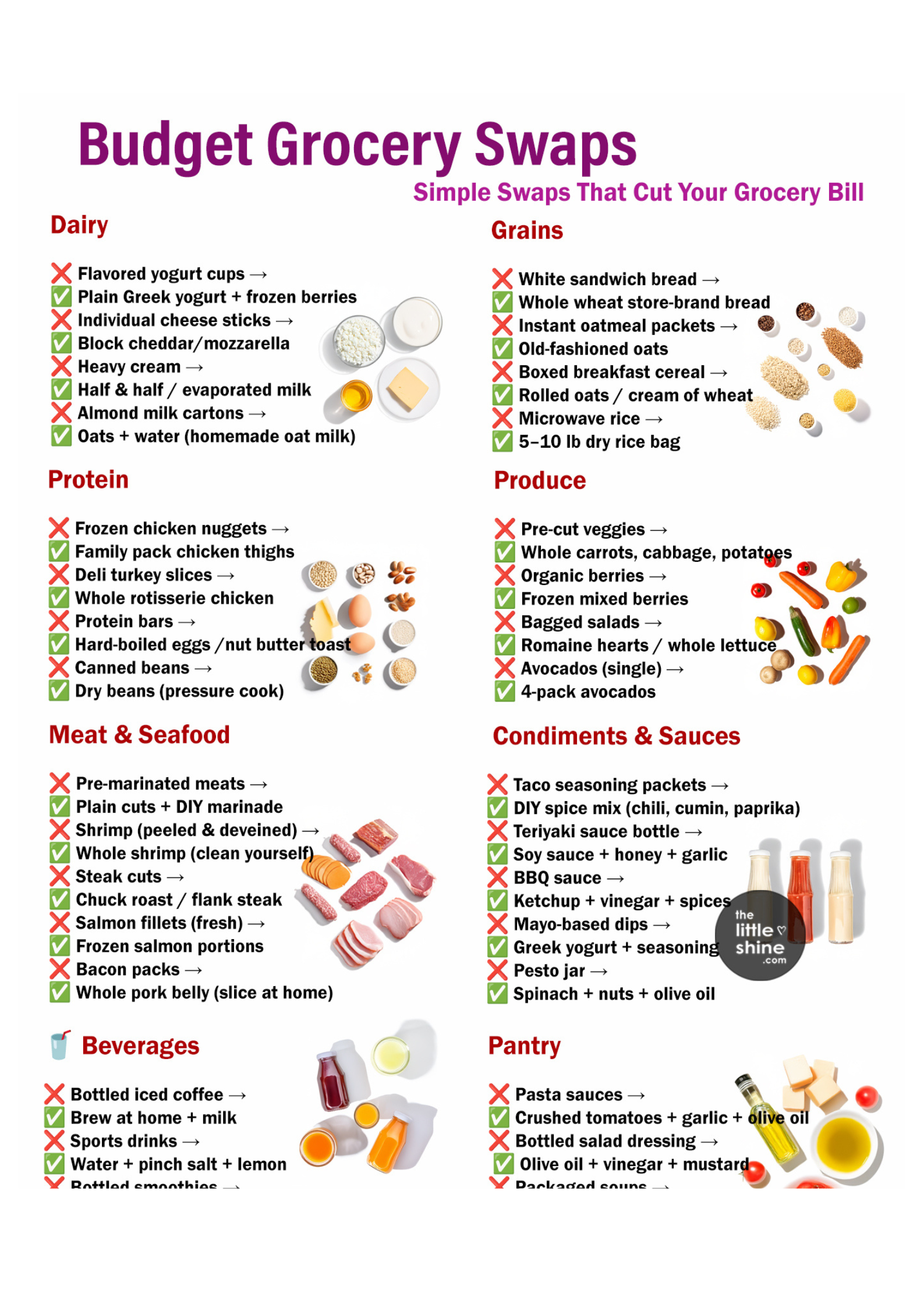
Below is a structured breakdown of high-impact grocery swaps across dairy, grains, protein, produce, pantry, snacks, beverages, condiments, meat, baking, plant-based, convenience foods, and freezer staples — combining the strategies from your image and the expanded categories.
🥛 Dairy Swaps
Problem: Single-serve and flavored dairy products carry branding + processing markups.
Swap Strategy: Buy plain, buy large, flavor yourself.
- Flavored yogurt cups → Plain Greek yogurt + frozen berries
- Individual cheese sticks → Block cheddar or mozzarella
- Heavy cream → Half & half or evaporated milk
- Almond milk cartons → Oats + water (homemade oat milk)
Savings logic:
Single-serve yogurt can cost 2–3x more per ounce than a large tub. Blocks of cheese are significantly cheaper than individually wrapped sticks.
🌾 Grain Swaps
Problem: Convenience grains = high markup, low fiber.**
- White sandwich bread → Store-brand whole wheat
- Instant oatmeal packets → Old-fashioned oats
- Boxed breakfast cereal → Rolled oats or cream of wheat
- Microwave rice cups → 5–10 lb dry rice bag
Savings logic:
Rice cups can cost 4–5x more per serving than bulk dry rice. Instant oats are often double the price of rolled oats.
🍗 Protein Swaps
Problem: Processed protein is the most expensive form of protein.**
- Frozen chicken nuggets → Family-pack chicken thighs
- Deli turkey slices → Whole rotisserie chicken
- Protein bars → Hard-boiled eggs or nut butter toast
- Canned beans → Dry beans (pressure cook)
Savings logic:
Dry beans cost pennies per serving compared to canned. A whole chicken provides multiple meals at lower cost per gram of protein.
🥕 Produce Swaps
Problem: Pre-cut and organic premiums inflate produce budgets.**
- Pre-cut veggies → Whole carrots, cabbage, potatoes
- Organic berries → Frozen mixed berries
- Bagged salads → Romaine hearts or whole lettuce
- Single avocados → 4-pack avocados
Savings logic:
Pre-cut vegetables can cost 2–3x more. Frozen berries reduce spoilage waste.
🥫 Pantry Swaps
Problem: Prepared sauces are convenience traps.**
- Pasta sauce jars → Crushed tomatoes + garlic + olive oil
- Bottled salad dressing → Olive oil + vinegar + mustard
- Packaged soups → Bouillon cubes + vegetables
- Flavored oils → Store-brand olive or avocado oil
Savings logic:
Most bottled sauces are inexpensive ingredients sold at premium pricing.
🍿 Snack Swaps
Problem: Packaged snack foods have the highest markup per calorie.**
- Chips → Air-popped popcorn kernels
- Cookies → Banana + peanut butter
- Granola bars → Homemade oat bites
- Ice cream → Frozen banana “nice cream”
Savings logic:
Popcorn kernels cost a fraction per serving compared to chips.
🥤 Beverage Swaps
Problem: Liquid calories drain budgets quickly.**
- Bottled iced coffee → Brew at home
- Sports drinks → Water + pinch salt + lemon
- Bottled smoothies → Banana + frozen berries + yogurt
- Flavored sparkling water → Soda water + citrus
- Premium juice blends → Whole fruit + water
Savings logic:
Bottled coffee and smoothies can cost 5–10x more than homemade versions.
🧂 Condiments & Sauces
Problem: Seasoning packets = rebranded spices.**
- Taco seasoning packets → DIY spice mix
- Teriyaki sauce → Soy sauce + honey + garlic
- BBQ sauce → Ketchup + vinegar + spices
- Mayo dips → Greek yogurt + seasoning
- Jarred pesto → Spinach + nuts + olive oil
🥩 Meat & Seafood Swaps
Problem: Pre-prepped meat carries labor markup.**
- Pre-marinated meats → Plain cuts + DIY marinade
- Peeled shrimp → Whole shrimp (clean yourself)
- Fresh salmon fillets → Frozen salmon portions
- Steak cuts → Chuck roast or flank steak
- Bacon packs → Whole pork belly (slice at home)
🧁 Baking Swaps
Problem: Baking mixes are basic pantry ingredients with branding.**
- Pancake mix → Flour + eggs + milk
- Self-rising flour → Flour + baking powder
- Brown sugar → White sugar + molasses
- Pre-made pie crust → Flour + butter
- Tub frosting → Butter + powdered sugar
🌱 Plant-Based Swaps
Problem: Processed plant substitutes are premium-priced.**
- Vegan meat substitutes → Lentils or chickpeas
- Almond flour products → Blended oats
- Store-bought hummus → DIY chickpeas + tahini
- Cauliflower rice packs → Whole cauliflower
🧊 Freezer & Convenience Swaps
Problem: “Ready-to-eat” costs more than ready-to-prep.**
- Frozen ready meals → Batch-cooked freezer meals
- Single-serve yogurt drinks → Large yogurt tub
- Frozen garlic bread → Bread + butter + garlic
- Instant ramen cups → Dry noodles + homemade broth
- Frozen smoothie packs → DIY portioned freezer bags
The Core Principle Behind Every Swap
- Buy larger formats.
- Avoid single-serve packaging.
- Avoid pre-cut/pre-marinated.
- Favor store-brand staples.
- Cook once, eat twice.
- Reduce food waste with frozen options.