Maintaining a healthy body is not about one single habit; it is the outcome of consistent care for every system that keeps us functioning. From your eyes to your feet, each body part has unique needs that can be met with simple, sustainable routines. This article outlines practical, science-backed ways to strengthen each part of your body and support long-term well-being.
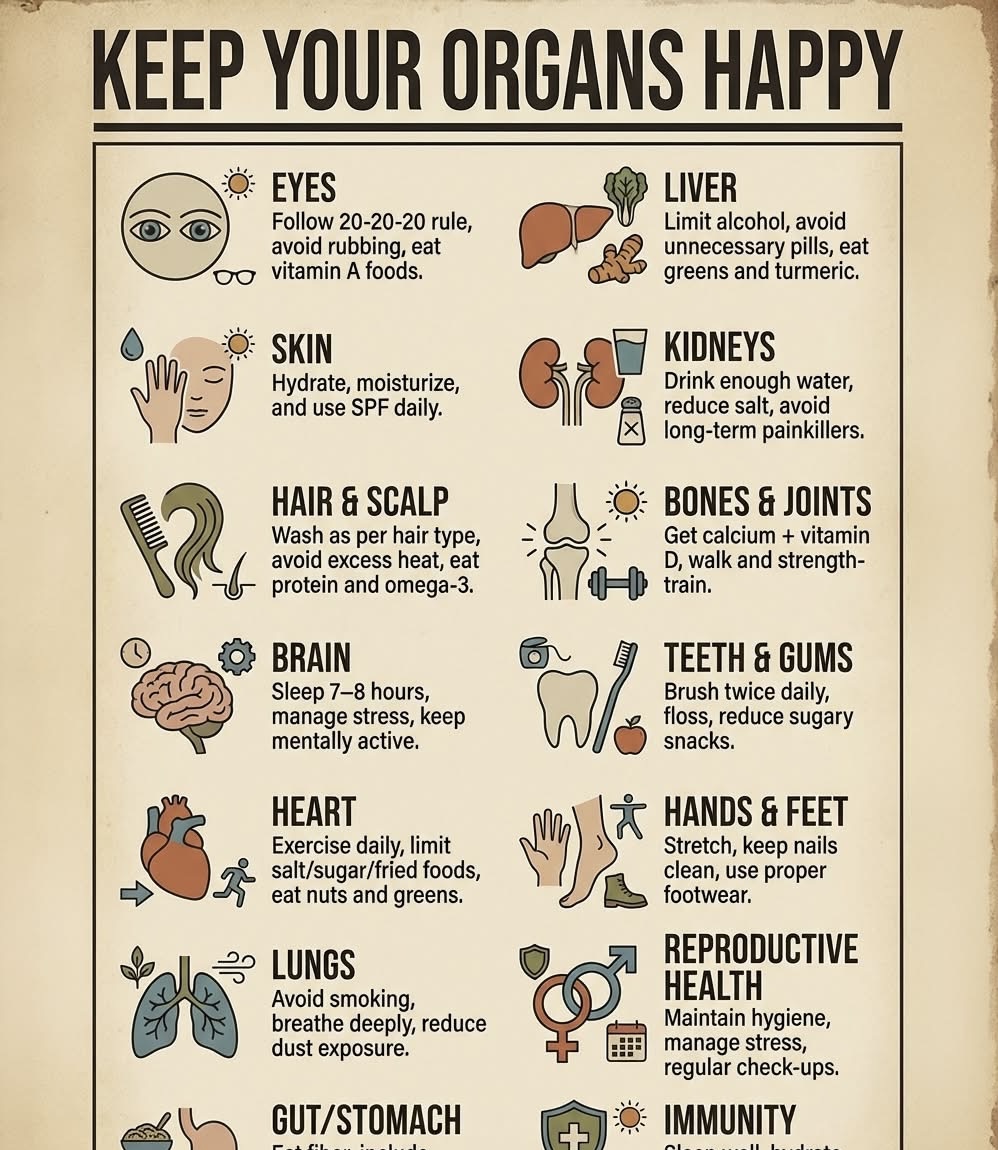
1. Eyes
- Follow the 20-20-20 rule to reduce screen strain.
- Consume vitamin A–rich foods like carrots and spinach.
- Use proper lighting and avoid rubbing your eyes.
- Take regular screen breaks to prevent dryness and fatigue.
2. Skin
- Drink adequate water to maintain elasticity.
- Moisturize daily to strengthen the skin barrier.
- Apply sunscreen (SPF 30+) every day.
- Reduce intake of sugar and processed foods.
3. Hair & Scalp
- Wash hair based on your hair type—avoid overwashing.
- Minimize heat styling to prevent damage.
- Eat protein-rich foods and omega-3s for stronger hair.
- Keep the scalp clean to avoid buildup and irritation.
4. Brain
- Sleep 7–8 hours consistently for optimal cognitive function.
- Engage in reading, puzzles, or learning activities.
- Practice meditation or deep breathing to reduce stress.
- Stay socially connected to support emotional health.
5. Heart
- Exercise at least 30 minutes daily (walking, cycling, etc.).
- Limit salt, sugar, and deep-fried foods.
- Add nuts, oats, leafy greens, and fish to your diet.
- Maintain a healthy weight to reduce cardiac risk.
6. Lungs
- Avoid smoking and secondhand smoke exposure.
- Practice deep-breathing exercises to expand lung capacity.
- Keep your home free of dust and pollutants.
- Stay physically active to support healthy respiration.
7. Stomach & Gut
- Eat high-fiber foods such as whole grains, fruits, and vegetables.
- Include probiotic foods like yogurt or kefir.
- Avoid heavy meals late at night.
- Chew food thoroughly to aid digestion.
8. Liver
- Reduce alcohol consumption.
- Avoid unnecessary medications or supplements.
- Eat liver-friendly foods such as greens, beetroot, turmeric.
- Maintain a healthy weight to support liver function.
9. Kidneys
- Drink enough water daily, but avoid excessive intake.
- Limit salty and ultra-processed foods.
- Avoid long-term use of OTC painkillers unless prescribed.
- Manage blood pressure and blood sugar levels.
10. Bones & Joints
- Consume adequate calcium and vitamin D.
- Engage in weight-bearing exercises (walking, resistance training).
- Maintain proper posture during daily activities.
- Balance body weight to reduce joint strain.
11. Teeth & Gums
- Brush twice daily and floss regularly.
- Reduce sugary snacks and fizzy drinks.
- Replace your toothbrush every 2–3 months.
- Visit the dentist every 6–12 months.
12. Hands & Feet
- Stretch fingers, wrists, ankles, and toes regularly.
- Trim nails properly to avoid infection.
- Use comfortable, supportive footwear.
- Moisturize hands and feet to prevent cracking.
13. Reproductive Health
- Maintain hygiene and wear breathable cotton undergarments.
- Manage stress to support hormonal balance.
- Have regular medical check-ups and screenings.
- Follow safe and hygienic practices.
14. Immune System
- Sleep well, hydrate consistently, and eat nutrient-rich foods.
- Get 10–15 minutes of sunlight daily for vitamin D.
- Minimize processed foods and refined sugar.
- Manage stress through relaxation techniques