
Essential oils are concentrated plant extracts used for scent and relaxation. They are not cures, but they can support comfort when used safely and correctly.
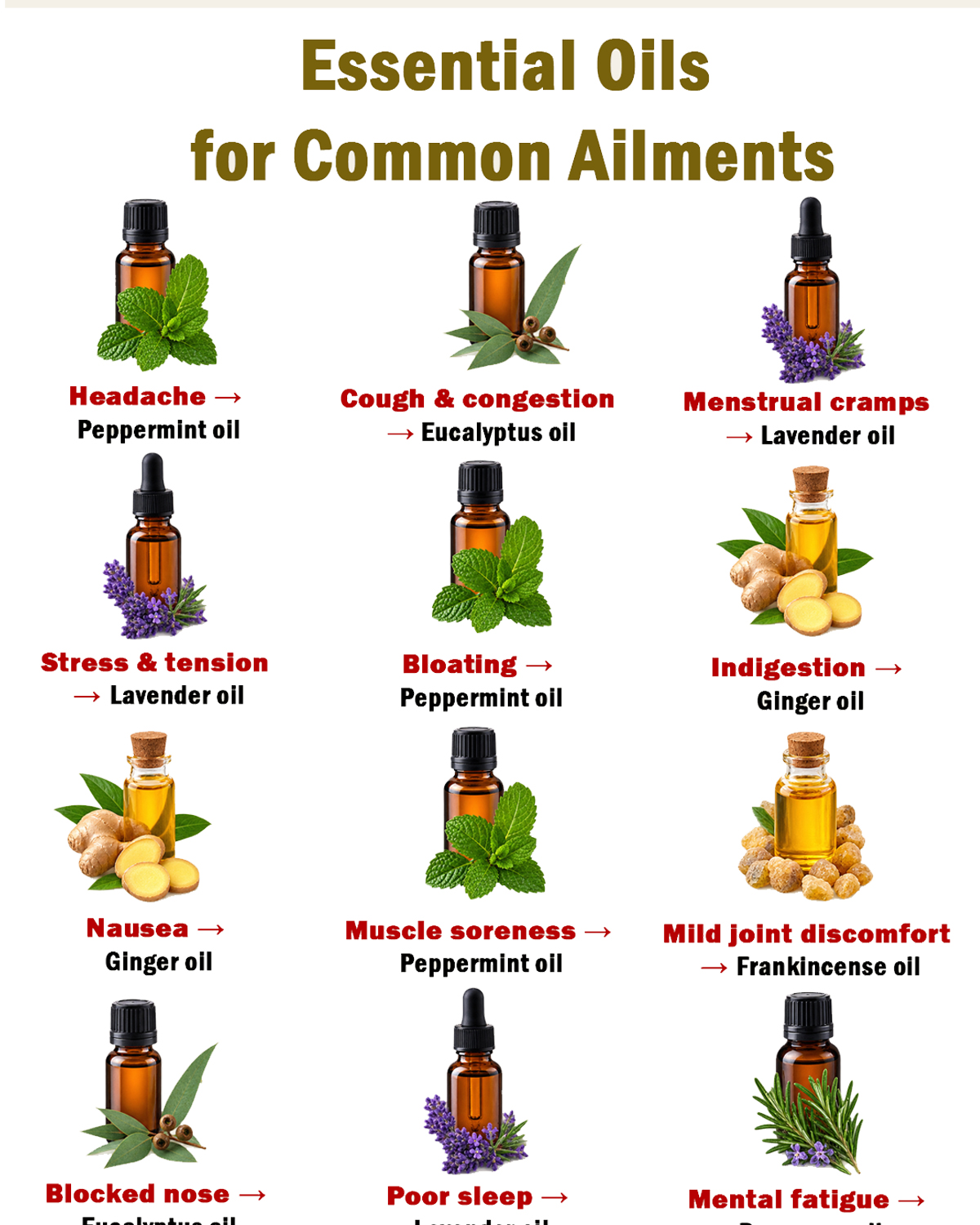
Peppermint Oil
What it’s used for: Headaches, focus, mild bloating
How to use:
- Mix 1–2 drops with a carrier oil (like coconut or almond oil)
- Gently massage onto temples or the back of the neck for headache relief
- Inhale from a tissue for a quick refreshing boost
Important: Never apply near eyes or use undiluted. Avoid if it worsens heartburn.
Eucalyptus Oil
What it’s used for: Coughs, congestion, stuffy nose
How to use:
- Add a few drops to a diffuser for inhalation
- Or add to a bowl of hot water and breathe in steam (keep eyes closed)
Important: Do NOT swallow. Can irritate sensitive airways.
Lavender Oil
What it’s used for: Stress, sleep, mild relaxation
How to use:
- Add a few drops to a diffuser before bedtime
- Place 1 drop (diluted) on wrists or pillow
- Add to a warm bath for relaxation
Important: Works best as a calming aid, not a medical treatment.
Ginger Oil
What it’s used for: Nausea, motion discomfort, digestion support
How to use:
- Inhale from a tissue or diffuser when feeling queasy
- Mix with carrier oil and gently massage the stomach area
Important: Do not ingest essential oil. Seek medical help for ongoing nausea.
Frankincense Oil
What it’s used for: Joint discomfort, relaxation, massage
How to use:
- Mix with carrier oil and massage into sore joints
- Use in a diffuser for a calming atmosphere
Important: Effects are mild and temporary; not a treatment for joint disease.
Rosemary Oil
What it’s used for: Mental fatigue, focus, alertness
How to use:
- Diffuse while studying or working
- Inhale directly from a tissue for a quick mental refresh
Important: Not a treatment for memory loss or chronic fatigue.
Quick Safety Reminders
- Always dilute before skin use
- Never swallow essential oils
- Keep away from eyes and children
- Stop use if irritation occurs
- Consult a healthcare professional if pregnant or unwell
Essential oils can be a pleasant part of a self-care routine, but they work best as supportive tools—not medical treatments.