
Your body’s organs work together every day to keep you healthy. Although no single food or habit can guarantee perfect health, small and consistent lifestyle choices can support the way your body functions.
Here are 12 simple organ-health pairings to remember.
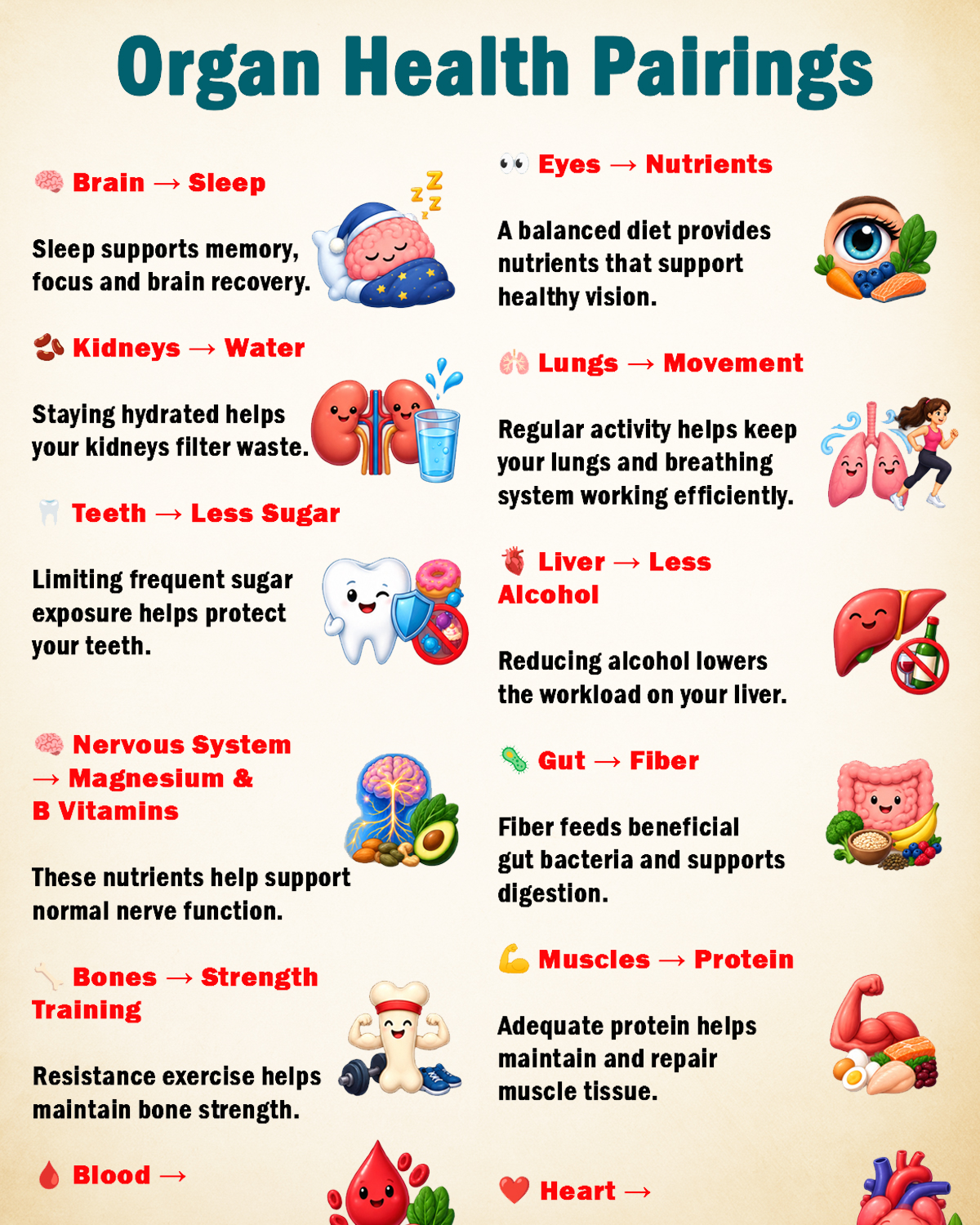
1. Brain → Sleep
Sleep gives the brain time to recover, organize memories and prepare for the next day. Most adults should aim for around seven to nine hours of quality sleep each night.
2. Kidneys → Water
Your kidneys filter waste and help maintain the body’s fluid balance. Drinking enough water supports this process, but individual needs vary depending on health, activity level and climate.
3. Heart → Stress Management
Long-term stress may affect blood pressure, sleep and everyday habits. Deep breathing, regular exercise, enjoyable hobbies and supportive relationships can all help protect cardiovascular well-being.
4. Nervous System → Magnesium and B Vitamins
Magnesium and several B vitamins contribute to normal nerve function. They can be found in foods such as leafy greens, whole grains, legumes, nuts, seeds, eggs and dairy products.
5. Bones → Strength Training
Bones respond positively to resistance and weight-bearing exercise. Strength training, walking and stair climbing can help maintain bone strength—especially when combined with adequate calcium, vitamin D and protein.
6. Blood → Iron
Iron is needed to make hemoglobin, the substance in red blood cells that carries oxygen. Meat, seafood, beans, lentils, tofu and fortified cereals are common sources. Vitamin C can help the body absorb iron from plant foods.
7. Eyes → Nutrients
A varied diet supplies nutrients that support healthy vision. Leafy greens, carrots, eggs, berries and oily fish provide substances such as vitamins A, C and E, lutein, zeaxanthin and omega-3 fats.
8. Lungs → Movement
Regular physical activity strengthens the muscles involved in breathing and helps the body use oxygen more efficiently. Walking, swimming, cycling or dancing can all support respiratory fitness.
9. Liver → Less Alcohol
The liver processes alcohol, and excessive consumption can gradually damage it. Drinking less—or avoiding alcohol entirely—reduces its workload and supports long-term liver health.
10. Gut → Fiber
Fiber feeds beneficial gut bacteria and promotes regular digestion. Fruits, vegetables, beans, lentils, seeds and whole grains are excellent sources. Increase fiber gradually and drink enough water.
11. Muscles → Protein
Protein supplies the building blocks needed to maintain and repair muscle tissue. Include protein-rich foods such as eggs, fish, poultry, dairy, tofu, beans or lentils throughout the day.
12. Teeth → Less Sugar
Frequent sugar exposure gives harmful mouth bacteria more opportunities to produce enamel-damaging acids. Limiting sugary snacks and drinks, brushing twice daily and flossing regularly can help protect your teeth.
The Bottom Line
Good health is rarely about one “miracle” ingredient. It comes from repeated everyday choices: sleeping well, eating a varied diet, staying active, managing stress, drinking enough water and limiting alcohol and added sugar.
Support the whole body, and every organ benefits.