
The body works as one connected system. Although each organ needs many nutrients, these key pairings make it easier to understand their major roles.’
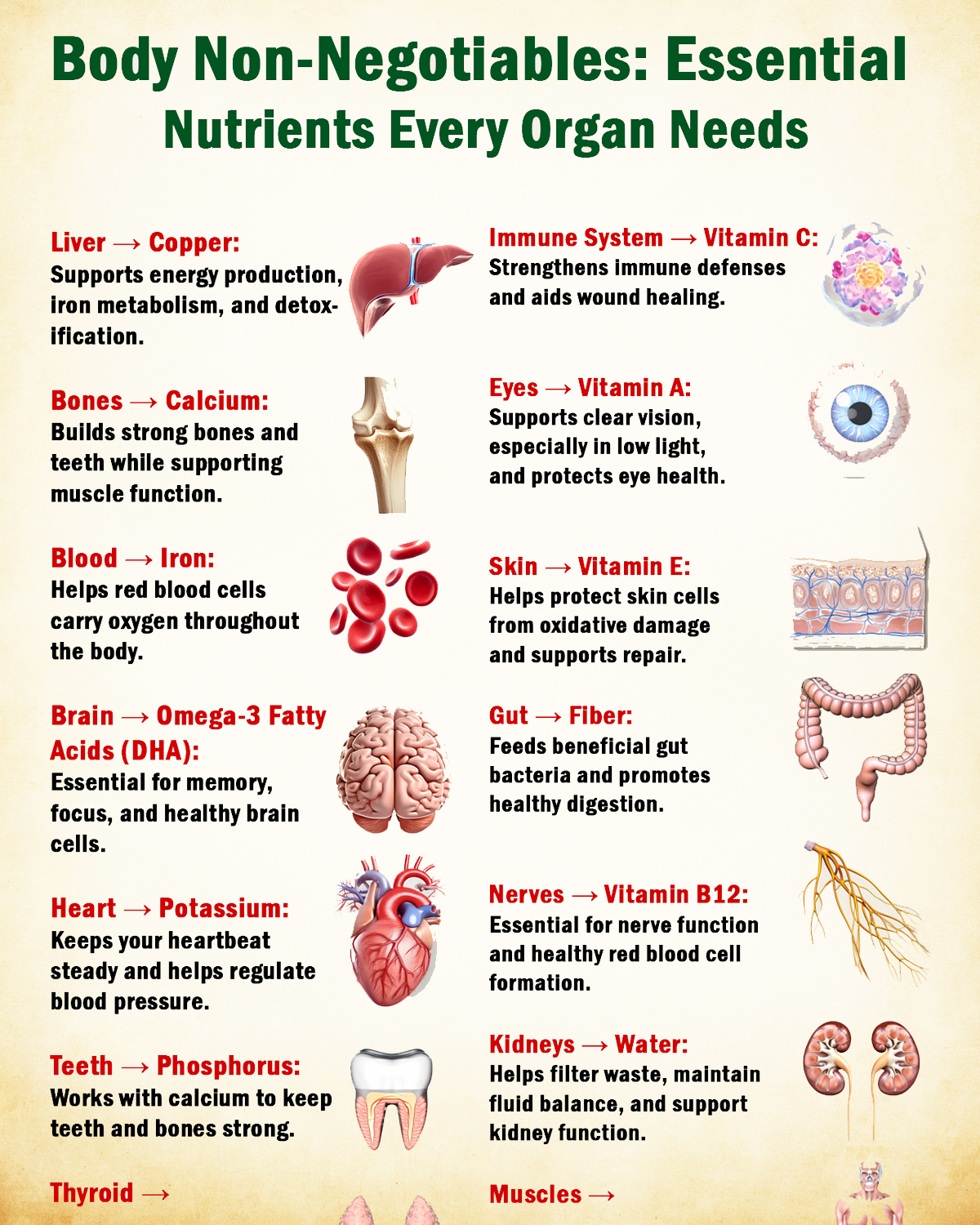
- Liver → Copper
Supports energy production, iron metabolism and normal liver enzyme function.
Sources: Nuts, seeds, whole grains and shellfish. - Immune System → Vitamin C
Supports immune defenses, collagen production and wound healing.
Sources: Citrus fruits, bell peppers, strawberries and broccoli. - Eyes → Vitamin A
Supports clear vision, especially in low light, and protects the eye’s surface.
Sources: Carrots, sweet potatoes, eggs and leafy greens. - Bones → Calcium
Helps build strong bones and teeth while supporting muscles and nerves.
Sources: Dairy, tofu, fortified plant milk and leafy vegetables. - Teeth → Phosphorus
Works with calcium to strengthen tooth enamel and bones.
Sources: Dairy, fish, beans, nuts and whole grains. - Blood → Iron
Helps red blood cells carry oxygen throughout the body.
Sources: Meat, lentils, beans, spinach and fortified cereals. - Brain → Omega-3 Fatty Acids
DHA supports healthy brain-cell structure, memory and normal brain development.
Sources: Salmon, sardines, walnuts, chia seeds and flaxseeds. - Heart → Potassium
Supports a steady heartbeat, muscle function and healthy blood pressure.
Sources: Bananas, potatoes, beans, vegetables and dairy. - Skin → Vitamin E
Helps protect skin cells from oxidative damage and supports normal repair.
Sources: Nuts, seeds, avocado and vegetable oils. - Gut → Fiber
Supports digestion, regular bowel movements and beneficial gut bacteria.
Sources: Fruits, vegetables, beans, seeds and whole grains. - Nerves → Vitamin B12
Supports nerve function, DNA production and healthy red blood cell formation.
Sources: Eggs, dairy, meat, fish and fortified foods. - Kidneys → Water
Helps the kidneys filter waste and maintain fluid and mineral balance. Individual fluid needs may vary. - Muscles → Magnesium
Supports muscle contraction, relaxation, nerve signals and energy production.
Sources: Leafy greens, beans, nuts, seeds and whole grains. - Thyroid → Iodine
Needed to produce thyroid hormones that regulate metabolism.
Sources: Iodized salt, seafood, dairy and eggs.
15. Joints and Cartilage → Vitamin C
Supports collagen production, which helps maintain cartilage, tendons and connective tissues.
Sources: Citrus fruits, berries, peppers and broccoli.
16. Hair → Protein
Hair is mainly made of keratin, a protein needed for normal growth and strength.
Sources: Eggs, fish, dairy, beans, lentils and nuts.
17. Cells → Folate
Supports DNA production, cell division and healthy red blood cell formation.
Sources: Leafy greens, beans, avocado and fortified grains.
18. Blood Clotting → Vitamin K
Helps the body produce proteins needed for normal blood clotting and bone health.
Sources: Kale, spinach, broccoli and other leafy vegetables.
19. Pancreas → Zinc
Supports insulin storage and release while helping with immune function and tissue repair.
Sources: Meat, shellfish, dairy, beans, nuts and seeds.
20. Hormones → Healthy Fats
Provide essential fatty acids and help the body absorb vitamins A, D, E and K.
Sources: Avocado, olive oil, nuts, seeds and fatty fish.
The Bottom Line
No organ depends on only one nutrient. A varied diet containing vegetables, fruits, whole grains, beans, healthy fats and adequate protein gives the body the nutritional teamwork it needs.
Your body is not looking for one miracle nutrient. It wants the whole crew.