
Cleaning your home should leave it fresh, hygienic, and healthier. But some common habits can actually spread dirt, damage surfaces, or reduce the effectiveness of your cleaning products. Here are 20 cleaning mistakes many people make—and the simple fixes that make a big difference.
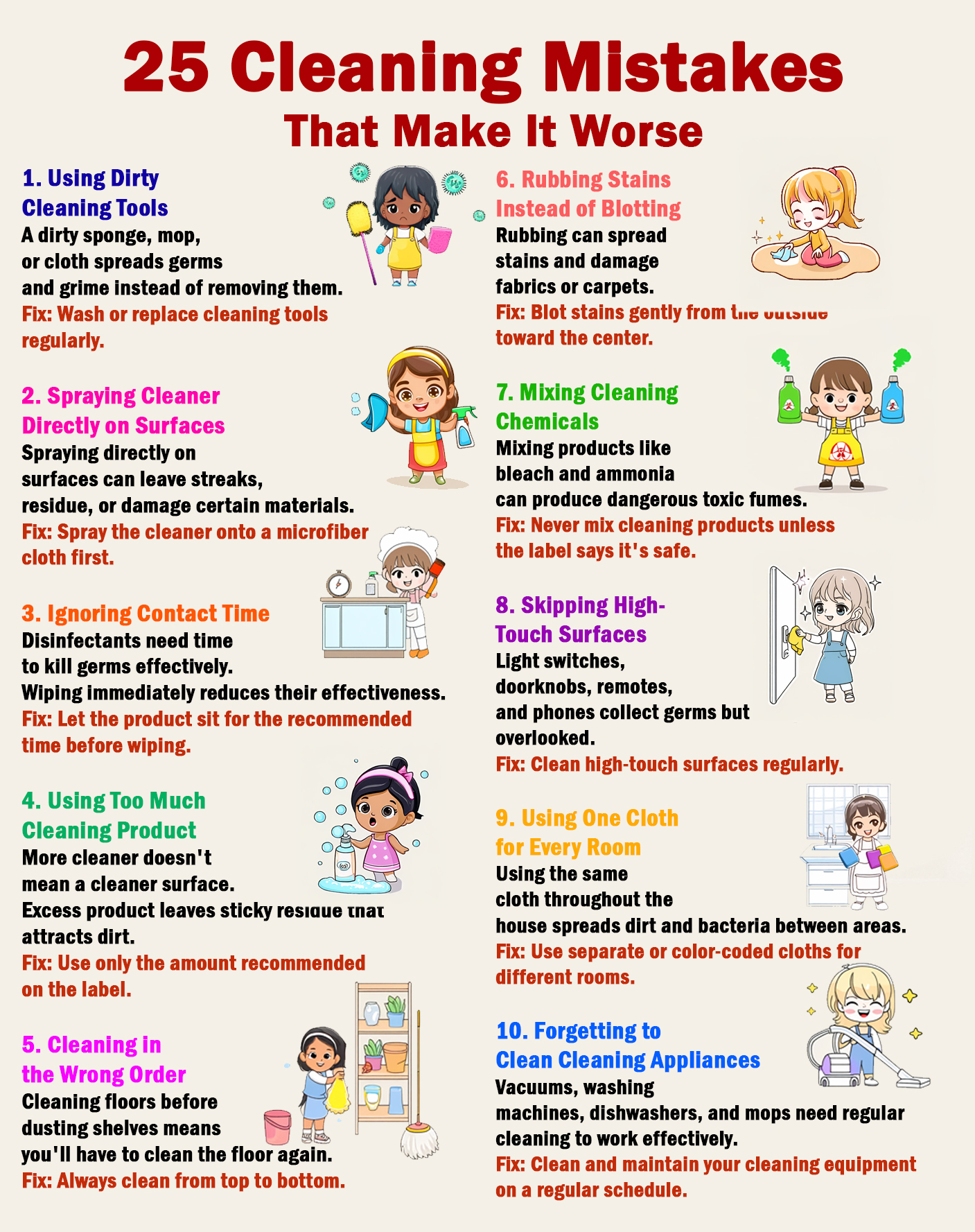
1. Using Dirty Cleaning Tools
A dirty sponge, mop, or cloth doesn’t clean—it spreads bacteria, grease, and grime from one surface to another.
Do this instead: Wash or replace sponges, mop heads, and cleaning cloths regularly.
2. Spraying Cleaner Directly on Surfaces
Spraying cleaner directly onto glass, wood, or electronics can leave streaks, sticky residue, or even damage certain finishes.
Do this instead: Spray the cleaner onto a microfiber cloth first, then wipe the surface.
3. Ignoring Contact Time
Disinfectants need time to kill germs. Wiping them away immediately reduces their effectiveness.
Do this instead: Let the product sit for the amount of time recommended on the label before wiping.
4. Using Too Much Cleaning Product
More cleaner doesn’t mean better cleaning. Excess product leaves behind residue that attracts dust and dirt.
Do this instead: Use only the recommended amount.
5. Cleaning in the Wrong Order
If you clean the floor before dusting shelves, dust will simply fall onto your freshly cleaned floor.
Do this instead: Always clean from top to bottom.
6. Rubbing Stains Instead of Blotting
Scrubbing stains can push them deeper into fabric and spread them further.
Do this instead: Blot gently from the outside of the stain toward the center.
7. Mixing Cleaning Chemicals
Combining products like bleach and ammonia can release dangerous toxic gases.
Do this instead: Never mix cleaning products unless the label specifically says it’s safe.
8. Skipping High-Touch Surfaces
Light switches, door handles, remotes, and phones collect germs throughout the day but are often forgotten.
Do this instead: Wipe these frequently touched surfaces regularly.
9. Using One Cloth for Every Room
Using the same cloth throughout the house transfers bacteria from one area to another.
Do this instead: Use separate or color-coded cloths for different rooms.
10. Forgetting to Clean Cleaning Appliances
Your vacuum, dishwasher, washing machine, and mop also need regular cleaning to perform properly.
Do this instead: Clean and maintain your cleaning equipment on a routine schedule.
11. Using the Same Sponge Too Long
Kitchen sponges quickly become breeding grounds for bacteria and unpleasant odors.
Do this instead: Replace them every 1–2 weeks or sanitize them regularly.
12. Cleaning Windows in Direct Sunlight
Heat causes cleaning solution to dry too quickly, leaving streaks behind.
Do this instead: Clean windows on a cloudy day or when they’re shaded.
13. Not Reading Product Labels
Different cleaners are designed for different surfaces and require proper dilution or application.
Do this instead: Follow the manufacturer’s instructions every time.
14. Using Abrasive Scrubbers on Delicate Surfaces
Harsh scrubbers can scratch glass, stainless steel, ceramic cooktops, and non-stick cookware.
Do this instead: Choose a soft microfiber cloth or a non-scratch sponge.
15. Vacuuming Too Quickly
Fast vacuuming doesn’t give the machine enough time to lift embedded dirt and pet hair.
Do this instead: Move the vacuum slowly and make overlapping passes.
16. Letting Spills Sit Too Long
Fresh spills become stubborn stains the longer they remain on a surface.
Do this instead: Clean spills immediately before they have time to set.
17. Using Too Much Water on Wood Floors
Excess moisture can cause hardwood floors to warp, swell, or develop cracks.
Do this instead: Use a slightly damp microfiber mop instead of soaking the floor.
18. Washing Microfiber Cloths Incorrectly
Fabric softener and bleach coat the fibers, making microfiber less effective at trapping dust and dirt.
Do this instead: Wash microfiber separately using mild detergent and skip the fabric softener.
19. Vacuuming Before Dusting
Dusting after vacuuming sends particles back onto clean floors.
Do this instead: Dust furniture, shelves, and surfaces before vacuuming or mopping.
20. Reusing Dirty Mop Water
Once mop water becomes dirty, it spreads grime instead of removing it.
Do this instead: Empty the bucket and refill it with clean water whenever it becomes cloudy.
Final Thoughts
Small cleaning mistakes can reduce the effectiveness of your efforts and even spread germs around your home. By using the right techniques, following product directions, and cleaning tools as well as surfaces, you’ll achieve a cleaner, healthier home with less time and effort. Sometimes, it’s not about cleaning more—it’s about cleaning smarter.