
Even experienced home cooks can develop habits that affect food safety, flavor, and cooking results. Fortunately, many of these mistakes are easy to fix. Small changes in the kitchen can help meals taste better, reduce food waste, and keep your family safer.
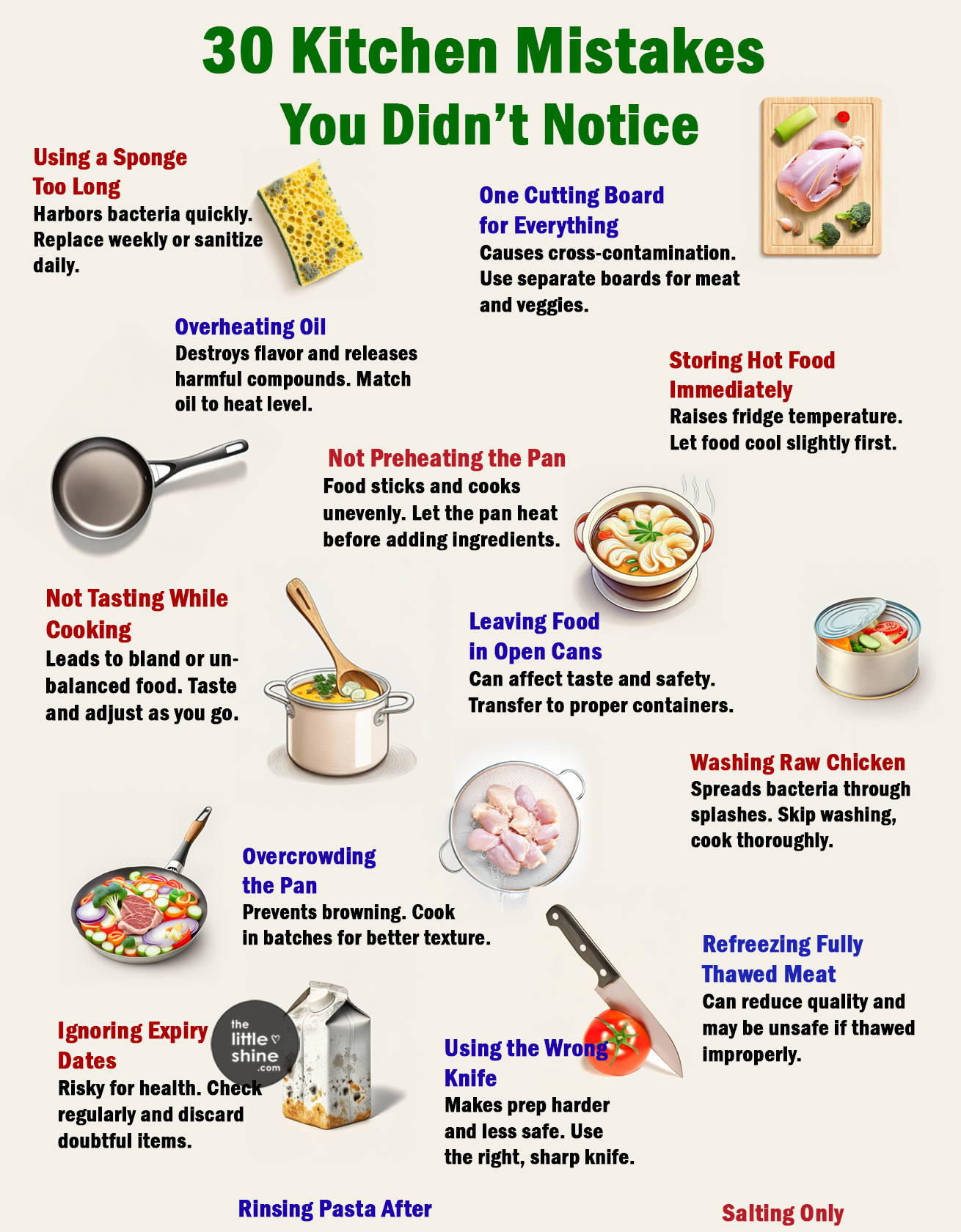
Here are 30 common kitchen mistakes and how to avoid them.
1. Using a Sponge Too Long
Kitchen sponges trap moisture and food particles, making them a breeding ground for bacteria. Replace them weekly or sanitize them daily by microwaving a damp sponge for one minute or running it through the dishwasher.
2. Using One Cutting Board for Everything
Using the same cutting board for raw meat and vegetables can spread harmful bacteria. Keep separate boards for raw meat, seafood, and fresh produce.
3. Overheating Cooking Oil
Every cooking oil has a smoke point. Heating oil beyond this point creates unpleasant flavors and can produce harmful compounds. Choose an oil suitable for your cooking method.
4. Putting Hot Food Straight Into the Fridge
Large amounts of hot food can raise your refrigerator’s temperature. Let food cool slightly (no longer than about two hours at room temperature) before refrigerating.
5. Not Preheating the Pan
Adding food to a cold pan often leads to sticking and uneven cooking. Allow the pan to reach the proper temperature before adding ingredients.
6. Leaving Food in Open Cans
Once opened, canned foods should be transferred to a clean container. Storing food in the can may affect flavor and quality.
7. Not Tasting While Cooking
Seasoning at the end isn’t always enough. Taste throughout cooking and adjust salt, acidity, or spices gradually.
8. Washing Raw Chicken
Washing raw poultry can spread bacteria through water splashes. Cooking chicken thoroughly is the safest way to eliminate bacteria.
9. Overcrowding the Pan
Too much food lowers the pan’s temperature, causing steaming instead of browning. Cook in batches for better texture and flavor.
10. Refreezing Fully Thawed Meat
Refreezing meat that has thawed improperly can affect quality and safety. Only refreeze meat that has been thawed safely in the refrigerator.
11. Ignoring Expiry Dates
Regularly check pantry and refrigerator items. Discard foods that are expired or show signs of spoilage.
12. Using the Wrong Knife
The right knife makes cooking easier and safer. Keep knives sharp and use the appropriate one for each task.
13. Forgetting to Dry Meat Before Cooking
Surface moisture prevents proper browning. Pat meat dry with paper towels before searing.
14. Storing Tomatoes in the Refrigerator
Cold temperatures reduce tomatoes’ flavor and create a mealy texture. Store ripe tomatoes at room temperature.
15. Refrigerating Potatoes
Cold temperatures convert starch into sugar, affecting taste and texture. Store potatoes in a cool, dark place instead.
16. Using Metal Utensils on Nonstick Pans
Metal utensils can scratch the nonstick coating. Use wooden, silicone, or nylon utensils instead.
17. Adding Garlic Too Early
Garlic burns much faster than onions and becomes bitter. Add it later in the cooking process when appropriate.
18. Thawing Food on the Counter
Room-temperature thawing encourages bacterial growth. Thaw food safely in the refrigerator, microwave, or cold water.
19. Opening the Oven Too Often
Every time the oven door opens, heat escapes. Resist checking frequently, especially when baking.
20. Using Expired Baking Powder or Baking Soda
Leavening agents lose effectiveness over time. Replace them regularly for light, fluffy baked goods.
21. Crowding the Refrigerator
An overfilled refrigerator restricts airflow, making cooling less efficient. Leave space between items for proper circulation.
22. Mixing Raw and Cooked Utensils
Never reuse plates, tongs, or forks that touched raw meat without washing them first.
23. Storing Onions with Potatoes
These vegetables release gases and moisture that cause each other to spoil more quickly. Store them separately.
24. Reusing Burnt Cooking Oil
Repeatedly overheated oil loses quality and develops undesirable compounds. Replace cooking oil regularly.
25. Forgetting to Label Leftovers
Write the date on containers so you know when leftovers should be eaten or discarded.
26. Cooling Large Pots of Food Too Slowly
Divide soups, stews, and casseroles into smaller containers before refrigerating so they cool more quickly.
27. Measuring Flour Incorrectly
Scooping directly with a measuring cup packs flour tightly. Spoon flour into the cup and level it off for accurate baking.
28. Rinsing Pasta After Cooking
For most pasta dishes, don’t rinse cooked pasta. The starch helps sauces cling to the noodles. (Rinsing is useful only for cold pasta salads.)
29. Storing Bread in the Refrigerator
Refrigeration makes bread stale faster. Store it at room temperature or freeze it for longer storage.
30. Using Wet Oven Mitts
Moisture transfers heat rapidly and can cause steam burns. Always use completely dry oven mitts.
Final Thoughts
Great cooking isn’t just about recipes—it’s about good kitchen habits. Avoiding these common mistakes can improve food safety, reduce waste, and help you get better results every time you cook. A few simple changes can make your meals more flavorful, your kitchen more efficient, and your cooking experience much more enjoyable.