
Herbs have been used in traditional wellness practices for centuries to support women’s health. While they are not a replacement for medical treatment, many herbs contain plant compounds that may help support hormone balance, digestion, immunity, skin health, energy, and more. Adding these herbs to your routine through teas, cooking, or supplements (when appropriate) can complement a healthy lifestyle.
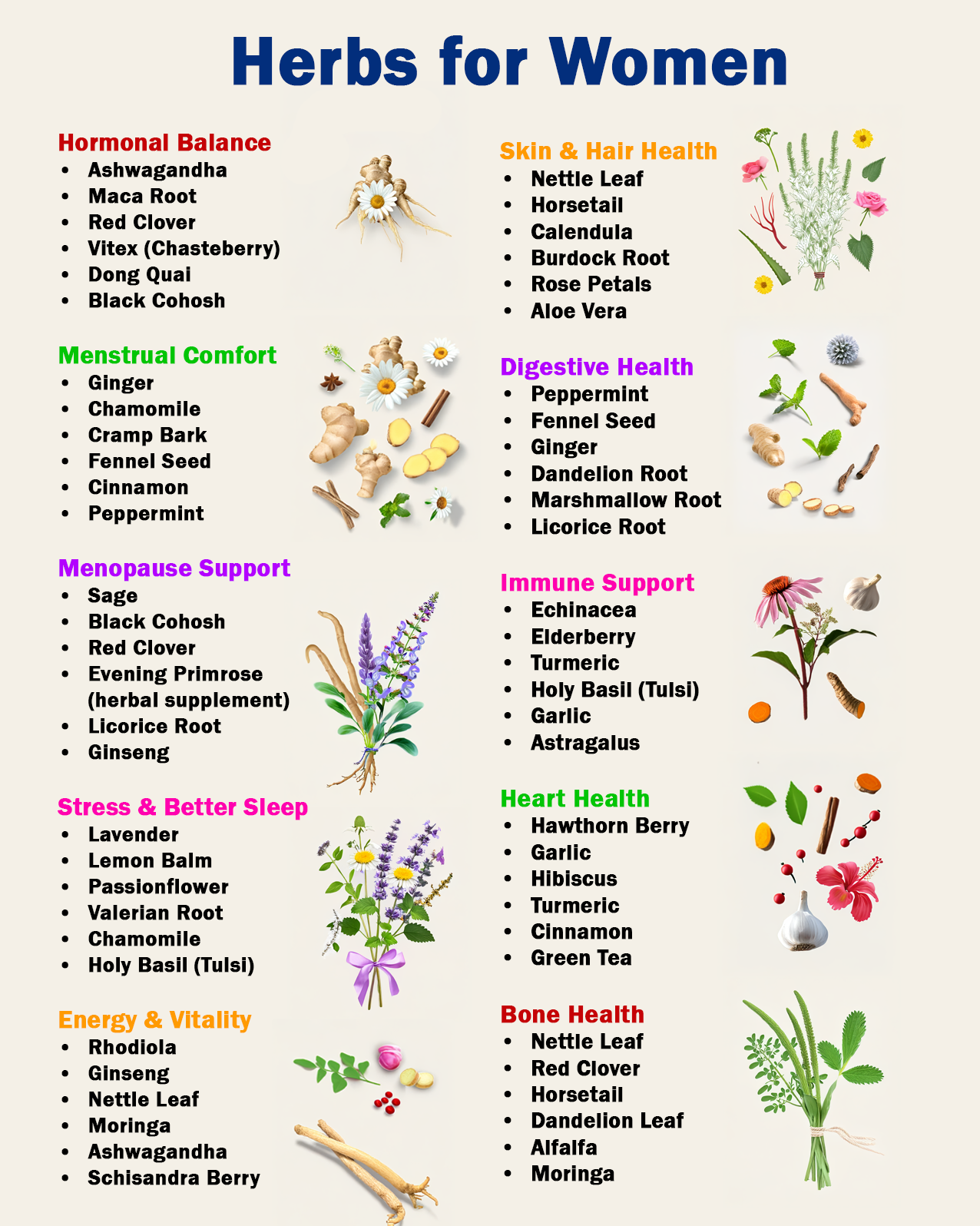
1. Herbs for Hormonal Balance
Hormonal fluctuations can affect mood, energy, skin, sleep, and menstrual cycles. Certain herbs have traditionally been used to support healthy hormone function.
Ashwagandha
An adaptogenic herb that may help the body manage stress, support cortisol balance, and improve overall well-being.
Maca Root
Native to Peru, maca is traditionally used to support energy, libido, and hormonal health.
Red Clover
Rich in isoflavones, red clover contains plant compounds that may support hormonal changes during menopause.
Vitex (Chasteberry)
Often used to support menstrual cycle regularity and PMS symptoms by influencing hormone signaling.
Dong Quai
Known as the “female ginseng,” Dong Quai has long been used in Traditional Chinese Medicine to support reproductive health.
Black Cohosh
Commonly used to help relieve menopause-related symptoms such as hot flashes and night sweats.
2. Herbs for Skin & Hair Health
Healthy skin and hair often reflect overall wellness. These herbs provide antioxidants, minerals, and other beneficial plant compounds.
Nettle Leaf
A rich source of vitamins and minerals that may support healthy skin and hair.
Horsetail
Contains silica, which contributes to healthy hair, skin, and nails.
Calendula
Known for its soothing properties and commonly used in skincare products.
Burdock Root
Traditionally used to support healthy skin through its antioxidant compounds.
Rose Petals
Contain antioxidants that may help protect skin from environmental stress.
Aloe Vera
Widely recognized for soothing and moisturizing the skin.
3. Herbs for Menstrual Comfort
Many women use herbs to help manage common menstrual discomfort.
Ginger
Research suggests ginger may help reduce menstrual discomfort and nausea.
Chamomile
Known for its calming effects and may help relax muscles.
Cramp Bark
Traditionally used by herbalists to ease menstrual cramps.
Fennel Seed
May help relieve bloating and digestive discomfort during menstruation.
Cinnamon
Contains anti-inflammatory compounds and may support menstrual comfort.
Peppermint
Helps relax digestive muscles and may reduce bloating.
4. Herbs for Digestive Health
A healthy digestive system supports nutrient absorption and overall wellness.
Peppermint
Commonly used to soothe occasional digestive discomfort.
Fennel Seed
May reduce gas and bloating.
Ginger
Supports digestion and helps relieve occasional nausea.
Dandelion Root
Traditionally used to support healthy digestion.
Marshmallow Root
Contains mucilage that may help soothe the digestive tract.
Licorice Root
Often used to support stomach comfort, though it should be used cautiously by people with high blood pressure.
5. Herbs for Menopause Support
Menopause brings natural hormonal changes that can affect comfort and quality of life.
Sage
May help reduce hot flashes and excessive sweating.
Black Cohosh
One of the most widely used herbs for menopause symptom support.
Red Clover
Contains phytoestrogens that may help support menopausal wellness.
Evening Primrose
Popular herbal supplement used for hormonal support.
Licorice Root
Traditionally used during menopause, though medical guidance is recommended.
Ginseng
May help support energy and reduce fatigue.
6. Herbs for Immune Support
A healthy immune system is essential throughout every stage of life.
Echinacea
Popular herbal remedy traditionally used to support immune function.
Elderberry
Rich in antioxidants and commonly used during cold and flu season.
Turmeric
Contains curcumin, a compound known for its antioxidant and anti-inflammatory properties.
Holy Basil (Tulsi)
An adaptogen that may support immune health and stress management.
Garlic
Contains sulfur compounds that support overall immune health.
Astragalus
Widely used in Traditional Chinese Medicine to support immune function.
7. Herbs for Stress & Better Sleep
Managing stress is important for both physical and emotional health.
Lavender
Known for its relaxing aroma and calming effects.
Lemon Balm
May help reduce stress and promote relaxation.
Passionflower
Often used to support restful sleep.
Valerian Root
A traditional herbal sleep aid.
Chamomile
One of the world’s most popular calming herbal teas.
Holy Basil (Tulsi)
May help the body adapt to everyday stress.
8. Herbs for Heart Health
Heart health becomes increasingly important with age.
Hawthorn Berry
Traditionally used to support cardiovascular health.
Garlic
May help support healthy cholesterol and blood pressure levels.
Hibiscus
Studies suggest hibiscus tea may help support healthy blood pressure.
Turmeric
Supports overall cardiovascular wellness through its antioxidant properties.
Cinnamon
May support healthy blood sugar and heart health as part of a balanced diet.
Green Tea
Rich in catechins, powerful antioxidants that support cardiovascular wellness.
9. Herbs for Energy & Vitality
Feeling energized starts with good nutrition, sleep, and healthy lifestyle habits.
Rhodiola
An adaptogen traditionally used to help combat fatigue.
Ginseng
May support mental and physical performance.
Nettle Leaf
Provides vitamins and minerals that support overall wellness.
Moringa
Packed with nutrients including vitamins A, C, and iron.
Ashwagandha
May support energy by helping the body better manage stress.
Schisandra Berry
Traditionally used to improve endurance and resilience.
10. Herbs for Bone Health
Strong bones require adequate nutrition and healthy lifestyle habits.
Nettle Leaf
Contains minerals that support bone health.
Red Clover
Contains isoflavones that may help support bone density after menopause.
Horsetail
A natural source of silica, important for connective tissues.
Dandelion Leaf
Provides calcium and other minerals.
Alfalfa
Contains vitamin K and minerals that contribute to bone health.
Moringa
Rich in calcium, magnesium, and other nutrients important for bones.
Final Thoughts
Herbs can be a valuable addition to a healthy lifestyle, offering traditional support for women’s wellness throughout different life stages. While many herbs have promising research behind them, they work best alongside a balanced diet, regular exercise, quality sleep, and routine medical care.
If you’re considering herbal supplements, choose products from reputable manufacturers and consult your healthcare provider to ensure they’re appropriate for your individual health needs.
Disclaimer: This article is for educational purposes only and should not be considered medical advice. Herbs are not intended to diagnose, treat, cure, or prevent any disease. Always seek guidance from a qualified healthcare professional before starting any new herbal supplement.