
Great cooking isn’t just about recipes—it’s about technique. Professional chefs rely on small, smart shortcuts that dramatically improve flavor, texture, and efficiency. The good news: most of these are simple habits you can start using immediately.
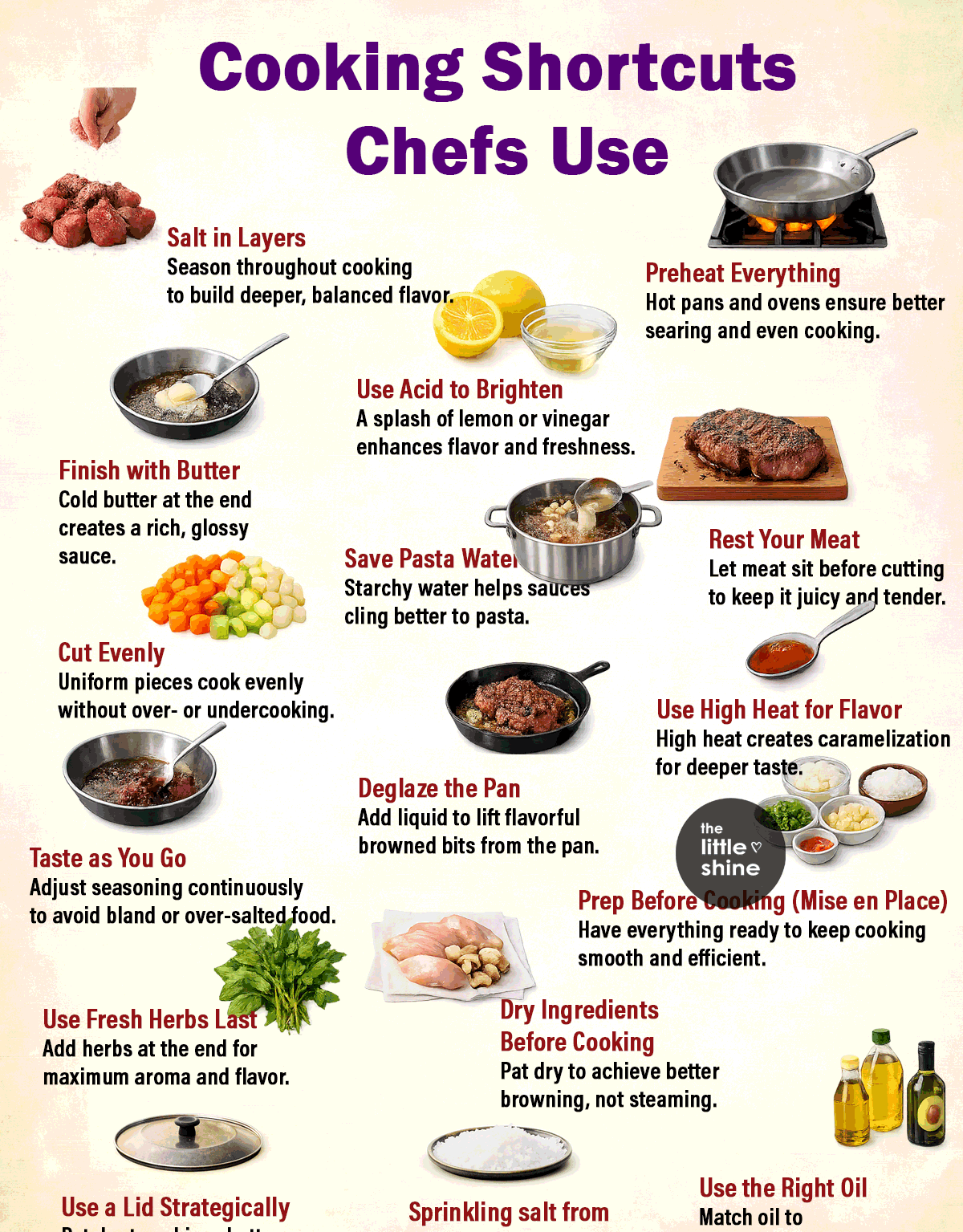
Salt in Layers
Season throughout cooking to build deeper, balanced flavor.
Preheat Everything
Hot pans and ovens ensure better searing and even cooking.
Finish with Butter
Cold butter at the end creates a rich, glossy sauce.
Use Acid to Brighten
A splash of lemon or vinegar enhances flavor and freshness.
Rest Your Meat
Let meat sit before cutting to keep it juicy and tender.
Cut Evenly
Uniform pieces cook evenly without over- or undercooking.
Save Pasta Water
Starchy water helps sauces cling better to pasta.
Use High Heat for Flavor
High heat creates caramelization for deeper taste.
Taste as You Go
Adjust seasoning continuously to avoid bland or over-salted food.
Deglaze the Pan
Add liquid to lift flavorful browned bits from the pan.
Prep Before Cooking (Mise en Place)
Have everything ready to keep cooking smooth and efficient.
Use Fresh Herbs Last
Add herbs at the end for maximum aroma and flavor.
Dry Ingredients Before Cooking
Pat dry to achieve better browning, not steaming.
Use the Right Oil
Match oil to cooking method based on smoke point.
Season from Height
Sprinkling salt from above distributes it more evenly.
Use Room Temperature Ingredients
They cook more evenly and blend better in recipes.
Don’t Overcrowd the Pan
Gives food space to brown instead of steam.
Let the Pan Do the Work
Don’t move food too early—allow a proper crust to form.
Sharpen Your Knife
A sharp knife improves precision and speeds up prep.
Toast Spices First
Dry roasting releases deeper aroma and flavor.
Control Heat, Not Just Flame
Adjust heat levels constantly instead of cooking everything on high.
Use a Lid Strategically
Cover to trap moisture; uncover to reduce and thicken.
Add Salt to Pasta Water
It should taste like the sea for properly seasoned pasta.
Carryover Cooking Matters
Food continues cooking after you remove it from heat.
Use Ice Water for Veggies
Shocking vegetables keeps them bright and crisp.
Grate Garlic Instead of Chopping
Gives stronger, more even flavor distribution.
Cook in Batches
Prevents soggy results and improves texture.
Balance Flavors
Always adjust salt, acid, fat, and sweetness together.
Warm Your Plates
Keeps food hot longer and improves dining experience.
Use Stock Instead of Water
Adds depth to rice, sauces, and soups instantly.
Crack Eggs on Flat Surface
Prevents shell fragments from falling in.
Use a Microplane for Zest
Adds intense citrus flavor without bitterness.
Rest Dough and Batter
Improves texture in baking and pancakes.
Clean as You Cook
Saves time and keeps workflow efficient.
Final Thought
These aren’t complicated techniques—they’re small shifts in how you cook. But together, they create a noticeable upgrade in every dish you make. Once these become habits, your food will consistently taste more balanced, professional, and satisfying.