
Taking supplements can support your health — but combining the wrong ones can reduce absorption, cause digestive discomfort, or even increase health risks. Many people unknowingly cancel out the benefits of their vitamins and minerals simply by taking them at the same time.
Here’s a clear breakdown of supplement combinations you should avoid — and what to do instead.
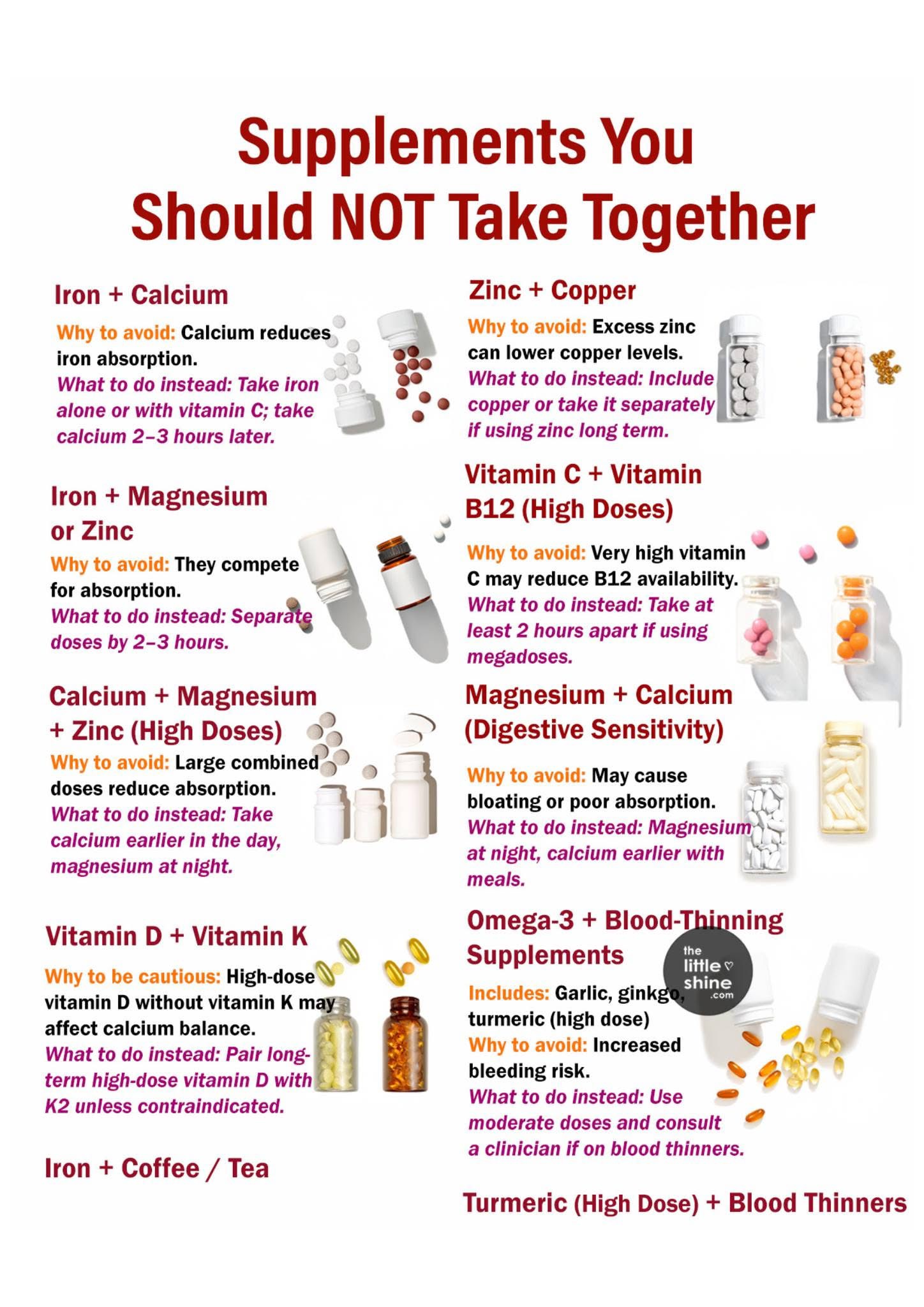
1. Iron + Calcium
Why avoid it:
Calcium significantly reduces iron absorption when taken together. This is especially important for people treating iron deficiency.
What to do instead:
- Take iron alone or with vitamin C.
- Take calcium 2–3 hours later.
2. Iron + Magnesium or Zinc
Why avoid it:
These minerals compete for absorption in the gut. Taking them together can reduce the effectiveness of each.
What to do instead:
- Separate doses by at least 2–3 hours.
3. Calcium + Magnesium + Zinc (High Doses)
Why avoid it:
Large combined doses can overwhelm absorption pathways, meaning your body may not fully absorb them.
What to do instead:
- Take calcium earlier in the day.
- Take magnesium at night (it may also support relaxation and sleep).
4. Zinc + Copper
Why avoid it:
Excess zinc can lower copper levels over time, potentially leading to copper deficiency if taken long term.
What to do instead:
- If using zinc long term, include copper in appropriate amounts.
- Consider taking them separately under professional guidance.
5. Vitamin C + Vitamin B12 (High Doses)
Why avoid it:
Very high doses of vitamin C may reduce B12 availability in the body.
What to do instead:
- If taking megadoses, space them at least 2 hours apart.
6. Magnesium + Calcium (For Sensitive Digestion)
Why avoid it:
For some individuals, taking both together may cause bloating or poor absorption.
What to do instead:
- Take magnesium at night.
- Take calcium earlier with meals.
7. Vitamin D + Vitamin K
Why be cautious:
High-dose vitamin D without adequate vitamin K may affect calcium balance in the body.
What to do instead:
- Pair long-term high-dose vitamin D with vitamin K2 unless contraindicated.
- Always consult a healthcare provider for high-dose regimens.
8. Iron + Coffee or Tea
Why avoid it:
Coffee and tea contain compounds (like tannins) that significantly reduce iron absorption.
What to do instead:
- Avoid coffee or tea at least 1–2 hours before or after taking iron.
9. Omega-3 + Blood-Thinning Supplements
Includes: Garlic, ginkgo, turmeric (high doses).
Why avoid it:
Combining these may increase bleeding risk, especially if already on blood-thinning medications.
What to do instead:
- Use moderate doses.
- Consult a clinician if taking anticoagulants.
10. Turmeric (High Dose) + Blood Thinners
Why avoid it:
High-dose turmeric has natural blood-thinning properties and may amplify the effect of anticoagulant medications.
What to do instead:
- Avoid high doses if on blood thinners unless medically supervised.
11. Probiotics + Antibiotics
Why avoid it (same time):
Antibiotics can kill probiotic bacteria, making the probiotic less effective.
What to do instead:
- Take probiotics at least 2–3 hours after antibiotics.
- Continue probiotics for 1–2 weeks after finishing antibiotics.
12. Fiber Supplements + Medications or Minerals
Why avoid it (together):
Fiber (like psyllium or bran) can bind to medications and minerals such as iron, zinc, and calcium, reducing absorption.
What to do instead:
- Take fiber supplements at least 2 hours before or after other supplements or medications.
13. Potassium + Potassium-Sparing Medications
Why avoid it:
Taking potassium supplements alongside potassium-sparing diuretics (or certain blood pressure medications) can lead to dangerously high potassium levels (hyperkalemia).
What to do instead:
- Only supplement potassium under medical supervision if you’re on heart or blood pressure medication.
14. Vitamin E (High Dose) + Blood Thinners
Why avoid it:
High-dose vitamin E may increase bleeding risk, especially when combined with anticoagulants or antiplatelet medications.
What to do instead:
- Avoid high doses unless directed by a healthcare professional.
- Use caution if already taking omega-3s, garlic, ginkgo, or turmeric.
Why Timing Matters in Supplementation
Minerals often compete for absorption because they share similar transport mechanisms in the intestines. Fat-soluble vitamins affect calcium metabolism. Some natural compounds influence blood clotting.
Proper timing can dramatically improve effectiveness and reduce side effects.
Simple Supplement Timing Rule
- Iron: Take alone, away from coffee, tea, and calcium.
- Calcium: With meals.
- Magnesium: Evening or before bed.
- Zinc: Away from iron; balance with copper long term.
- High-dose supplements: Always space and monitor.
Final Thought
More supplements do not always mean better results. Strategic timing and proper combinations are key to maximizing benefits and minimizing risks.
If you take multiple supplements daily, reviewing your routine could significantly improve absorption and safety.