
Soaking food overnight is a traditional preparation method rooted in nutritional science. Proper soaking improves digestibility, enhances mineral absorption, reduces anti-nutrients, and often shortens cooking time. While modern cooking has made soaking optional for convenience, it remains highly beneficial for many plant-based foods.
This guide explains what to soak, why it works, and how to do it correctly.
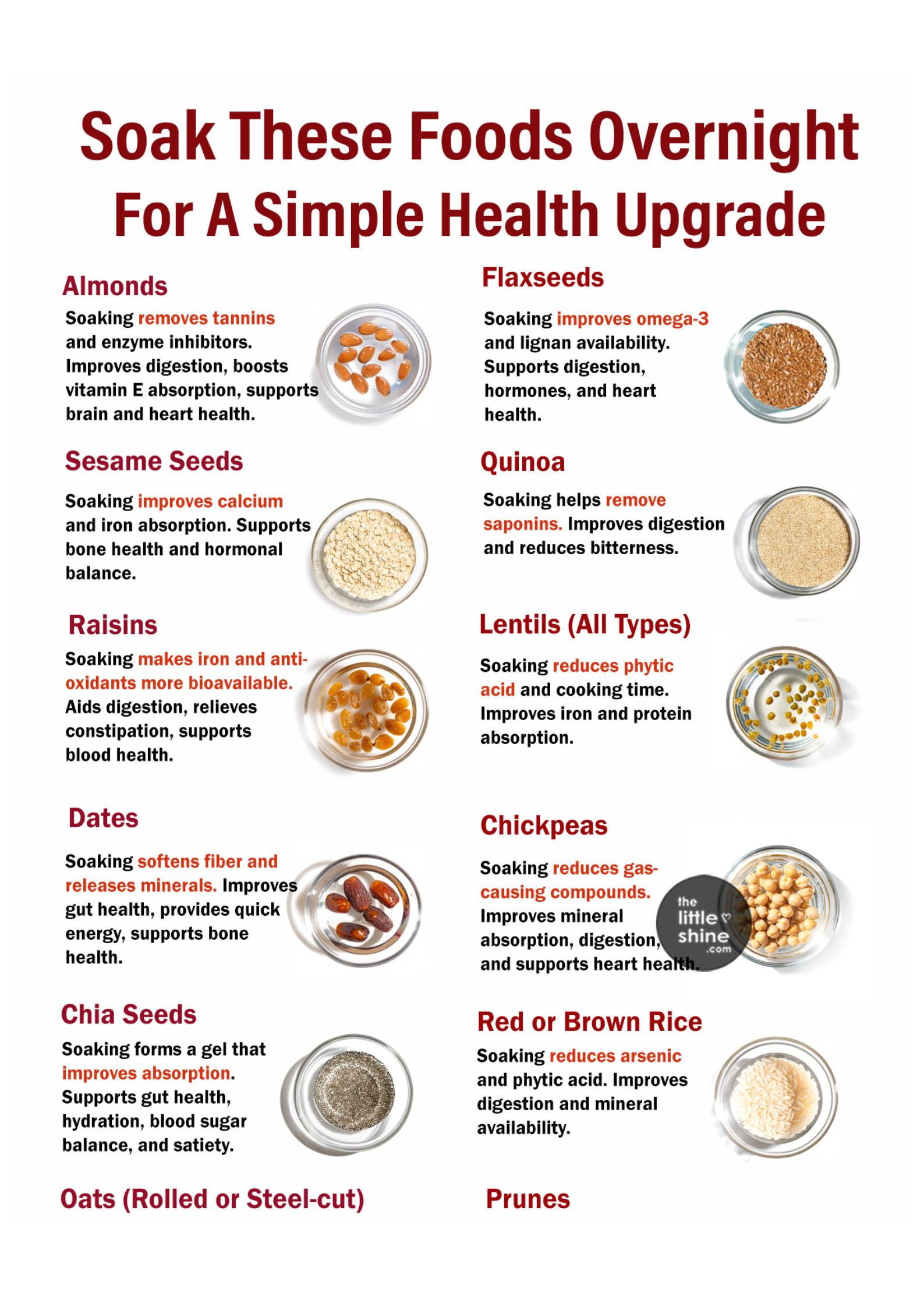
Why Soaking Works
Many grains, legumes, nuts, and seeds contain natural compounds that protect the plant but make digestion harder for humans. The most important include:
- Phytic acid – Binds minerals like iron, zinc, calcium, and magnesium.
- Lectins – Can irritate the digestive tract if not properly prepared.
- Oligosaccharides – Cause gas and bloating (especially in beans).
- Enzyme inhibitors – Slow digestion.
Soaking activates enzymes that begin breaking down these compounds, making nutrients more bioavailable and easier on the gut.
Foods You Should Soak Overnight
1. Whole Grains (8–12 Hours)
Soaking whole grains improves mineral absorption and softens the outer bran layer.
Best grains to soak:
- Brown rice
- Red rice
- Black rice
- Wild rice
- Whole wheat berries
- Barley
- Rye berries
- Spelt
- Sorghum (jowar)
- Millet
- Buckwheat groats
Optional tip: Add 1 tablespoon lemon juice or apple cider vinegar per cup of water to help reduce phytic acid further.
2. Beans and Legumes (8–12+ Hours)
This is the most important category for soaking.
Soaking:
- Reduces gas-causing sugars
- Lowers lectin content
- Improves protein digestion
- Shortens cooking time
Always soak:
- Chickpeas
- Kidney beans (rajma)
- Black beans
- Pinto beans
- Navy beans
- Cannellini beans
- Lima beans
- Fava beans
- Black-eyed peas
- Whole green gram (moong)
- Whole urad
- Soybeans
Critical step: Discard soaking water and rinse thoroughly before cooking.
3. Nuts (6–8 Hours)
Nuts contain enzyme inhibitors that soaking helps neutralize.
Good candidates:
- Almonds
- Walnuts
- Pecans
- Hazelnuts
- Brazil nuts
- Pistachios
Cashews need only 2–4 hours; longer soaking makes them too soft.
After soaking, you can dehydrate them in a low oven if you prefer a crunchy texture again.
4. Seeds (2–8 Hours Depending on Type)
Soaking improves digestibility and nutrient absorption.
- Pumpkin seeds
- Sunflower seeds
- Sesame seeds
- Hemp seeds (short soak)
- Chia seeds (form gel)
- Flax seeds (form gel)
- Basil seeds (sabja)
Note: Chia and flax are usually soaked for functional use (puddings, egg substitutes) rather than anti-nutrient reduction.
5. Functional and Traditional Soaks
Some foods are soaked for therapeutic reasons:
- Fenugreek seeds – May support blood sugar balance.
- Black raisins – Traditionally used to relieve constipation.
- Dry figs – Improve bowel regularity.
- Dry amla – Vitamin C support.
- Makhana (fox nuts) – Softens before cooking.
- Poha (flattened rice) – Hydrates quickly before preparation.
6. Foods Soaked Before Fermentation or Sprouting
Soaking is the first step in improving gut health through fermentation.
- Idli/dosa rice with urad dal
- Ragi (finger millet)
- Wheat for sourdough
- Lentils for sprouting
- Chickpeas for sprouting
Soaking activates the seed and prepares it for microbial fermentation or germination.
Foods That Do NOT Need Overnight Soaking
- White rice
- Split lentils (masoor dal)
- Split moong dal
- Most fresh vegetables
- Fresh fruits
These either lack significant anti-nutrients or cook quickly without soaking.
How to Soak Properly
- Use warm or room temperature filtered water.
- Use a large bowl — food expands.
- Add optional acid (lemon juice or vinegar) for grains.
- Cover loosely and leave at room temperature.
- Rinse thoroughly before cooking.
- For beans, cook completely — never eat undercooked legumes.
Key Benefits of Soaking
- Better mineral absorption
- Less bloating and gas
- Improved protein digestibility
- Faster cooking time
- Better texture
- Enhanced gut tolerance
Final Thought
Soaking is not mandatory for every food, but for whole grains and legumes, it significantly improves nutritional quality and digestive comfort. If you experience bloating, mineral deficiencies, or digestive discomfort, this simple step can make a measurable difference.