
Eating well does not require extreme dieting or complicated rules. It requires meeting evidence-based daily targets across core food groups while controlling added sugar, sodium, and saturated fat. Below is a structured breakdown aligned with U.S. Dietary Guidelines, followed by a realistic one-day sample meal plan.
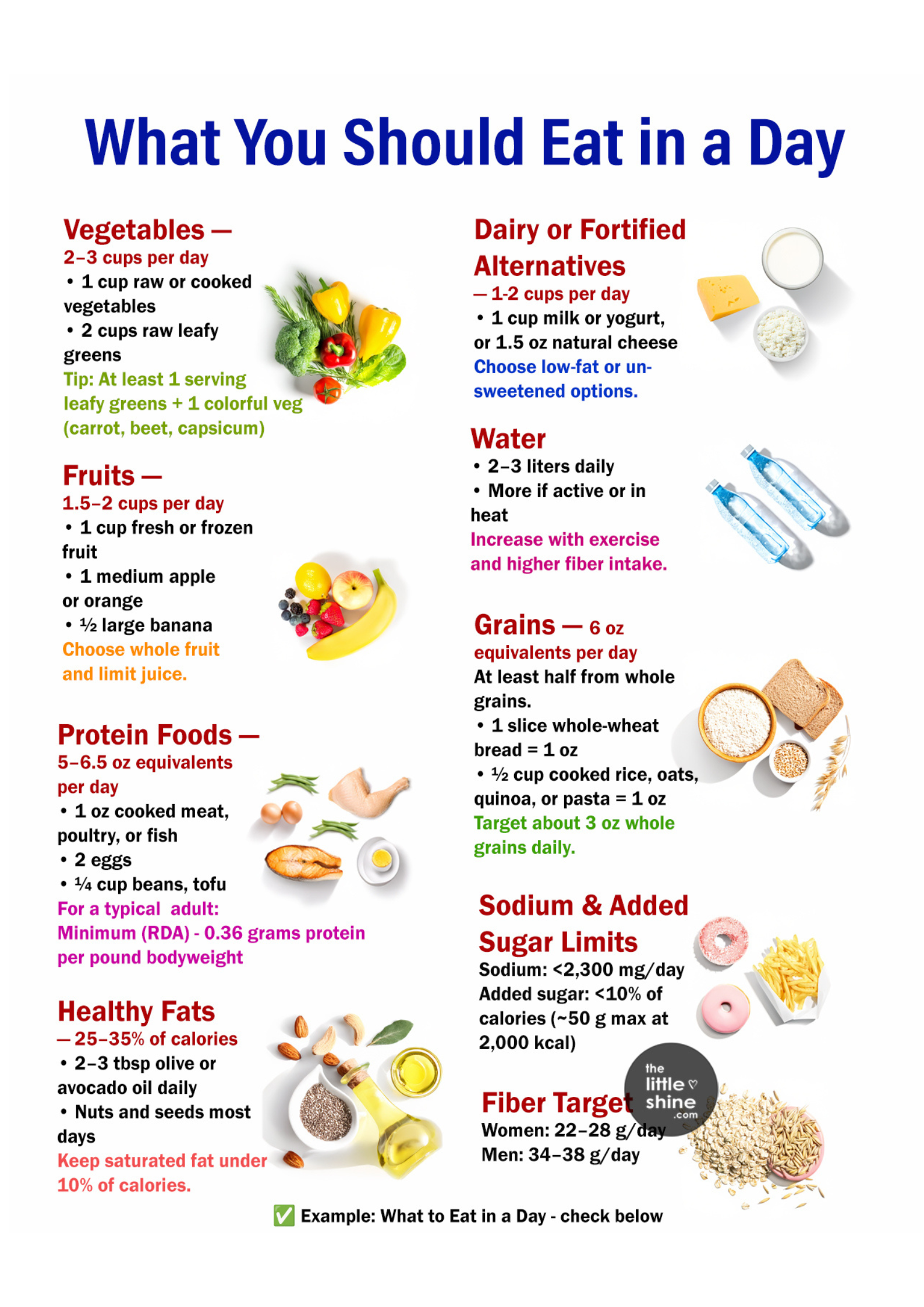
1. Vegetables: 2–3 Cups Per Day
Why it matters: Vegetables provide fiber, potassium, folate, antioxidants, and phytochemicals that reduce cardiometabolic risk.
Daily target:
- 1 cup raw or cooked vegetables
- 2 cups raw leafy greens = 1 cup equivalent
- Include at least:
- 1 leafy green serving
- 1 colorful vegetable (carrot, bell pepper, beet, squash)
Strategy: Distribute across meals instead of relying on dinner only.
2. Fruits: 1.5–2 Cups Per Day
Why it matters: Whole fruits provide fiber and micronutrients without the glycemic spike of juice.
Daily target examples:
- 1 medium apple or orange
- 1 cup berries
- ½ large banana
Best practice: Choose whole fruit. Limit juice due to concentrated sugars.
3. Protein Foods: 5–6.5 oz Equivalents Per Day
Why it matters: Supports muscle maintenance, metabolic function, and satiety.
Examples of 1 oz equivalent:
- 1 oz cooked meat, poultry, or fish
- 1 egg
- ¼ cup beans or tofu
Minimum protein requirement:
~0.36 g per pound bodyweight (RDA).
Many active adults benefit from more (0.5–0.7 g/lb depending on goals).
Diversify sources: Include seafood, poultry, legumes, eggs, nuts.
4. Grains: 6 oz Equivalents Per Day
At least 50% from whole grains.
1 oz equivalent:
- 1 slice whole-wheat bread
- ½ cup cooked rice, oats, quinoa, or pasta
Target: ~3 oz from whole grains daily.
5. Dairy or Fortified Alternatives: 1–2 Cups Per Day
- 1 cup milk or yogurt
- 1.5 oz natural cheese
Choose low-fat or unsweetened options. Fortified plant milks are acceptable alternatives.
6. Healthy Fats: 25–35% of Calories
- 2–3 tbsp olive or avocado oil daily
- Nuts and seeds most days
Keep saturated fat under 10% of total calories.
7. Hydration
- 2–3 liters of water daily
- Increase with exercise, heat, or high fiber intake.
8. Limits to Respect
- Sodium: < 2,300 mg/day
- Added sugar: < 10% of calories (~50 g max at 2,000 kcal)
- Fiber target:
- Women: 22–28 g/day
- Men: 34–38 g/day
Example: One Full Day of Balanced Eating (Approx. 2,000 kcal)
Designed for a typical moderately active U.S. adult.
Breakfast
- ½ cup dry rolled oats (1 oz grain equivalent) cooked with:
- 1 cup low-fat milk
- ½ cup blueberries
- 1 tbsp chia seeds
- 1 boiled egg
Covers: whole grains, fruit, dairy, protein, healthy fats.
Mid-Morning Snack
- 1 medium apple
- 10–12 almonds
Covers: fruit + healthy fats + fiber.
Lunch
- Grilled chicken breast (3 oz cooked)
- ½ cup cooked quinoa (1 oz grain equivalent)
- Large mixed salad:
- 2 cups leafy greens
- Cherry tomatoes
- Bell peppers
- 1 tbsp olive oil + vinegar dressing
Covers: vegetables (leafy + colorful), lean protein, whole grain, healthy fat.
Afternoon Snack
- Plain Greek yogurt (¾–1 cup)
- ½ banana sliced
Covers: dairy + fruit + protein.
Dinner
- Baked salmon (3 oz)
- ½ cup brown rice (1 oz grain equivalent)
- 1 cup roasted broccoli + carrots
- Drizzle 1 tsp olive oil
Covers: seafood protein, whole grain, vegetables, healthy fat.
Hydration
- 8–10 cups water throughout the day
- Optional: black coffee or unsweetened tea
Daily Coverage Summary
This example provides approximately:
- 2+ cups vegetables
- 2 cups fruit
- 6 oz protein equivalents
- 3 oz whole grains (minimum target met)
- 1–2 cups dairy
- Adequate healthy fats
- ~30–35 g fiber
- Controlled sodium and minimal added sugar