
Reduce waste. Save money. Preserve nutrition.
A well-organized pantry is not just aesthetic — it’s a food preservation system. Improper storage accelerates oxidation, moisture absorption, pest contamination, flavor loss, and rancidity. With a few strategic adjustments, you can extend shelf life by months, protect food quality, and reduce grocery expenses significantly.
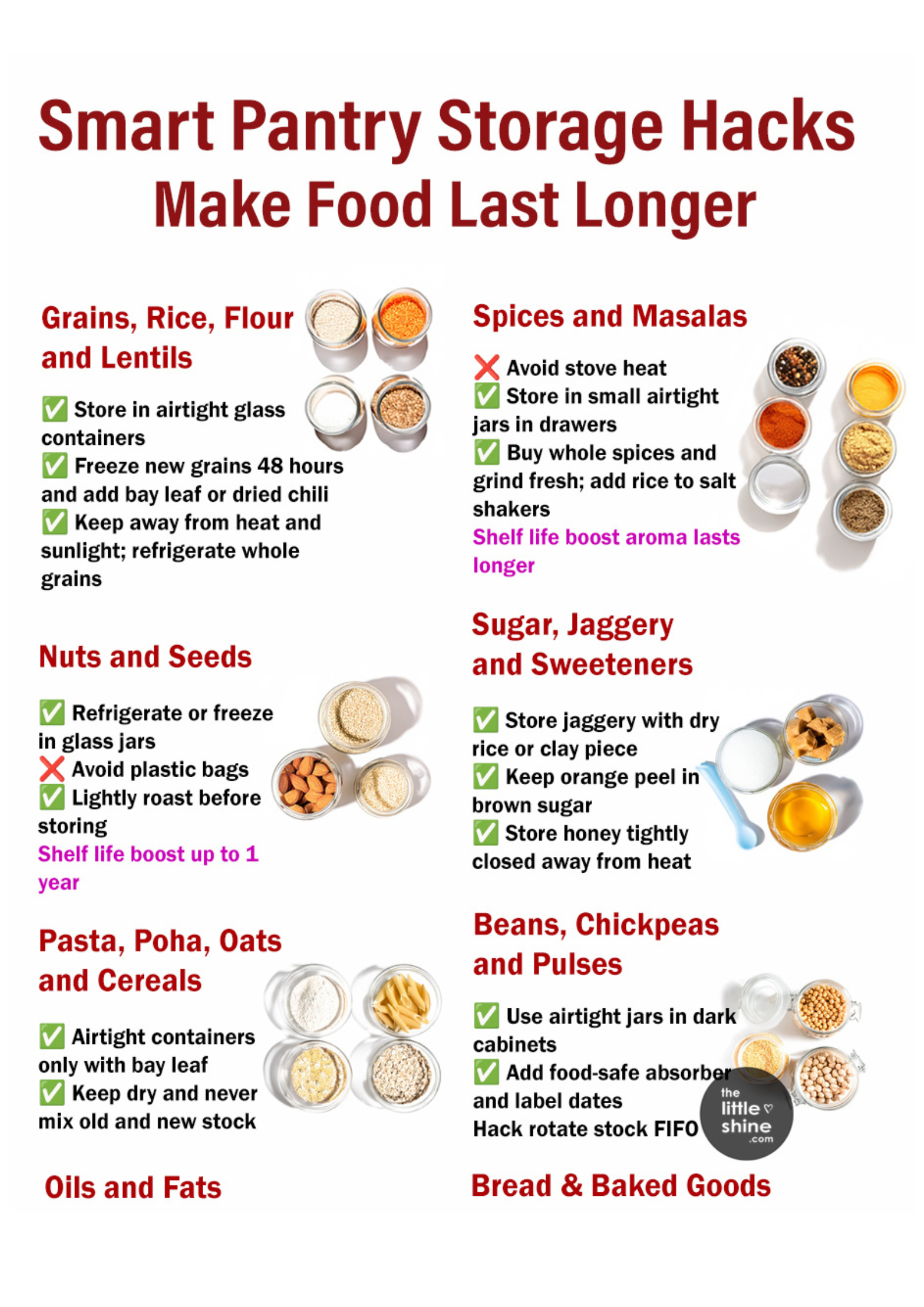
Below is a complete guide combining the core pantry staples from the infographic with expanded expert storage strategies.
1️⃣ Grains, Rice, Flour & Lentils
Dry staples are highly vulnerable to moisture, insects, and temperature fluctuations.
Best Practices
- Store in airtight glass containers.
- Freeze newly purchased grains for 48 hours to kill potential insect eggs.
- Add bay leaf or dried chili to deter pests.
- Keep away from heat and sunlight.
- Refrigerate whole grains in warm climates.
- Never mix old and new stock.
Pro Tip: Whole grains last 2–3x longer than flour because the germ remains intact until grinding.
Shelf Life Boost: +3 to 6 months
2️⃣ Beans, Chickpeas & Pulses
Legumes absorb moisture easily and are prone to infestation.
Best Practices
- Store in airtight jars in dark cabinets.
- Use food-safe moisture absorbers in humid regions.
- Label purchase dates.
- Follow FIFO (First In, First Out) rotation.
Why it matters: Older pulses take longer to cook and lose texture quality.
3️⃣ Spices & Masalas
Heat, light, and oxygen degrade volatile oils responsible for aroma.
Best Practices
- Avoid storing near the stove.
- Keep spices in small airtight jars inside drawers.
- Buy whole spices and grind fresh.
- Add rice to salt shakers to prevent clumping.
Shelf Life Boost: Whole spices last 2–3 years; ground spices 6–12 months.
4️⃣ Nuts & Seeds
High natural oil content makes them prone to rancidity.
Best Practices
- Refrigerate or freeze in glass jars.
- Avoid plastic bags.
- Lightly roast before long storage (removes moisture).
Shelf Life Boost: Up to 1 year (refrigerated)
5️⃣ Sugar, Jaggery & Sweeteners
These attract moisture and insects.
Best Practices
- Store jaggery with dry rice grains or a small clay piece.
- Keep orange peel in brown sugar to prevent hardening.
- Store honey tightly sealed away from heat.
Note: Honey crystallization is natural — not spoilage.
6️⃣ Pasta, Poha, Oats & Cereals
These absorb humidity quickly.
Best Practices
- Store in airtight containers with a bay leaf.
- Keep completely dry.
- Avoid mixing old and new stock.
7️⃣ Oils, Ghee & Nut Butters
Light and heat accelerate oxidation.
Best Practices
- Store oils in dark glass bottles.
- Refrigerate flaxseed and walnut oil.
- Use a dry spoon for ghee and nut butters.
- Refrigerate natural peanut butter after opening.
- Keep away from stove heat.
Shelf Life Boost: Prevents rancidity (extends 2–4 months)
8️⃣ Potatoes, Onions & Garlic
These require airflow and darkness.
Best Practices
- Store in ventilated baskets (never plastic bags).
- Keep potatoes separate from onions.
- Avoid refrigerating potatoes (causes starch conversion to sugar).
9️⃣ Bread & Baked Goods
Moisture and warmth cause mold growth.
Best Practices
- Freeze sliced bread if not used within 2 days.
- Store in cloth bread bags at room temperature.
- Avoid humid storage areas.
Freezer Hack: Freeze flat for easy portion removal.
🔟 Canned Goods
Often overlooked in pantry management.
Best Practices
- Store below 25°C.
- Wipe lids before storing.
- Transfer leftovers to glass containers after opening.
- Rotate using FIFO.
1️⃣1️⃣ Chocolate & Cocoa
Sensitive to temperature and odors.
Best Practices
- Store at 18–20°C in a dark cabinet.
- Avoid refrigeration (prevents sugar bloom).
- Keep tightly wrapped.
1️⃣2️⃣ Freezer Optimization Hacks
The freezer is an extension of your pantry.
- Portion before freezing.
- Remove excess air from zip bags.
- Label with name and date.
- Freeze herbs in olive oil cubes.
- Never refreeze thawed meat.
1️⃣3️⃣ Smart Pantry Organization System
Food preservation is also about visibility and rotation.
- Use clear containers.
- Label purchase and expiry dates.
- Do a pantry audit every 3 months.
- Keep high-use items at eye level.
- Store rarely used items on upper shelves.
Why This Matters
Proper pantry storage:
- Reduces food waste by 20–40%
- Saves significant monthly grocery costs
- Preserves nutrients and flavor
- Prevents pest infestations
- Improves meal planning efficiency
In warm and humid climates especially, temperature control and airtight storage are non-negotiable.