
Small changes in how you prep, cook, and handle foods can make a big difference in nutrients, flavor, and digestion. Here’s a simple guide to help you get more benefits from everyday veggies, nuts, seeds, herbs, and pantry staples.
Vegetables: Cook Smarter, Not Harder
🥒 Zucchini — Keep the Peel On
The skin has fiber and nutrients that boost digestion and add texture. Just wash and cook—no peeling needed.
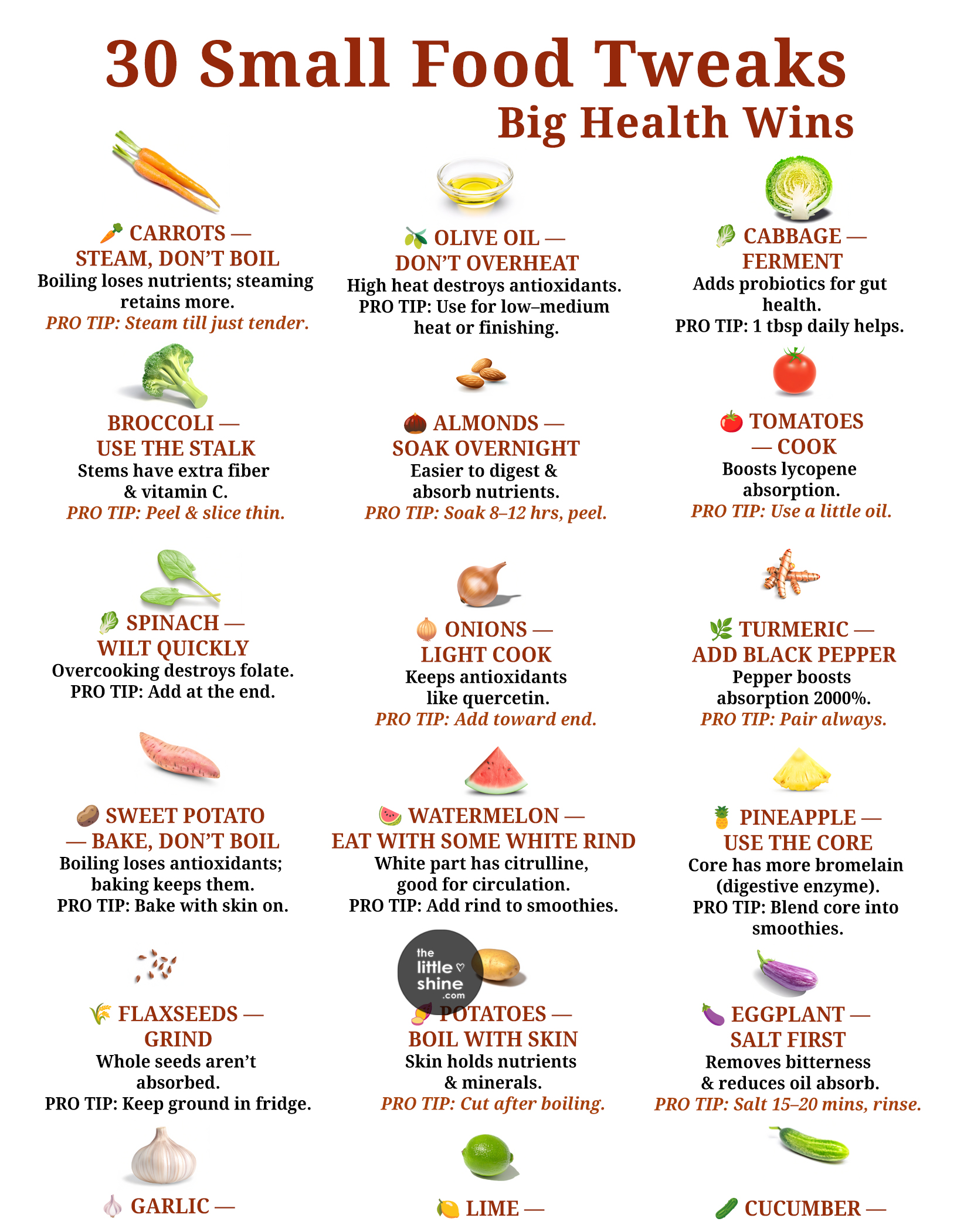
🥕 Carrots — Steam Instead of Boiling
Boiling strips nutrients into the water. Steaming helps carrots stay vibrant, sweet, and vitamin-rich.
🌽 Corn — Avoid Overcooking
Too much heat toughens kernels and reduces natural sweetness. Cook briefly for the best flavor and nutrition.
🥦 Broccoli — Don’t Throw the Stalk
Stems contain extra fiber and vitamin C. Peel the outer layer and slice into stir-fries or soups.
🍠 Potatoes — Boil With the Skin
The skin locks in nutrients like potassium and iron. Cut them after boiling to preserve more goodness.
🥬 Spinach — Wilt Quickly
Overcooking destroys delicate vitamins like folate. Add spinach at the end for a quick, nutrient-rich wilt.
🫘 Green Beans — Blanch for Best Texture
A quick boil followed by an ice bath keeps beans crisp, green, and nutrient dense.
🍆 Eggplant — Salt Before Cooking
Salting removes bitterness and helps eggplant absorb less oil, giving it a better texture.
🥔 Sweet Potato — Bake, Don’t Boil
Baking preserves antioxidants and natural sweetness more than boiling.
🍄 Mushrooms — Don’t Rinse Under Water
Mushrooms act like sponges. Instead, wipe them clean for better texture and browning.
🌶️ Bell Peppers — Eat Raw for Vitamin C
Cooking reduces vitamin C drastically. Add raw peppers on top of cooked meals for a nutrient boost.
🥬 Kale — Massage to Soften
Rubbing kale with a little oil breaks down tough fibers and improves flavor and digestion.
🥕 Beetroot — Roast for Extra Sweetness
Roasting intensifies flavor and preserves nutrients better than boiling.
🌽 Peas — Cook Straight From Frozen
Frozen peas stay sweet and flavorful when cooked directly—no thawing needed.
🥦 Cauliflower — Steam Instead of Overboiling
Boiling turns it mushy and removes nutrients. Steaming or roasting keeps it tasty and firm.
🍉 Watermelon — Don’t Waste the Rind
The white part contains citrulline, great for blood flow and hydration. Add to smoothies for extra benefits.
Herbs, Spices & Flavor Boosters
🧄 Garlic — Crush & Rest for 10 Minutes
Letting crushed garlic sit activates allicin, its most powerful health compound. Add raw garlic at the end to preserve benefits.
🍋 Lime — Add After Cooking
Vitamin C is heat-sensitive. Adding lime at the end brightens flavor and keeps nutrients intact.
🧅 Onions — Light Cooking Preserves Antioxidants
Overcooking reduces quercetin and other antioxidants. Add them later in cooking for maximum benefits.
🍅 Tomatoes — Cook for Better Lycopene Absorption
Heat boosts lycopene, a heart-healthy antioxidant. Pair with a little oil to maximize absorption.
🌿 Turmeric — Pair With Black Pepper
Black pepper increases curcumin absorption up to 2000%. Use them together in cooking.
Nuts, Seeds & Superfood Basics
🌰 Almonds — Soak Overnight
Soaking makes almonds easier to digest and improves nutrient absorption. Peel for an even smoother texture.
🌾 Flaxseeds — Grind Before Using
Whole flaxseeds pass through the body untouched. Grinding unlocks omega-3s and fiber.
🌱 Chia Seeds — Soak First
Soaking prevents bloating and creates a gut-friendly gel that’s easier to digest.
🫚 Ginger — Freeze for Easy Grating
Freezing reduces waste and makes it much easier to grate fresh ginger directly into dishes.
🫒 Olive Oil — Avoid High Heat
High heat damages its antioxidants. Use for medium heat or finish dishes with a drizzle.
🥗 Lettuce — Tear, Don’t Cut
Cut edges brown faster. Tearing keeps leaves fresh and crisp longer.