
Your urine is a powerful, real-time diagnostic tool that offers a clear window into your body’s inner workings. Its color, clarity, and even smell can provide crucial clues about your hydration levels, diet, and overall health. While it’s a topic often met with awkwardness, understanding what these colors mean is a simple yet effective way to stay proactive about your well-being. This point-by-point guide deciphers the rainbow of urine colors and their potential meanings.
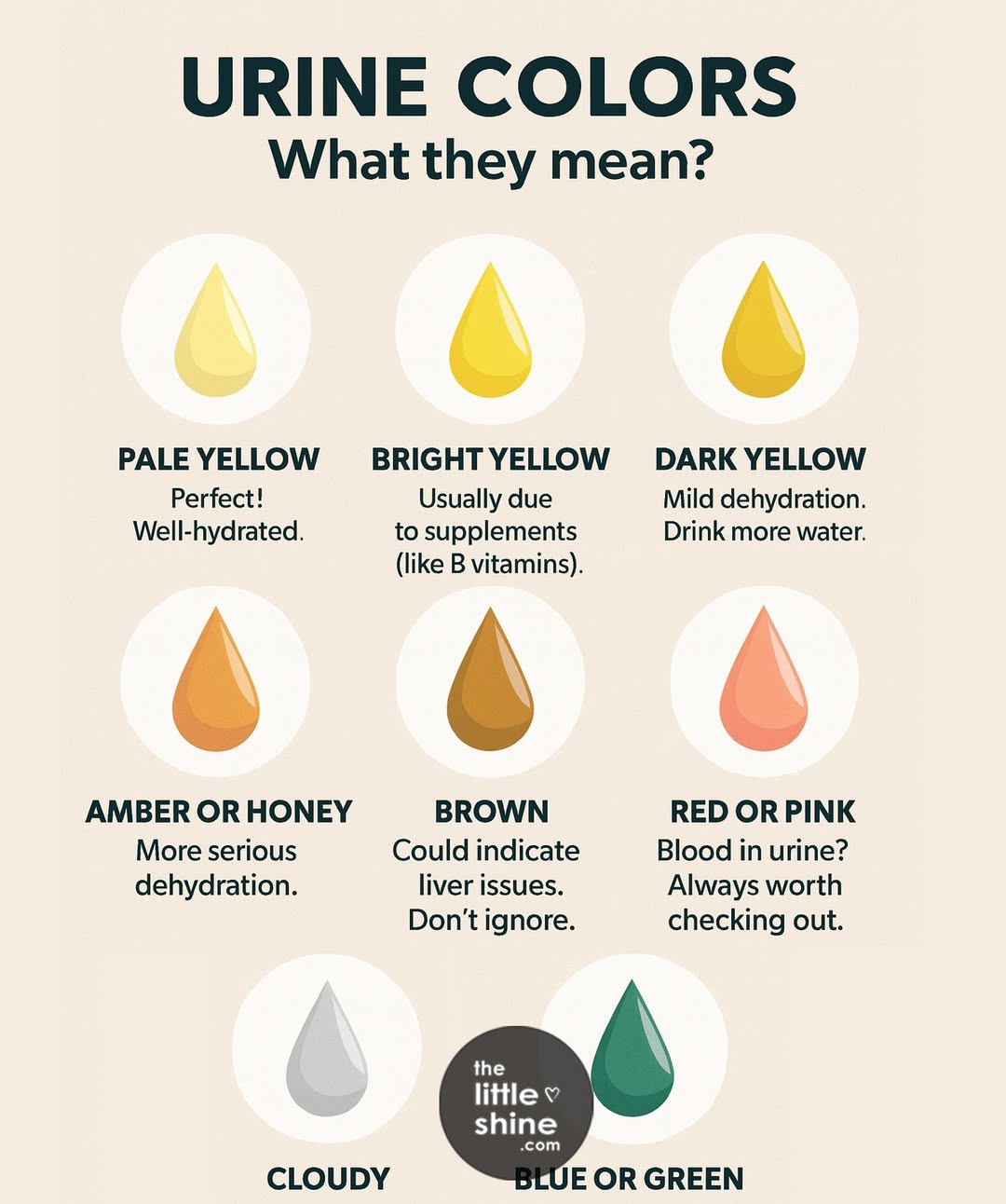
1. Pale Yellow: The Hydration Gold Standard
This is the color you’re aiming for. It signifies a perfect balance of hydration and waste elimination.
- What it means: You are well-hydrated. Your body has enough water to efficiently process and excrete waste products without your kidneys needing to conserve water.
- Action to take: None. Keep doing what you’re doing! This is the ideal state, indicating your fluid intake is perfectly matched to your body’s needs.
2. Bright Yellow: Often a Sign of Supplements
This vibrant, almost neon-yellow hue can be alarming, but it’s usually harmless.
- What it means: This is most commonly caused by excess water-soluble vitamins, particularly B vitamins (like B2 and B12), being flushed from your system. Your body takes what it needs and excretes the rest, which has this characteristic bright color.
- Action to take: No need for concern if you are taking vitamins. It’s simply your body’s normal processing at work.
3. Dark Yellow: A Gentle Nudge to Drink Up
This deeper shade of yellow is a common signal from your body.
- What it means: This indicates mild dehydration. Your body is conserving water, leading to a more concentrated urine with a higher level of waste products like urochrome.
- Action to take: Drink more water. This is a simple, early warning sign that you should increase your fluid intake.
4. Amber or Honey: A Clear Signal of Dehydration
This dark, rich color is a more urgent version of the dark yellow signal.
- What it means: This points to more serious dehydration. Your urine is highly concentrated due to a significant lack of fluids. You may also feel thirsty, tired, or have a headache.
- Action to take: Rehydrate consistently. Drink water steadily over the next several hours. If you feel unwell, seek a cool place and rest.
5. Brown: A Cause for Attention
This cola- or tea-colored urine moves beyond simple dehydration.
- What it means: While severe dehydration can cause this, brown urine can also indicate potential liver issues (like hepatitis or cirrhosis) or a bile duct obstruction. It can also be caused by intense exercise that damages muscle tissue.
- Action to take: Don’t ignore this. If you are well-hydrated and this color persists, it is essential to consult a healthcare professional for proper evaluation.
6. Red or Pink: A Potential Warning Sign
Seeing a reddish tint can be frightening, and rightfully so.
- What it means: This can signify the presence of blood (hematuria), which may point to a range of conditions from kidney stones and urinary tract infections (UTIs) to more serious issues like tumors. However, it can also be caused by eating large amounts of beets, blackberries, or rhubarb.
- Action to take: Always get this checked out. Unless you are certain it’s from food, a visit to a doctor is crucial to rule out any underlying medical problems.
7. Cloudy: A Sign of Possible Infection
Cloudiness refers to urine that isn’t clear and may have a murky appearance.
- What it means: Cloudy urine, especially if accompanied by a strong, unpleasant smell, is a classic symptom of a urinary tract infection (UTI). It can also indicate kidney stones or excess proteins and minerals.
- Action to take: If the cloudiness persists or is paired with pain, burning, or fever, see a doctor for a diagnosis and potential antibiotics.
8. Blue or Green: The Rare and Unusual
These colors are certainly surprising and are almost never related to food.
- What it means: This is a rare occurrence typically caused by certain medications (like some antidepressants, pain relievers, and anesthetics) or medical dyes used in diagnostic tests for the bladder and kidneys.
- Action to take: While usually harmless if linked to a known medication, it’s always wise to mention any drastic color changes to your doctor to confirm the cause.
Important Disclaimer: This guide is for informational purposes only. It is not a substitute for professional medical advice. Any persistent, unusual, or concerning change in your urine color—especially if accompanied by pain, fever, or other symptoms—warrants a consultation with a healthcare provider.