In a world that often feels rushed and digital, good manners are your superpower. They signal respect, build trust, and make the people around you feel valued.
It’s not about formalities—it’s about fundamentals. Here are 30 essential etiquette rules to navigate any social situation with grace and confidence.
Here are 30 essential etiquette rules everyone should know:
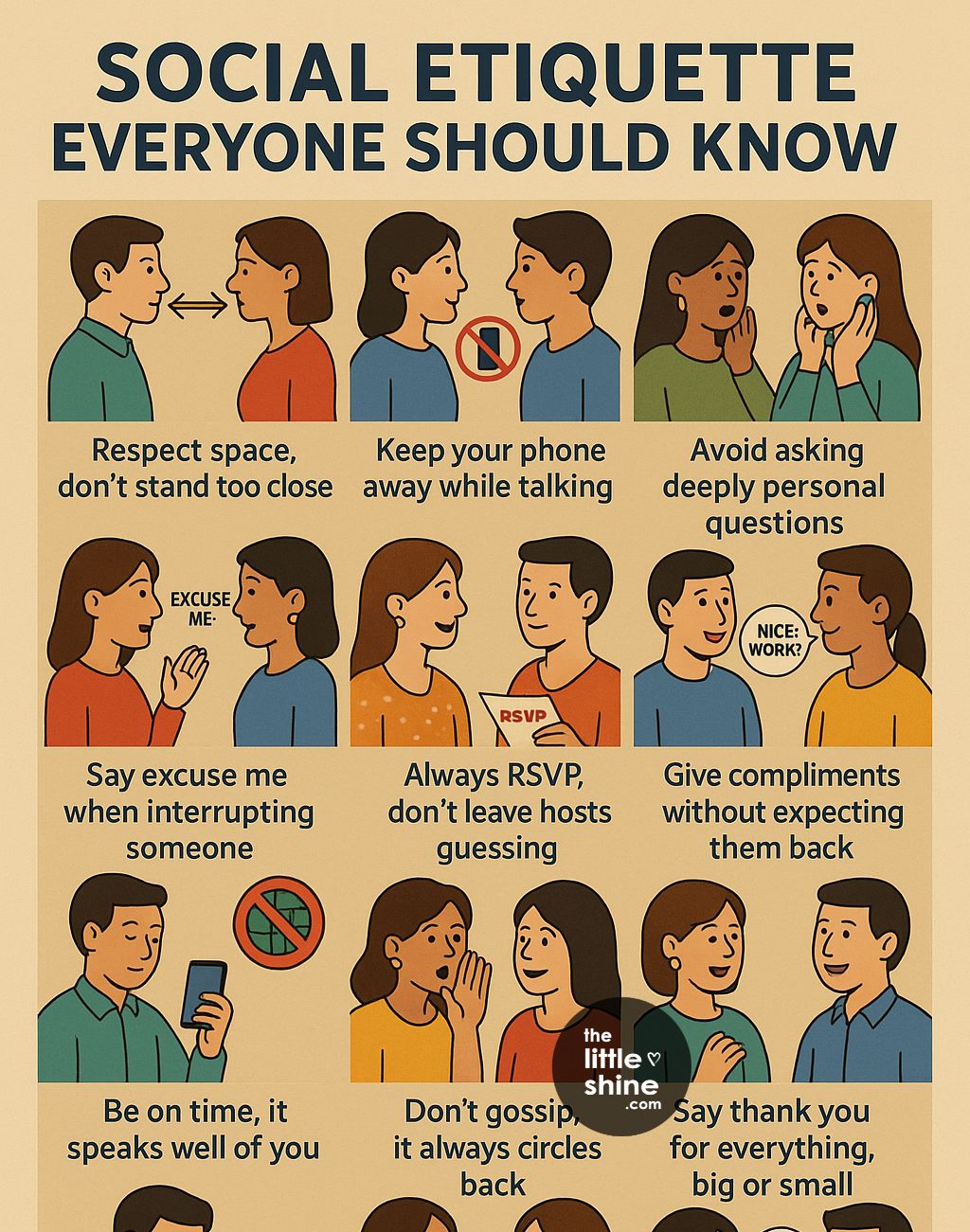
Respect personal space. Maintain a comfortable distance when talking.
Keep your phone away during conversations. Giving someone your full attention is a priceless gift.
Avoid asking deeply personal questions upon first meeting someone.
Say “excuse me” when you need to interrupt, get by, or after a sneeze.
Always RSVP by the requested date. It’s crucial for planning.
Give sincere compliments freely and without expecting one in return.
Be on time. Punctuality shows you value other people’s time.
Don’t gossip. It damages trust and reputations—including your own.
Say “please” and “thank you” for everything, big or small.
Listen to understand, not just to reply. Avoid interrupting.
Use people’s names. It’s the sweetest sound to them.
Chew with your mouth closed and avoid talking with food in it.
Respect differences of opinion. You can disagree without being disagreeable.
Hold the door open for the person behind you.
Offer your seat to those who may need it more on public transport.
Don’t overshare on social media. Be mindful of what you post about yourself and others.
Write thank-you notes. A handwritten note for a gift or kind gesture is unforgettable.
Be a gracious guest. Offer to help clean up and don’t overstay your welcome.
Put your shopping cart back in the designated corral.
Apologize sincerely when you’re in the wrong.
Respect others’ time. Keep meetings and calls focused and to the point.
Mind your volume. Be aware of how loud you’re talking in public spaces like restaurants or public transport.
Wait your turn in line. Never cut in line; it’s the ultimate sign of disrespect.
Introduce people who don’t know each other to help them start a conversation.
Avoid “one-upping.” When someone shares a story, listen instead of immediately telling your own that’s bigger or better.
Be present. Make eye contact and engage fully instead of constantly looking around the room.
Respect the shared environment. Clean up after yourself at the office, in a park, or at a friend’s house.
Dress appropriately. Your attire should be suitable for the occasion out of respect for your hosts.
Handle criticism gracefully. Listen, consider it, and thank the person for their feedback, even if you disagree.
Default to kindness. You never know what someone else is going through.